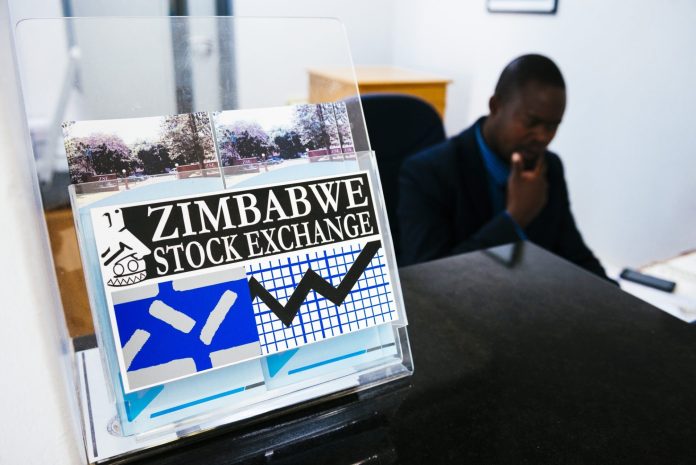
The Zimbabwe Stock Exchange Holdings expects to launch its long-awaited Small and Medium Enterprises exchange in the next two to three months to widen access to capital for the country’s largely informal economy.
ZSEH chief executive Mr Justin Bgoni said in an interview on the sidelines of the recently held Zimbabwe Association of Pension Funds Annual General Meeting, that significant progress has been made on groundwork on the platform, including technology development and investor engagement.
“Hopefully, we should come out in the next month or two to launch an SME exchange.
“We have done quite a lot of work in the background in terms of the technology, in terms of getting financiers to commit,” he said.
The proposed SME exchange is expected to provide smaller businesses with an alternative route to raise capital outside traditional bank financing, while also encouraging informal enterprises to formalise their operations.
Mr Bgoni said the platform would cater to two categories of businesses, including firms seeking to raise finance and those requiring funding while building market visibility and governance structures.
Plans to establish an SME-focused exchange have been there for more than a decade, but momentum has accelerated this year as Zimbabwe Stock Exchange Holdings intensifies efforts to deepen capital markets participation.
The group owns both the Zimbabwe Stock Exchange (ZSE) and the Victoria Falls Stock Exchange (VFEX), with the latter trading exclusively in hard currency.
Zimbabwe’s economy is heavily informalised, with SMEs estimated to account for about 86 percent of economic activity, creating a substantial but largely untapped market for structured financing.
Mr Bgoni said the success of the SME exchange would partly depend on the gradual formalisation of informal businesses.
“It is difficult for someone to give you money when you are completely informal and you want to go to the next level. We believe that will also help in terms of encouraging people to become more formalised,” he said.
He argued that a more formal economy would improve transparency, investor confidence and broader economic growth.
Beyond the SME exchange, Mr Bgoni said the capital markets were also working on improving retail investor participation through digital platforms and simpler account-opening procedures.
He pointed to platforms such as VFEX Direct and C-Trade, which allow individuals to register and trade shares electronically, as part of ongoing efforts to democratise investment access.
However, he acknowledged that current Know Your Customer (KYC) requirements within Zimbabwe’s capital markets may still be too cumbersome for ordinary investors.
“I think, as with the capital markets, our KYC requirements could be thicker than what we need,” Mr Bgoni said.
He said the ZSE was studying reforms implemented in markets such as Kenya and India to simplify investor onboarding processes.
In Kenya, authorities have eased investment access for retail participants through streamlined digital systems, while India has adopted a centralised KYC framework that allows investors to register once and use the same credentials across financial institutions.
“That makes it easier as well for people to invest. There are things that we have seen other people do that we could do better,” said Mr Bgoni.
SME Association of Zimbabwe founder and chief executive Farai Mutambanengwe said in an interview recently that the establishment of the Zimbabwe Entrepreneurship Exchange is a positive and overdue development that will expand SMEs’ access to long-term capital and broaden their financing options.
He noted that the platform has the potential to enhance the visibility and credibility of many small and medium-sized enterprises through improved disclosures, transparency, and more formalised reporting structures.
“This could help SMEs attract strategic partners, strengthen governance practices and ultimately drive job creation and business expansion, provided the exchange is efficiently administered with minimal bureaucratic hurdles,” he said.
Mr Mutambanengwe also highlighted key challenges that policymakers must address, chief among these being the need to ensure that listing requirements and compliance costs are not prohibitive, as this could deter many SMEs from participating in the market.-herald