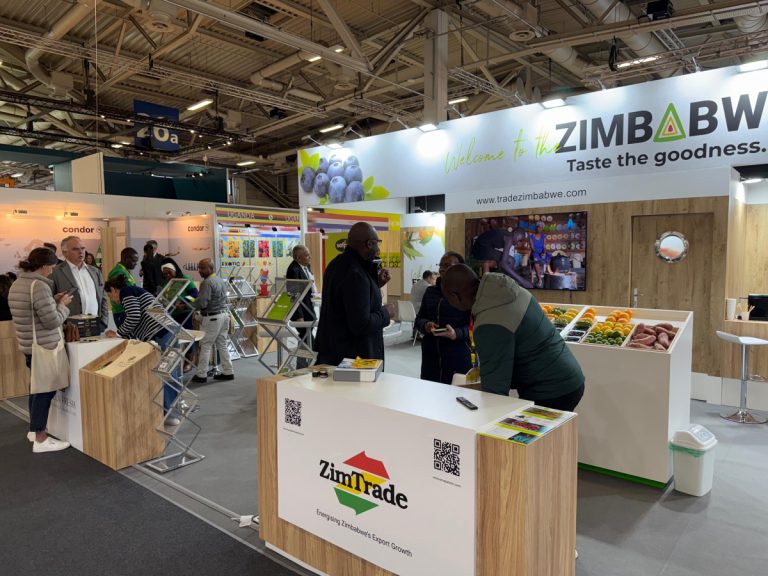
ZIMTRADE is stepping up efforts to connect Zimbabwean producers with international markets, leveraging a strong export performance that has seen merchandise exports jump 61 percent to US$`10,4 billion between January and September 2026.
ZimTrade director of operations Mr Similo Nkala said this during the ZimTrade 2026 Buyers’ Meeting held in Bulawayo on Monday, which forms part of a broader programme of business engagements that will continue with a Buyers’ Seminar in Harare on 4 November.
Mr Nkala said the partnership between the national trade development organisation, Afreximbank and Stanbic Bank has a wider development purpose beyond commercial transactions.
“For Zimbabwe, those partnerships have a wider development purpose. Access to a larger, dependable market can make investment in new production viable, create demand for local suppliers and support more employment. Helping our companies compete internationally is therefore also a way of widening economic opportunities for Zimbabweans at home,” he said.
He revealed that Zimbabwe’s trade performance provides a strong basis for advancing export work. From January to September 2026, merchandise exports increased by 61 percent to US$10,4 billion, while imports rose by 34,8 percent to US$9,76 billion, from US`$7,24 billion.
“This gives Zimbabwe a trade surplus of US$637,4 million, compared with a deficit of US$764 million in the same period in 2025,” said Mr Nkala.
“To sustain this progress, we need export growth to strengthen the productive capacity behind it. Earnings from abroad can help finance equipment, technology and inputs that make our industries more competitive. Greater processing at home can then create demand for local suppliers while developing technical skills and employment.”
Mr Nkala stressed that investment for export expansion must be guided by demand, with market development shaping production decisions from the outset.
“Understanding what buyers need, how much they can purchase and the prices they are prepared to pay helps a company decide what to produce and how to invest. Market development must therefore shape production decisions from the outset,” he said.
“For a food processor, for example, a buyer’s requirements for shelf life and packaging will influence the equipment and processes needed. Expected order volumes will influence the scale of that investment.
“Establishing these requirements early helps a producer develop a product that meets the market and a production line that can be used profitably.”
He said Zimbabwe’s trading arrangements under SADC and COMESA, the UK-ESA-EPA and China’s expanded zero-tariff framework provide opportunities to develop demand, with embassies and trade missions ready to help identify buyers and provide market information.
“This seminar allows us to work through those requirements directly. The meetings and factory visits give buyers an opportunity to assess production capabilities and discuss the improvements needed for a supply relationship to proceed. They also help exporters distinguish between orders they can fulfil immediately and opportunities that require further investment,” he said.
Mr Nkala urged buyers to be explicit about volumes, specifications, packaging and supplier approval requirements, while exporters should respond with accurate capacity figures, realistic lead times and clear pricing and payment terms.
He said clarity about demand will show where producers need to work together to fulfil larger orders.
“Combining production under agreed quality controls can help firms fulfil orders beyond their individual capacity. Aggregation and partnerships with established exporters can bring smaller enterprises, including women-owned businesses and young entrepreneurs, into these supply chains,” said Mr Nkala.
“Such cooperation requires clear arrangements for quality control, delivery and accountability. Buyers need confidence that a larger network of producers can still provide a consistent product.”
He acknowledged that working capital shortages, high logistics costs, cold-chain limitations, certification gaps and border delays can prevent viable orders from proceeding.
“Buyers assess the final delivery, even when a delay arises outside the supplier’s direct control. Coordination among producers, financiers, logistics providers and public institutions is therefore essential to our competitiveness. Removing these obstacles is part of establishing Zimbabwe as a dependable source of supply,” he said.
He said ZimTrade will use engagements during Export Week to identify such constraints and coordinate follow-up with relevant public institutions, diplomatic missions and private-sector partners.
He expressed appreciation to Stanbic Bank and Afreximbank for partnering with ZimTrade in delivering the Buyers’ Seminars.
“Your support demonstrates a shared commitment to strengthening Zimbabwe’s export competitiveness and connecting our enterprises with international markets. These partnerships bring the financial sector and trade promotion together to help businesses turn market opportunities into sustainable export growth,” he said.
“Our ambition is for more Zimbabweans to earn a better living through enterprises that can compete successfully in regional and international markets. The partnerships formed here can help turn that ambition into practical opportunities for business growth and employment.
“A company that delivers reliably strengthens confidence in Zimbabwean products and encourages buyers to consider other suppliers from our country. Zimbabwe’s name on a product represents the work of our people and the capabilities of our industries. We should be ambitious about the markets we can reach, and exacting about the quality associated with our name.”
He welcomed regional and international buyers from Mozambique, Zambia, the DRC, Rwanda, the United Kingdom, Poland, China and Germany, saying that these engagements give a clear understanding of production capabilities and the confidence to establish lasting supplier relationships.
“As your businesses find dependable sources of supply, our producers gain opportunities to expand. That shared commercial interest is the foundation on which successful partnerships can grow,” said Mr Nkala.-herald