Ask most entrepreneurs what makes a million-dollar business, and they will point to a factory, modern machinery, a fleet of trucks or prime real estate. Ask an investor the same question, and the answer looks nothing alike — because investors rarely care what a business owns. They care what it can become.
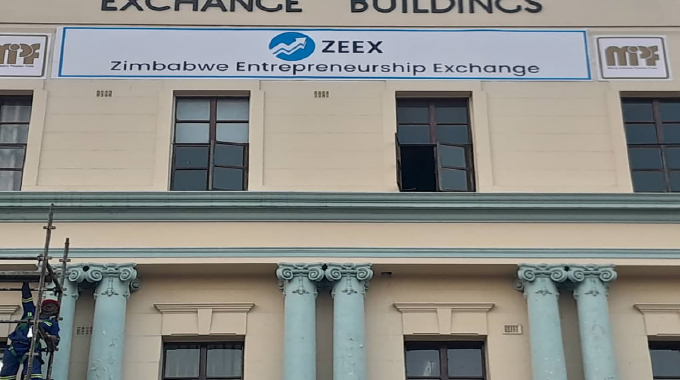
That difference in thinking explains why some businesses with relatively modest physical assets attract millions of dollars in investment, while others with impressive buildings and equipment struggle to raise capital. It’s also the philosophy behind the Zimbabwe Entrepreneurship Exchange (ZEEX), which is trying to connect entrepreneurs with investors looking past today’s balance sheet and into tomorrow’s growth — using Zimbabwe’s own listed companies as proof that value follows growth potential, not asset value.
As of last Friday, the crocodile-turned-gold miner Padenga Holdings Limited was valued at US$1,16 billion, becoming Zimbabwe’s second most valuable firm after Delta Corporation Limited. Yet the firm had assets worth just US$250,64 million at the end of 2025. That means the market is valuing the company at about 4,6 times its asset base — clear evidence that investors are paying not for what Padenga owns, but for its future earnings potential, growth strategy and ability to generate long-term shareholder value.
In reality, investors are searching for tomorrow’s success stories.
“All the big companies that we have now were once small companies and everyone wants to be involved with them at the early stage,” Zimbabwe Stock Exchange Holdings chief executive officer Justin Bgoni said.
That observation captures a fundamental truth about capital markets: investors are not buying what a business is today. They are buying what they believe it can become.
Growth creates value
A business worth US$1 million does not necessarily own US$1 million worth of assets — Padenga is a billion-dollar company despite holding assets worth far less. A company’s value is determined by the profits it can generate in future, the markets it can enter, and the confidence investors have in management’s ability to deliver that growth.
This is why two companies with similar factories can receive vastly different valuations. One may have stagnant sales, weak governance and limited expansion prospects. The other may have loyal customers, rising revenues, experienced management and a clear strategy to scale. The second business is likely to command the higher valuation, because investors are paying for future earnings, not yesterday’s investments.
The story matters as much as the numbers
Entrepreneurs often assume investors will automatically recognise a good business. They rarely do. Businesses must explain why they deserve investment — and a compelling growth story, backed by credible financial information, often makes the difference between attracting capital and being overlooked.
Bgoni says entrepreneurs should focus on presenting a business investors want to join. “The better your idea, the more interest you have out there.”
That does not mean investors ignore financial performance. Rather, they want both: the numbers explain where the business is today, and the story explains where it is going.
Customers are often worth more than machinery
Factories depreciate. Vehicles lose value. Machinery eventually becomes obsolete. Customers, however, can continue generating income for years. A company supplying supermarkets through long-term contracts, or exporting to regional markets, may therefore be worth considerably more than another business with newer equipment but no reliable customer base.
Investors place a premium on businesses capable of generating predictable and recurring cash flows because they reduce uncertainty. That is why recurring revenue, long-term contracts, recognised brands and loyal customers often increase a company’s valuation far more than additional physical assets.
The same principle underpins one of ZEEX’s flagship products — invoice discounting. The platform has already secured US$50 million in funding commitments for businesses that supply large corporates but wait 30, 60 or even 90 days to be paid. Rather than focusing on a supplier’s collateral, investors provide funding against invoices backed by creditworthy customers, recognising the value of predictable future cash flows. For entrepreneurs, this shows that a strong customer base and dependable contracts can become financeable assets in their own right, unlocking working capital and strengthening the overall value of the business.
Management is an asset
One of the first things professional investors evaluate is the people running the business. Can management execute the strategy? Are financial records reliable? Does the company have proper governance? Can the business continue operating if the founder steps away?
Strong leadership reduces risk. Reduced risk generally increases valuation.
Preparation increases value
Many entrepreneurs believe they simply approach the market and ask for funding. ZEEX has been designed differently. Businesses first work with accredited sponsors — licensed advisory firms that help entrepreneurs refine their investment proposals before they are presented to investors. That preparation improves the quality of opportunities reaching the market while increasing investor confidence.
As Bgoni explained: “They help you develop your idea.”
Sponsors help entrepreneurs articulate their growth strategy, determine the most appropriate funding instrument, and present information in a way investors understand. In many cases, they also help founders recognise value they had not previously identified within their own businesses.
You are not pitching to ZEEX
Perhaps the biggest misconception surrounding capital markets is that entrepreneurs need to convince the exchange. They do not. ZEEX operates the marketplace; investors decide which businesses receive funding.
“You don’t have to convince us as the exchange. You have to convince people. There are people out there who will be willing to listen to you who have money. You convince them.”
That distinction changes everything. Instead of preparing a loan application, entrepreneurs prepare an investment opportunity. Instead of asking what collateral they own, they explain how additional capital will increase production, expand exports, create jobs or grow profits.
Learning to think like investors
Bgoni believes ZEEX will create a new investment culture in Zimbabwe. Entrepreneurs will learn how to communicate opportunities, while investors will become more familiar with evaluating emerging businesses.
“Companies will be learning how to pitch, then the investors will be learning what to look for.”
That learning process could prove just as valuable as the capital itself. Over time, stronger businesses should lead to better investment opportunities, while better-informed investors should increase confidence in Zimbabwe’s SME sector.
Zimbabwe already provides the evidence
Zimbabwe’s listed companies demonstrate that market value is driven by future earning potential rather than simply the value of physical assets. InfraCo Zimbabwe, for example, debuted on the Victoria Falls Stock Exchange in March 2026 with a market capitalisation exceeding US$1 billion following Econet Wireless Zimbabwe’s restructuring. Investors were valuing the company’s future ability to generate income from strategic telecommunications infrastructure, rather than merely the replacement value of its fibre network, towers and data centres.
Similarly, Padenga Holdings has grown from a crocodile producer into Zimbabwe’s second most valuable listed company. Both examples illustrate the same lesson: investors do not simply buy assets; they invest in businesses with the capacity to create sustainable future wealth.
If you believe yours can too, come to ZEEX-newsday