Zimbabwe’s economic reforms have largely succeeded in restoring macroeconomic stability, but the country’s next challenge is transforming that stability into higher levels of investment that can drive sustained economic growth, the African Development Bank (AfDB) has said.
After years of focusing on taming inflation, stabilising the exchange rate and restoring fiscal discipline, the country’s policy agenda is increasingly shifting towards mobilising long-term capital for productive sectors such as mining, manufacturing, agriculture and infrastructure.
ADVERTISEMENT
The AfDB says this transition reflects a broader challenge facing Southern Africa, where many economies have made progress in restoring macroeconomic stability but continue to struggle to convert domestic savings into productive investment.
In its 2026 Southern Africa Economic Outlook report, the bank says the region’s most pressing development financing constraint is no longer merely a shortage of capital, but limited capacity to mobilise, intermediate and deploy available resources efficiently.
“Southern Africa’s most binding development financing challenge is not simply a shortage of resources, but the limited capacity to mobilise, intermediate and deploy available capital efficiently at scale,” the report says.
The report notes that investment levels remain below what is required to sustain higher economic growth because of weak financial intermediation, shallow capital markets, inadequate project preparation and limited long-term financing channels.
Although the regional economy is projected to expand from 2,1 percent this year to 2,7 percent in 2027, structural constraints continue to weigh on growth prospects. These include limited economic diversification, weak agricultural productivity, infrastructure deficits and low domestic resource mobilisation.
For Zimbabwe, the findings come as authorities pursue reforms aimed at deepening domestic capital markets.
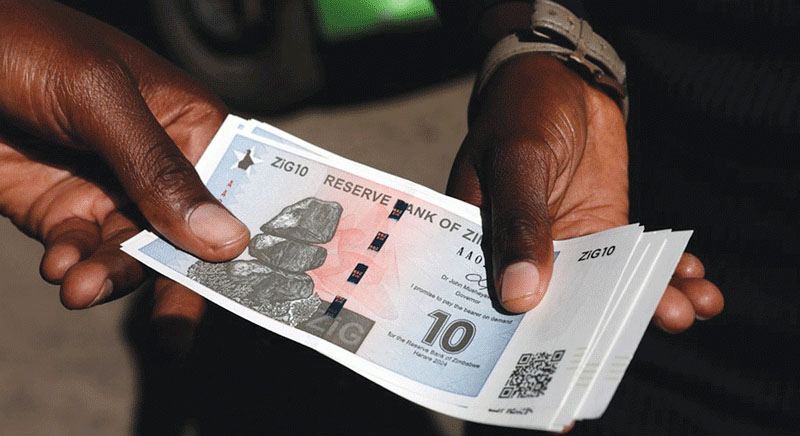
Treasury has reintroduced competitive Treasury Bill auctions, lengthened the maturity profile of domestic debt, expanded issuance of ZiG-denominated securities and continued efforts to strengthen the Victoria Falls Stock Exchange as part of broader financial sector reforms.
The Reserve Bank of Zimbabwe has also maintained a tight monetary policy stance, helping to moderate inflation while supporting exchange rate stability — measures viewed by market participants as critical for rebuilding investor confidence.
Investment banker Rudo Mashiringwane said Zimbabwe had made notable progress in stabilising the macroeconomic environment, but investors were now looking beyond stability towards bankable investment opportunities.
“The conversation has shifted. Inflation and exchange rate stability remain important because they create the foundation for investment, but they are no longer sufficient on their own,” she said.
“Investors are asking whether there are enough quality projects, whether the capital markets can efficiently allocate savings to productive sectors and whether businesses can access long-term finance at competitive rates. Those are the issues that will determine Zimbabwe’s next phase of growth.”
She said institutional investors such as pension funds and insurance companies could play a significantly larger role in financing infrastructure and productive sectors if appropriate investment instruments continued to be developed.
The AfDB similarly argues that large pools of domestic savings remain underutilised across Southern Africa, while access to affordable external finance has become increasingly difficult because of higher global borrowing costs and declining concessional financing.
It recommends strengthening domestic revenue mobilisation, deepening regional capital markets, leveraging pension and insurance assets, expanding blended finance mechanisms and attracting greater private sector participation.
Investment analyst Milton Buhali said Zimbabwe’s policy focus should now be on ensuring that savings circulating within the financial system are channelled into productive investment, rather than remaining concentrated in short-term instruments.
“Zimbabwe has an opportunity to build a more sophisticated domestic capital market. Pension funds, insurance companies, collective investment schemes and even diaspora capital can become important sources of long-term financing if the right investment framework exists,” he said.
“Capital market development is not just about raising money. It improves price discovery, strengthens corporate governance and gives companies alternatives to expensive bank borrowing.”
He said continued stability would also encourage foreign portfolio investors to gradually return to Zimbabwean markets.
According to the AfDB, strengthening financial systems will require expanding local currency financing markets, improving regulatory and supervisory frameworks, increasing the participation of institutional investors and promoting greater regional financial integration.
The bank also says improving debt transparency, reducing illicit financial flows and modernising financial systems would help lower financing costs while strengthening investor confidence.
While acknowledging that downside risks remain – including climate shocks, commodity price volatility, geopolitical tensions and tightening global financial conditions – the AfDB says sustained reforms across fiscal, monetary and structural policy will be essential to achieving stronger and more inclusive growth.
The implication for Zimbabwe is increasingly clear: macroeconomic stability has laid the foundation, but the country’s long-term economic success will depend on whether that stability can unlock higher investment, deeper capital markets and greater private sector-led growth.-herald