THE Government has fully embraced new high-yielding hybrid seed technologies as part of an aggressive push to revive Zimbabwe’s stuttering cotton sector and boost smallholder farmers’ viability.
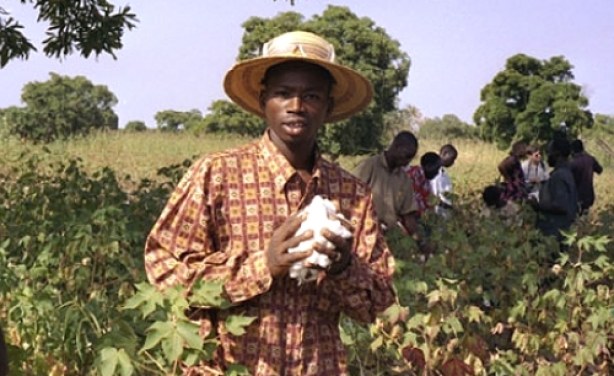
Mrs Medlinah Magwenzi, the chief director of Agricultural and Rural Development Advisory Services (ARDAS) in the Ministry of Agriculture, Mechanisation and Water Resources Development, revealed this during a familiarisation tour of a cotton demonstration plot at the Kadoma Research Centre.
She said that the Government was ready to absorb hybrid technologies to protect rural livelihoods.
Mrs Magwenzi made the remarks while representing the permanent secretary in the ministry, Professor Obert Jiri, at the event, attended by private cotton companies and members of the Cotton Ginners Association.
The policy shift comes at a critical time for the sector. Cotton production has plummeted from the peak of 352 000 tonnes in 2011 and about 10 000 tonnes in 2024 and now sits at a low of roughly 30 000 tonnes.
Industry data shows that smallholder productivity has been severely depressed, with average yields at a dismal 0,5 tonnes per hectare.
This has been blamed partly on inadequate and delayed input distribution, alongside rising panic over poor-quality seed being supplied to the market by some seed houses.
Industry players at the event raised serious concerns over poor seed quality and a widespread lack of standard handling protocols.
Stakeholders noted that failure to separate commercial seed from certified planting seed during processing has severely contaminated and degraded the product supplied to farmers, resulting in terrible germination rates that heavily cripple productivity.
However, experts from Quton Seed revealed during the tour that their newly introduced hybrid seeds possess a massive yield potential of up to five tonnes per hectare — significantly higher than standard Open Pollinated Varieties (OPVs) currently dominant in the fields.
Acknowledging that hybrid seeds generally command a premium price, Mrs Magwenzi emphasised that the Government would leverage its existing safety nets — specifically the Presidential Inputs Programme — to ensure the technology reaches farmers.
To complement this, Quton announced plans to massively expand its local hybrid seed multiplication programme to actively drive down procurement costs.
The localisation process has already commenced, with Quton targeting the production of 100 tonnes of hybrid seed this year before gradually ramping up its localised breeding operations.
“This tour has shown a different picture from what we have been seeing in cotton production of late,” Mrs Magwenzi said.
“Farmers will always look at something viable… If they manage to produce this way, they can be happy. So, if farmers could learn all these new technologies and tap into them and adopt them, then we’ll be a better cotton production country as we have been before.”
Mrs Magwenzi noted that as the rollout begins, Quton must guarantee that the hybrid seed is readily available and specifically bred to suit the country’s distinct ecological zones.
While the current hybrid seed package is versatile enough for all cotton-growing regions — experiencing only minor performance variations depending on the area — future development will be more targeted.
She emphasised that developing region-specific seed varieties directly aligns with the government’s ongoing drive towards precision agriculture.
Quton director Dr Daniel Mayers urged authorities to enforce strict regulations within the seed sector to ensure high-quality standards are maintained across the value chain.
Seed Services — the regulatory department under the Ministry of Agriculture, Mechanisation and Water Development — is legally mandated to register all seed varieties in the country and ensure absolute compliance with quality and certification standards.
“If we want to save our cotton sector, we must protect the integrity of what goes into the soil,” said Dr Mayers.
“Regulatory authorities must step up enforcement and tightly police the market and must ensure absolute compliance with quality and certification standards. We cannot allow substandard seed to compromise our farmers’ hard work.”
Quton business unit lead — cotton, Mr Kaustubh Joshi, acknowledged that while the introduction of hybrid seed will attract relatively higher initial costs, the exponential increase in crop yields would easily offset the expense.
He added that production costs are expected to drop significantly once the company shifts its focus from importing the seed to multiplying and breeding the varieties locally.
“We shouldn’t look at the initial price of hybrid seed in isolation, but rather at the massive yield it delivers,” he said.
“The output gains are more than enough to comfortably absorb the higher cost of the technology.
“Furthermore, as we transition from importing these varieties to multiplying them locally right here in Zimbabwe, economies of scale will kick in and drive the prices down for the farmer.”
Mrs Magwenzi pointed out that while hybrid seeds have the immense potential to boost yields, the technology must be complemented by proper agronomic practices.
To achieve this, she stressed the critical need to establish demonstration plots across all cotton-growing regions, providing accessible hubs where local farmers can learn best farming practices.-herald