ZIMBABWE’S rising demand for cement is driving a fresh wave of industrial investment, with Chinese-owned Zhongjin Heli Energy and its subsidiary Jianqiang Cement positioning themselves as key players in reducing the country’s reliance on imported construction materials.
During a visit to the company’s industrial complex in Hwange on Friday, the Minister of Industry and Commerce, Cde Nqobizitha Mangaliso Ndlovu, said the expansion of local cement production is aligned with Zimbabwe’s industrialisation agenda under the National Development Strategy 2 (NDS2).
Minister Ndlovu toured the Zhongjin Heli Energy and Jianqiang Cement facilities, which form part of a multi-million-dollar investment encompassing a thermal power station, coke processing plant and cement manufacturing unit.
“We anticipate that the construction boom will continue to increase given the economic growth that we are experiencing, the relative growth of the middle class and businesses expanding. That expansion is leading to increased demand for cement, and when companies are going backwards into cement production, it means we are spending less and less on imports,” he said.
Zimbabwe’s cement demand has nearly doubled over the past six to eight years, driven by infrastructure development, housing projects and industrial expansion, with Government identifying the cement value chain as a strategic industrial priority.
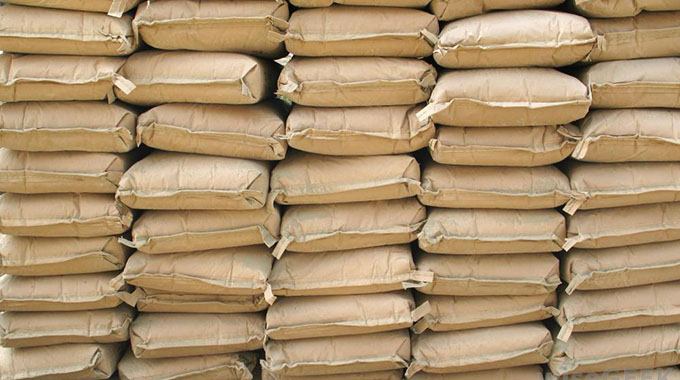
Jianqiang Cement has an installed production capacity of 500 000 tonnes per year and is producing approximately 15 000 tonnes monthly under the Sinoma Cement brand, with the company indicating it now commands about 20 percent of the domestic market.
The plant, completed in September 2025, is producing 42,5R cement for the local market at a time when demand for construction materials continues to surge nationwide.
However, clinker shortages remain one of the company’s major operational challenges, forcing it to import clinker from Zambia.
To address this constraint, Zhongjin Heli is establishing a clinker manufacturing plant in Mazowe, where a kiln has already been installed, with production expected to commence before year-end.
“Next year, they will be using clinker produced here locally,” Minister Ndlovu said.
The company also plans to establish another cement manufacturing plant in Mazowe, a move expected to increase its annual production capacity to over one million metric tonnes.
Industry analysts say increased domestic clinker production could stabilise cement supply, reduce production costs and ease pressure on foreign currency outflows linked to imports.
Beyond cement manufacturing, Zhongjin Heli is also making significant investments in energy generation. Its 235-megawatt thermal power station, which became operational in August 2025, is expected to feed surplus electricity into the national grid after meeting internal industrial demand.
Of the total electricity generated, only about 25 megawatts will be consumed within the industrial park, with the remainder supporting Zimbabwe’s expanding industrial energy requirements.
“So, we have got an investor who is already beginning to address the needs of our future industrialisation plans,” said Ndlovu.
The minister also commended the company’s adoption of environmentally conscious technologies and its contribution to employment creation in Hwange.
More than 500 people, predominantly locals, are employed across the company’s operations, which include the cement plant, thermal power station and coke processing facilities.
The coke processing division, which began production in May 2025, has an installed capacity of 500 000 tonnes per year and exports part of its output to Zambia and South Africa.
Government officials say the project reflects Zimbabwe’s broader drive towards value addition and beneficiation of local resources, while attracting strategic foreign direct investment into key industrial sectors.
Earlier this year, Vice President (Rtd Gen.) Constantino Chiwenga visited the US$500 million investment during his tour of Matabeleland North, underscoring Government support for large-scale industrial development projects.-herald