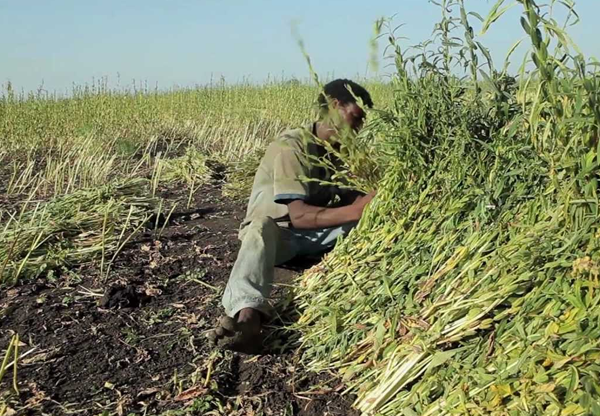
Zimbabwean sesame contractors have appealed to authorities for urgent regulatory protection following an influx of independent foreign buyers whom they say are crowding out local merchants.
The appeal comes as local contracting firms play an increasingly vital role in formalising the sector.
With structured support, formally exported volumes surged to four million kilogrammes last year, bringing order to an industry that previously operated haphazardly, according to the Zimbabwe Sesame Association (ZISA).
Local contracting firms pre-finance smallholder farmers by funding essential inputs during the planting season.
However, ZISA notes that foreign buyers are undercutting the formal market by offering quick cash directly at the farm gate.
The practice encourages side-marketing, robbing local firms of the revenue needed to recover their initial investments when harvest time arrives.
As such, domestic contractors are proposing a collaborative off-taker model rather than direct market competition.
Under the proposed framework, foreign buyers would no longer purchase produce directly from individual farmers.
Instead, foreign entities would act as primary off-takers, buying cleaned and aggregated sesame directly from local contractors.
“Our goal is to secure reliable, high-volume exports for international markets, not to dismantle domestic supply chains.
“Partnering with Zimbabwean contractors as primary off-takers gives us guaranteed quality and traceability without putting local financing frameworks at risk,” ZISA said.
Industry players emphasise that the structured arrangement would shield domestic investors from financial losses while maintaining foreign market access and facilitating vital knowledge transfer.
Reinvesting sales profits locally would build critical domestic capacity, enabling contractors to expand production cycles for smallholder farmers in future seasons.
Backing this growth vision, local contractors have lined up ambitious financing targets.
According to ZISA, local merchants have planned a financed hectarage of 35 000 hectares for the 2027 financial year, with projections scaling up to between 60 000 and 70 000 hectares in 2028.
Looking further ahead, local merchants aim to finance 100 000 hectares by 2030.
Analysts note that such long-term commitments require a well-organised sector to stimulate market confidence and spur sustainable investments.
Sesame has rapidly emerged as a lucrative cash crop for smallholder farmers in Zimbabwe, particularly in dry regions like Mbire, Gokwe, Chiredzi, and Binga.
Due to its drought tolerance, low fertiliser requirements, and strong international demand—especially from Asian and Middle Eastern markets—local contractors have championed the crop to boost rural livelihoods and generate foreign currency.
Market analysts suggest that instead of engaging in direct farm-gate buying, foreign entities should redirect their capital towards local value addition.
Opportunities include investing in seed processing, color sorting, de-hulling, oil extraction, and the production of downstream goods like tahini.-herald