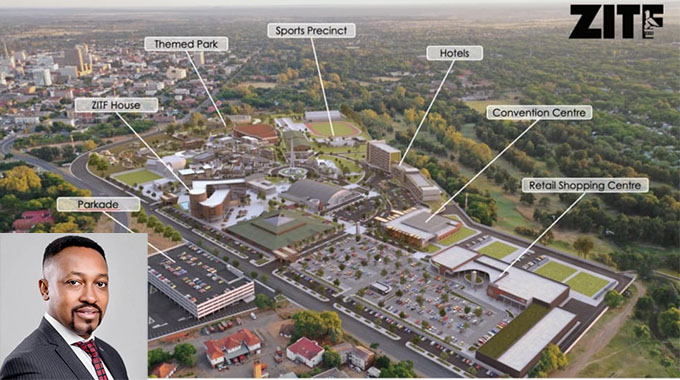
THE International Business Conference (IBC), held on the sidelines of the just-ended Zimbabwe International Trade Fair (ZITF) in Bulawayo, has once again asserted itself as a critical platform for shaping Zimbabwe’s economic trajectory, with strong calls for the translation of policies into tangible investment outcomes.
Drawing an oversubscribed audience of policymakers, captains of industry, investors and development partners, the conference underscored a central theme: Zimbabwe stands at a decisive inflection point where execution, competitiveness and connectivity must converge to unlock sustainable growth.
Vice President Dr Constantino Chiwenga set the tone with a message that the Government’s reform agenda is now firmly in the implementation phase, with emphasis shifting from policy articulation to measurable results.
“We are determined to create an economy that rewards productivity, attracts capital and promotes long-term confidence,” he said.
“In that regard, the Government remains committed to policy consistency, fiscal discipline, the sanctity of contracts, protection of investments, transparent regulation and continuous improvement in the ease of doing business. These principles are essential to unlocking domestic and international investment.”
Catalyst
His remarks captured the essence of the IBC’s growing importance, not merely as a discussion forum, but as a catalyst for real economic transformation. “The focus now is on execution and results. This conference must serve as a catalyst for concrete outcomes,” said VP Chiwenga. “We must convert dialogue into investment, partnerships into projects and opportunities into measurable economic impact. Zimbabwe is ready and open for mutually beneficial partnerships.” This shift to delivery reflects broader expectations from both domestic and international stakeholders, who increasingly view platforms such as the IBC as barometers of a country’s seriousness in driving reform and attracting capital.
The conference theme, “Connected Economies, Competitive Industries”, resonated strongly across discussions, reflecting the realities of a rapidly evolving global economy where integration and productivity define success.
ZITF board chairperson Mr Busisa Moyo framed the conference as a strategic economic instrument rather than a ceremonial gathering.
“This business conference has become a significant part of the economic calendar of our great country, where we meet, where we dialogue, where we showcase — it’s a small microcosm of what we have, our proudest products and services that we provide, that our private sector . . . projects to Africa and to the world,” he said. “ZITF has remained more than an event on the calendar. It is an economic tool for every leader in the private and public sectors in Zimbabwe to forge new alliances, to shape and reshape the boundaries and outputs of core relationships, to deepen ties with existing partners. “It has been a premier convening point where potential and ambition meet opportunity, where opportunity is transformed into value, where products meet markets, where companies meet investors and where relationships blossom into fruitful partnerships.”
Mr Moyo’s framing speaks directly to the IBC’s enduring value: its ability to bring together diverse actors within a structured environment that encourages deal-making, knowledge exchange and strategic alignment.
Competitiveness
However, while connectivity remains essential, speakers stressed that it must be matched by competitiveness.
“To trade, we need to be connected to raw materials and markets, and often it is technology and skills.
“But being connected is not good enough. We must be competitive on a wider scale to remain connected for the long term. Competitive industries are built upon innovation across vertical ecosystems that deliver an end product that consumers require. Competitiveness demands productivity, quality, reliability, innovation and cost discipline.” Ms Kunyalala Maphisa, chief executive officer of the Archbishop Desmond Tutu African Leadership Institute, highlighted structural impediments that continue to weigh on Zimbabwe’s business environment.
“Tariff and non-tariff barriers, regulation complexities, high utility costs and transport bottlenecks remain real impediments to growth,” she said.
“The Government must go further, sector by sector, to identify and eliminate every cost that is connected to employment creation. Transport connectivity costs that make running a logistics business unviable must also be addressed. Utility costs — power, water, broadband and all the other utilities and energy — that increase the cost of doing business must also be structurally reduced.”
Ms Maphisa’s intervention brought a critical dimension to the conference: the need for granular, sector-specific reforms that directly impact productivity and investor confidence.
“The goal is not merely a better business environment. The goal is dignity for employed people, and we know that employed people have dignity,” she said. “Policy imperatives: a systematic sector-by-sector review of business costs, a streamlined regulatory environment and an explicit commitment from Government to reducing the cost of doing business as a primary indicator of the future.”
In 2025, the Government embarked on a comprehensive review of business conditions to reduce the cost of doing business and streamline regulatory requirements. Zimbabwe is targeting 12 key sectors for comprehensive business regulatory reforms to improve the ease and cost of doing business.
These reforms are being implemented in phases, with initial focus on the agriculture, retail, tourism and transport sectors.
The initiative is aimed at enhancing the profitability of businesses and stimulating economic activity by slashing fees and simplifying compliance.
By tackling longstanding red tape, the Government seeks to create a modern and efficient business climate.
Ms Maphisa also linked policy ambition with implementation discipline. “I am convinced that Zimbabwe is a land of extraordinary opportunity. The NDS2 (National Development Strategy 2) agenda is not wishful thinking. It is a blueprint that affects real matters of our people, our land, our minerals, our history and our geography.
“The investors we seek will only come when we can demonstrate the purpose of conviction . . . The question is: How do we actually move from that point going forward? We must be simple-minded in the pursuit of the goals we seek and united in the vision and mission of our country.”
Indispensable
The convergence of these perspectives highlights why the IBC is increasingly indispensable.
It serves as a bridge between Government policy, private sector expectations and investor priorities, creating a shared understanding of both opportunities and constraints.
From a sectoral perspective, the conference reinforced mining, agriculture, infrastructure, energy and manufacturing as key pillars of Zimbabwe’s growth strategy. VP Chiwenga pointed to mining as a dominant economic driver, contributing about 14 percent to gross domestic product (GDP) and over 70 percent of export earnings, while signalling a firm shift towards beneficiation.
“The era of exporting raw resources without meaningful domestic benefit must give way to a new phase of in-country value addition, beneficiation, industrialisation and manufacturing,” he said.
Similarly, agriculture was positioned not merely as a production sector, but as a gateway to agro-industrialisation.
“Yet our greatest opportunity lies beyond primary production. It lies in agro-processing, packaging, storage, logistics and export market development,” he said.
Such sector-specific insights reinforce the IBC’s role as a platform for aligning national priorities with investment opportunities.
Equally critical is the conference’s role in signalling macroeconomic direction.
VP Chiwenga noted progress in stabilisation efforts, including moderated inflation and reforms supporting the ZiG currency.
“Our focus remains on predictability, confidence building and sustainable growth,” he said.
This is regarded as important for investors, for whom macroeconomic stability is often the primary consideration.
Beyond economics, the conference also explored emerging sectors such as tourism, with Ms Maphisa calling for integrated strategies.
“Tourism is not just about receiving international visitors, but it is also about fostering domestic tourism,” she said. “What is it that we do to achieve that? One of the policy imperatives that we propose is that we develop integrated tourism, which includes supporting transport links . . .”
She also emphasised the need for digital competitiveness.
“There is a need to invest in digital marketing infrastructure to compete with other countries such as Kenya, South Africa and Rwanda.”
Taken together, the deliberations at the IBC reveal a maturing economic dialogue, one that acknowledges both progress and persistent constraints, while focusing on practical solutions. The conference’s true significance lies not just in the ideas exchanged, but in its ability to mobilise action.
As VP Chiwenga aptly put it, “The policy direction is clear, the opportunities are substantial and the commitment to reform is unwavering.”
Dr Mike Bimha, co-chairperson of the NEFC Steering Committee, said: “What remains critical now is the translation of these discussions into actionable policy interventions and bankable investment opportunities.
This, by the way, provides a strategic plan to move from dialogue to implementation, from policy to impact and from opportunities to tangible investment.”
Business strategist with ConsultWorld Enterprise Mr Busani Malaba said the challenge and opportunity now lie in ensuring that the momentum generated within the halls of the IBC translates into factories on the ground, jobs for citizens and sustained economic growth.
“In that regard, the IBC is no longer just a conference. It is a proving ground for Zimbabwe’s economic ambitions,” he said.
“Going forward, success will not be measured by the quality of conversations we hold, but by the value of deals we close, the speed at which projects break ground and the scale of impact felt by ordinary Zimbabweans.
“We must decisively move the IBC from a platform of dialogue to a platform of delivery, where every engagement is anchored in timelines, accountability and measurable outcomes.
“The credibility of this forum — and indeed Zimbabwe’s investment narrative — will depend on our ability to convert commitments into capital flows, policy clarity into implementation and intent into tangible economic transformation,” said Mr Malaba.-herald