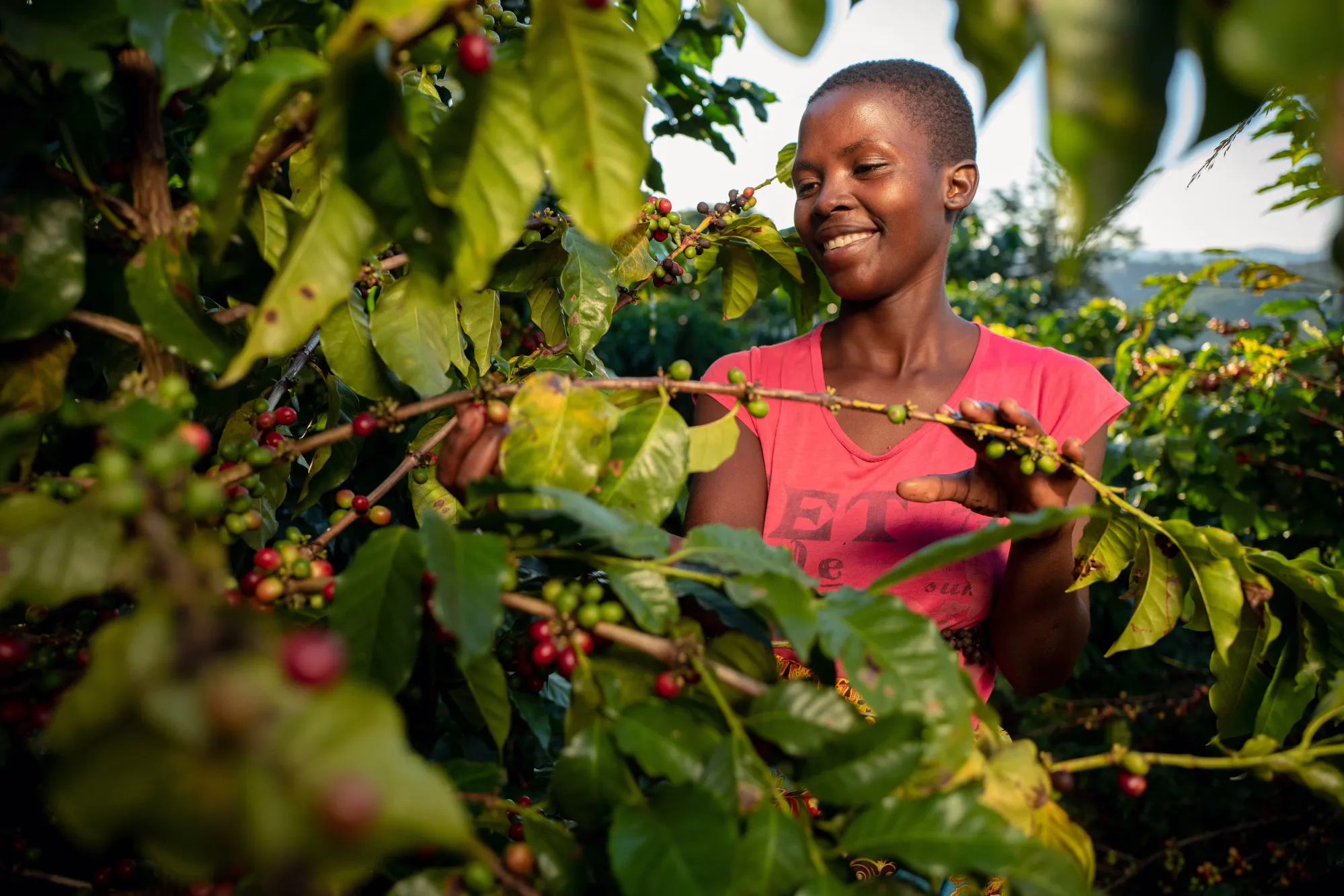
Zimbabwe’s coffee sector is brewing a comeback after exports rose by 59 percent to US$1 million last year from US$600 000 in 2022, driven by smallholder farmers.
This comes as the country intensifies compliance with European union (EU) requirements.
Horticulture exporters targeting the European Union (EU) market since January 2024 were mandated to comply with the EU deforestation regulation (EUDR) that prohibits the export of products to the EU market with deforestation.
The EU regulation on deforestation aims to prevent the import of products that contribute to deforestation and forest degradation.
These products include tea, coffee, soyabean, palm oil and beef, which are often associated with deforestation in tropical regions.
Under the EUDR, the due diligence process requires companies to obtain precise geolocation coordinates of where the product was produced.
However, if Zimbabwean horticulture producers rely on inputs or materials that contribute to deforestation, such as packaging made from unsustainable sources or fibres, including printed packaging and fertilisers produced from palm oil, they may face challenges in meeting the EU requirements.
Statistics from the Zimbabwe National Statistics Agency (ZimStat) show that the volume of coffee exports rose 33 percent to 158 483 kilogrammes from 119 452 over the same period.
The average price, however, declined 13 percent to US$4,61 per kg from US$5,33.
Zimbabwe’s coffee is exported as not roasted or decaffeinated, roasted coffee, not decaffeinated, coffee husks and skins, as well as coffee substitutes containing coffee.
The Horticultural Development Council (HDC) said it entered week three of the EUDR mapping on April 28 to ensure that every coffee shipment was traceable back to the farm.
“Our teams are braving fog and rough terrain to get every Zimbabwean coffee grower on the map.
“Traceability is key to supporting better incomes and stronger exports,” said the HDC.
The HDC is helping farmers map, track and comply so that they are competitive and boosting rural incomes.
“Now driven by smallholder farmers, the sector faces EU rules on deforestation prevention where compliance is a key requirement for market access,” added the HDC.
The HDC is optimistic that the hectarage under the coffee crop will rise to 5 000 by 2050 from the current 700, judging by enthusiasm from smallholder farmers who are starting new plantations.
“Interest in coffee is growing, with an estimated 2 000 farmers engaged in or planning coffee production; however, the sector needs long-term financing, inputs and equipment, especially irrigation, to sustain its recovery.
“In 2024, smallholder farmers contributed roughly 50 tonnes, while large-scale estates supplied 250 tonnes,” said HDC.
The HDC is incorporating smallholder farmers under the ‘Hub and Spoke’ model.
Last year, the HDC said the number of active smallholder farmers was slowly increasing, reaching about 1 300 growers with at least 50 trees each, cultivating roughly 470 hectares.
“However, half of that area is still young and not yet bearing fruit. Looking ahead to 2026, production is forecast to rise to about 400 tonnes as total planted area expands to around 700 hectares.
“Growth will depend on inputs and support for smallholder farmers, such as seedlings and fertilisers, being made available efficiently and on time,” the HDC continued.
The country’s unique selling proposition (USP) is its top-quality coffee that is balanced with rich flavour, moderate/balanced acidity and good aftertaste.
The USP is a marketing statement that differentiates a product or brand from its competitors.
Coffee Growers Association of Zimbabwe president, Mr Michael Jenrich, said coffee was a long-term crop, which required capital outlays in the first four years before harvesting started.
“Coffee is a complex and labour-intensive high-value and high-margin crop, which is mostly produced by smallholder farmers. It suits well with the HDC’s ‘Hub and Spoke’ model where smallholder farmers can be aggregated and/or paired with larger producers (hub or nucleus farms) for tradeable quantities and quality,” he said.-herald