Zimbabwe’s local currency inflation remained in single digits for the fourth consecutive month in April 2026, despite escalating conflict in the Middle East, which could derail the country’s hard-won macroeconomic stability.
The Zimbabwe Gold (ZiG) Consumer Price Index rose to 194,68 in April, up from 192,58 in March, pushing the year-on-year inflation rate to 4,8 percent — a 0,4 percentage point increase from the previous month’s 4,4 percent, according to data released by the Zimbabwe National Statistics Agency (ZimStat) on April 27, 2026.
Month-on-month inflation accelerated to 1,1 percent in April, compared with 0,5 percent in March, driven largely by a sharp rise in food and non-alcoholic beverage prices, which climbed 1,5 percent — a significant uptick from March’s 0,3 percent.
The figures mark a continuation of the stabilisation trend touted by the Reserve Bank of Zimbabwe in its first-quarter 2026 snapshot, which noted that annual ZiG inflation had reached single digits in January for the first time in more than three decades, at 4,1 percent.
However, the central bank’s own outlook has darkened. “Annual inflation is expected to temporarily increase in the near term to June 2026, before returning to its steady-state levels,” the bank said in its quarterly report, citing “inflationary pressures emanating from the recent oil price shock owing to geopolitical tensions from the US-Israel-Iran conflict.”
The conflict, which escalated sharply in late February, has driven Brent crude prices from the low US$70 per barrel to above US$110 by the end of March, according to the World Bank’s Africa Economic Update, released recently.
For Zimbabwe — classified by the World Bank as having “little capacity to intervene” against such shocks — the impact has been immediate. The report notes that in countries with limited fiscal room to cushion consumers, “fuel prices have risen sharply,” with Zimbabwe cited alongside Somalia as a case in point.
The central bank said it had maintained its Bank Policy Rate at 35 percent at its March Monetary Policy Committee meeting “to contain second-round effects of the fuel price increase in the economy.”
Despite the external headwinds, the RBZ sought to project confidence in the ZiG, noting that foreign currency reserves stood at US$1,4 billion as of March 31, sufficient to cover approximately six times the stock of ZiG reserve money and nearly double total ZiG deposits.
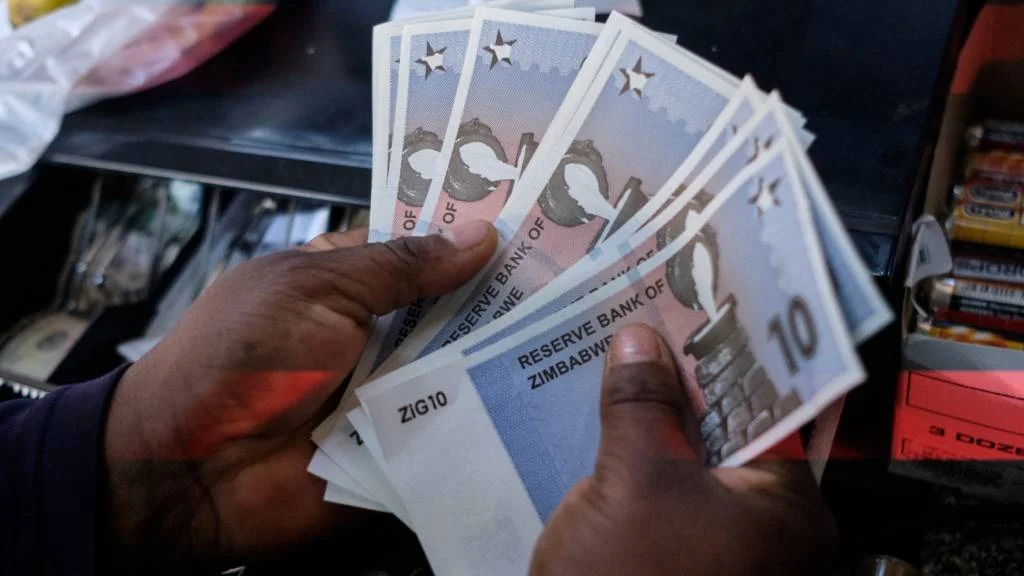
The bank also highlighted the launch of the upgraded BiG 5 ZiG banknote series in April, following a nationwide awareness campaign in March that reached 3 783 centres and more than 1,5 million participants.
Month-on-month ZiG inflation averaged 0,2 percent in the first quarter of 2026, the RBZ said, while total foreign currency receipts surged 54,1 percent to US$4,97 billion in the first three months of the year compared with the same period in 2025.
The interbank exchange rate has remained relatively stable, oscillating around ZiG25 per US dollar in the first quarter, with the parallel market premium contained below 20 percent, the central bank reported.
Parallel data released by ZimStat for US dollar-denominated transactions showed a more muted inflation trajectory. The USD Consumer Price Index rose to 124,76 in April from 123,46 in March, with year-on-year inflation at 2,2 percent — up 0,9 percentage points from March’s 1,3 percent.
Month-on-month USD inflation stood at 1,1 percent in April, identical to the ZiG measure, though the composition differed: non-food inflation in USD terms accelerated to 1,2 percent, while food inflation was lower at 0,8 percent.
The central bank has signalled that it will continue to “walk the talk and stay the course” through prudent monetary policy management, while acknowledging that the path ahead is fraught with external risks.
“Going forward, the Reserve Bank will continue to assess evolving domestic and international economic developments, outlook and the balance of risks to ensure that annual inflation remains low and stable in single-digit levels,” the bank said.-herald