Zimbabwe’s banking sector has expressed confidence that it can mobilise between US$4 billion and US$5 billion towards the estimated US$10 billion required to fund new mining projects and expand existing operations over the next five years, signalling a major shift in domestic financing of one of the country’s most strategic economic sectors.
The commitment is expected to accelerate mine development, expansion and mineral beneficiation while reducing reliance on expensive offshore capital, in line with the Government’s drive to build a US$12 billion mining industry.
Mining remains Zimbabwe’s largest foreign currency earner, contributing more than 75 percent of export receipts while playing a critical role in gross domestic product, employment and investment.
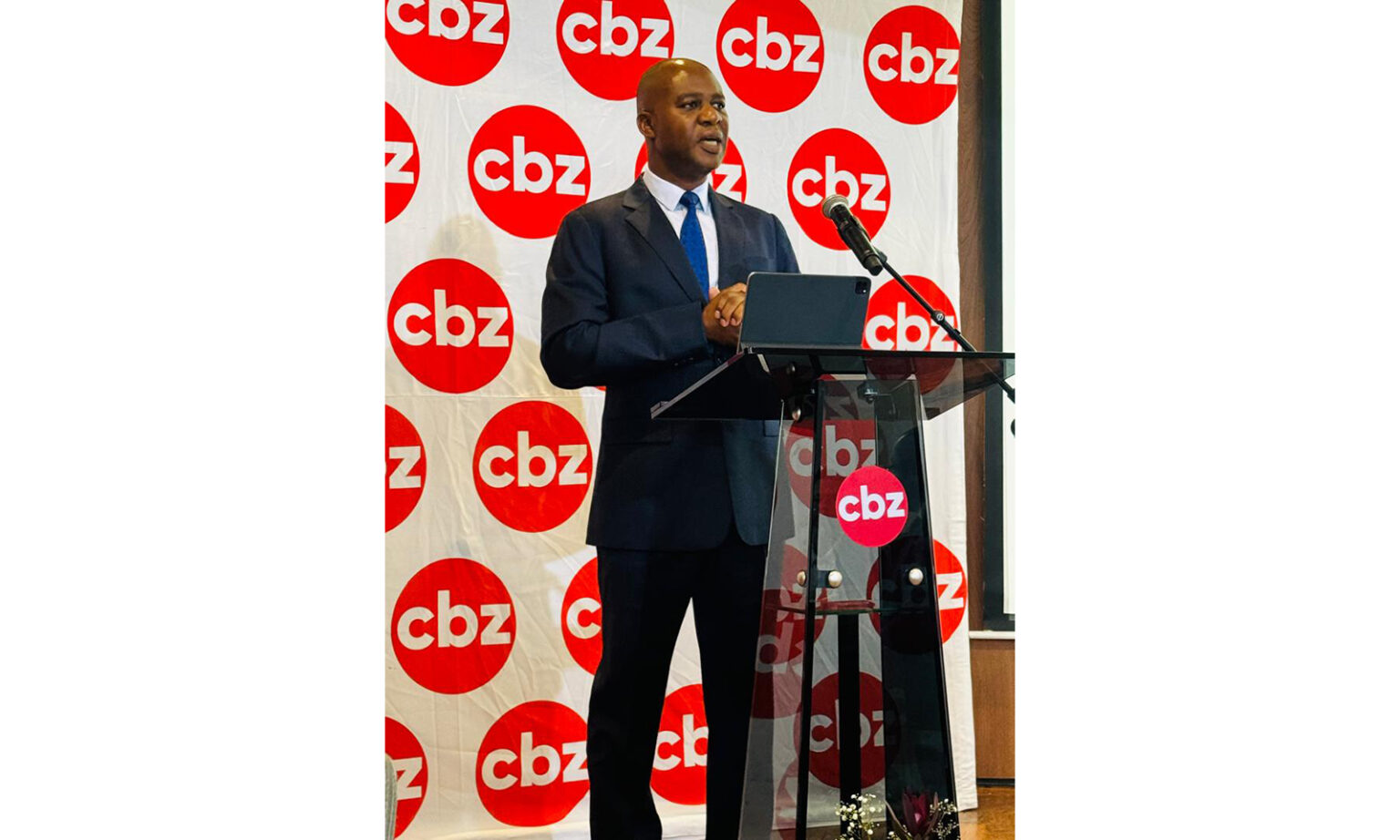
Speaking at the recently held Mine Entra 2026 Suppliers, Energy and Infrastructure Symposium in Bulawayo, CBZ Holdings’ chief executive officer, Mr Lawrence Nyazema, said Zimbabwe’s banking industry had developed a financing framework centred on syndicated lending, corporate loans, equipment finance, trade finance and supplier finance to support the sector’s continued expansion.
The financing proposal comes as the Chamber of Mines of Zimbabwe estimates that the industry requires about US$10 billion in fresh investment over the next five years to sustain production growth, develop new mines and expand existing operations.
“I go back to the US$10 billion challenge and try to answer the question: Where is the funding going to come from in the next five years? We believe that US$4 billion to US$5 billion will come from corporate lending,” said Mr Nyazema.
He said local financial institutions had demonstrated growing capacity to structure large-scale mining transactions through syndicated lending arrangements.
Mr Nyazema cited the recently concluded US$125 million syndicated facility for Mutapa Gold Resources, arranged by eight local banks, as evidence that domestic financial institutions were increasingly willing and able to pool resources to finance major mining investments.
“Recently in Harare we saw eight local financial institutions coming together to finance what is going to be one of the biggest gold mines this country has seen, and that is the Shamva New Project, which is a project under Mutapa, our sovereign wealth fund,” he said.
CBZ was tasked with arranging the financing syndication for the project, with Mr Nyazema saying the response from local banks exceeded expectations.
“The target that was given to CBZ, who arranged the syndication, was: can you raise US$75 million for us? But surprise, surprise, the eight banks put together US$125 million.”
“And what does that do? The extra US$50 million is going to be used to finance the Shamva New Project.”
He said the development proved that Zimbabwean financial institutions had the capacity to mobilise resources for major investments and support sectors that are critical to economic transformation.
“And what does that tell you? It tells you that there is capacity within our local financial institutions to come together and finance big projects,” he said.
Building on that momentum, he said banks were already pursuing another major syndicated transaction.
“The same group of financial institutions is targeting the close of another US$150 million syndicated financing facility by the end of August for a new gold mining project, while similar funding structures are also being explored for a platinum development.”
While expressing confidence in the banking sector’s capabilities, Mr Nyazema acknowledged that domestic institutions alone could not meet the industry’s entire funding requirements.
With banking sector deposits estimated at about US$6 billion, he said partnerships with regional and international development finance institutions remained essential to mobilising long-term capital for large-scale mining projects.
“I have already said total deposits are about US$6 billion. I would want to take this opportunity to thank and applaud the support that we get from our regional financial partners, the likes of Afreximbank, AFC and Standard Bank.
“Our all-weather financial partners will come to the party, but we have to make sure that our projects are creditworthy and bankable,” he said.
Beyond conventional corporate lending, Mr Nyazema said equipment finance, where mining machinery serves as collateral, could contribute between US$1 billion and US$2 billion, while trade finance had the potential to unlock another US$2 billion to support imports of mining equipment, consumables and other operational requirements.
Supplier finance, he added, would provide critical working capital to manufacturers, contractors and service providers supporting mining operations.
“This is the US$1 billion that will be set aside for you to carry out your activities,” he said.
Mr Nyazema said the combination of corporate lending, equipment finance, trade finance, supplier finance and support from development finance institutions could mobilise between US$8 billion and US$10 billion, bringing the Chamber of Mines’ investment target within reach.
He said the growing adoption of syndicated lending reflected a broader transformation in Zimbabwe’s financial services sector, enabling banks to spread risk while financing increasingly capital-intensive mining ventures.
Greater participation by domestic financial institutions is expected to improve access to long-term capital for exploration, mine development and expansion projects, while reinforcing investor confidence in Zimbabwe’s mining industry.
“I truly believe that the giant has woken up. I am of the view that the financial services sector has finally started to play its role,” said Mr Nyazema.-herald