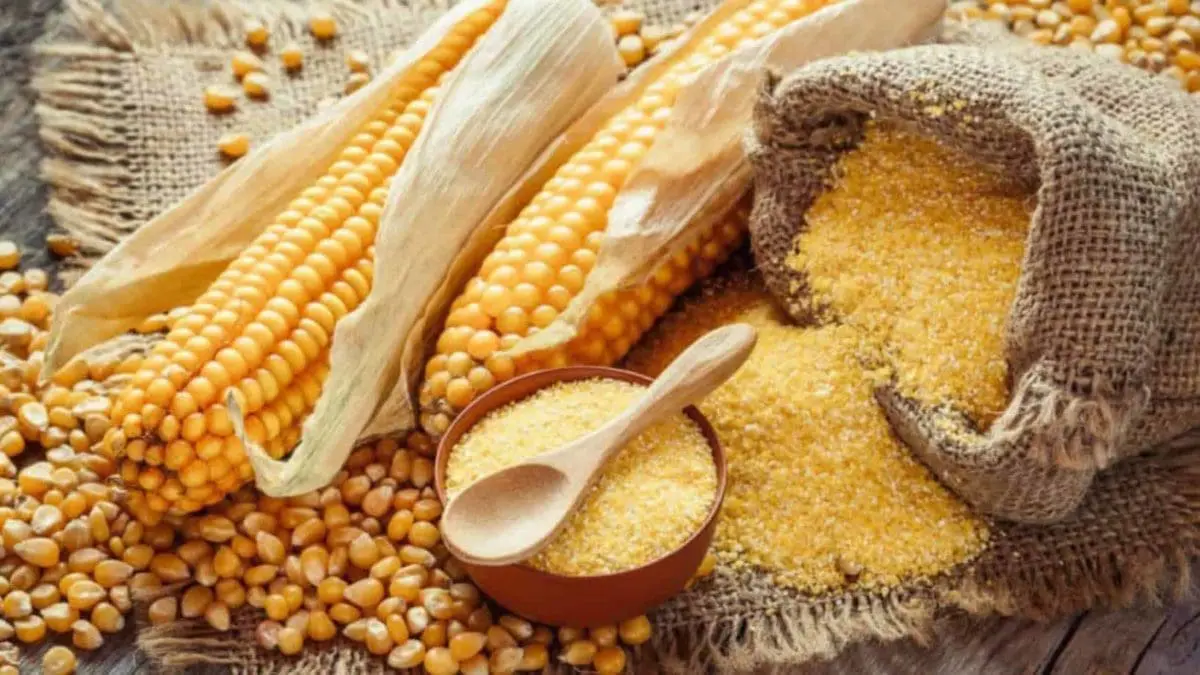
STAKEHOLDERS in the livestock industry have challenged local breeders to invest in hybrid yellow maize seed production to cater for the increasing demand of maize in stockfeed manufacturing and avoid competition with human needs.
This came up during deliberations at the just-ended three-day Seed Business Summit in Harare.
Livestock and Meat Advisory Council (LMAC) and Stockfeed Manufacturers Association of Zimbabwe (SMAZ) executive administrator, Dr Reneth Mano, said currently, the country was importing yellow maize for the livestock sector.
“We have lagged on yellow maize production, which is the number one source of carbohydrate for animal production for the protein we require.
“We are lagging far behind South Africa, Brazil, Argentina and the United States, but I believe we have the capacity to close that gap and produce quality yellow maize here to incorporate into that formula for turning our animal genetics into quality, affordable animal products,” he said.
Dr Mano said that without increased yellow maize production, the industry would continue to compete with humans for the white maize.
“Presently, we are consuming 30 000 tonnes of pork, 34 000 tonnes of fish, 190 000 tonnes of dairy and 110 000 tonnes of beef.
“When we put all these animal products together, that helps develop our children’s cognitive capabilities,” he said.
Dr Mano said there was a need to combine animal and plant genetics optimally.
He said the banks should also provide finance while scientists provide quality seeds that translate the animal genetics that we have into the protein we can afford.
“For the 2026/27 marketing year, Zimbabwe’s domestic maize-based agro-processing food and feed industry requires at least 1,2 million tonnes of maize.
“The stockfeed and livestock production industry alone will require 650 000 tonnes of maize and 200 000 tonnes of soya beans for livestock production and supply of animal proteins to keep Zimbabwe 100 percent self-sufficient in the production of meats, table eggs and farmed fish,” he said.
SMAZ representative and Feedmix head of procurement, Miss Brittany Turner, said feed manufacturers depended on maize and soya beans as the main ingredients in feed production.
“In 2025, the feed industry utilised 538 000 tonnes of maize grain, 301 000 tonnes of soyabean and 170 000 tonnes of bran from grain millers. Demand for these raw materials has been growing constantly over the past eight years by about 30 000 for maize and 15 000 tonnes for soyabeans each year.
SMAZ projected that demand for maize, soya bean and brans to reach 700 000 tonnes, 375 000 tonnes and 212 000 tonnes, respectively.
“If this demand is to be met through local production, this would require 232 000 hectares to be planted to maize and 187 000ha to be planted to soyabeans. This level of production to satisfy the feed sector would generate demand amounting to 5 810 tonnes of maize seed and 16 860 tonnes of soyabean seed,” she added.
Miss Turner said to curtail competition with the milling industry for access to white maize, SMAZ was prepared to contract farmers in producing yellow maize, which is not preferred by the milling industry.
According to the Agriculture Food Systems and Rural Transformation Strategy 2026-30 (AFSRTS 2), Zimbabwe remains a strong livestock genetics improvement focal point in the region with the potential to export quality genetics.
The National Development Strategy 2 (NDS 2), revealed that the Government will enhance livestock production and resilience through expanded availability of fodder and stockfeeds, coupled with the modernisation of animal health infrastructure.
“To address critical gaps in feed supply chains, the Government will implement measures to stimulate domestic supply through strengthening value chains. These interventions will ensure steady availability of feed for drought-survival rations and routine livestock maintenance,” read the NDS 2.-herald