The world’s most searched travel keyword in 2024 was not “adventure”. It was not “luxury”. It was “escape”.
After years of pandemic-induced anxiety, geopolitical turbulence and digital overload, a new breed of traveller has emerged: one who measures a destination not by its Instagram grid but by how deeply it quiets the mind.
Zimbabwe, long celebrated for its raw wilderness, has found in this moment something far more powerful than a marketing campaign. It has found a word: Runyararo.
In Shona, Zimbabwe’s most widely spoken indigenous language, Runyararo means peace: not the passive absence of noise, but a living, breathing stillness that restores the soul.
Tourism boards, lodge operators and wellness entrepreneurs across Zimbabwe are now weaving this concept into the country’s destination identity, positioning it as the antidote to global anxiety that millions of travellers are desperately seeking.
The US$1,3 trillion reason this matters
The Global Wellness Institute valued the wellness tourism market at US$1,3 trillion in 2023, projecting it to exceed US$2 trillion by 2030. Travellers are no longer satisfied with a spa day bolted onto a safari itinerary. They want immersive transformation and they are willing to pay premium rates to find it.
Bali has long dominated the wellness travel imagination. Costa Rica’s Pura Vida philosophy built an entire national tourism brand. Thailand’s spiritual retreats draw hundreds of thousands annually.
But these destinations are now facing the very problem they sought to solve: overcrowding, commercialisation and the creeping inauthenticity that follows mass appeal.
Zimbabwe’s Runyararo proposition arrives at precisely the right moment: uncrowded, unscripted and unmistakably real.
Mosi-oa-Tunya: From Wonder to Wellness Destination
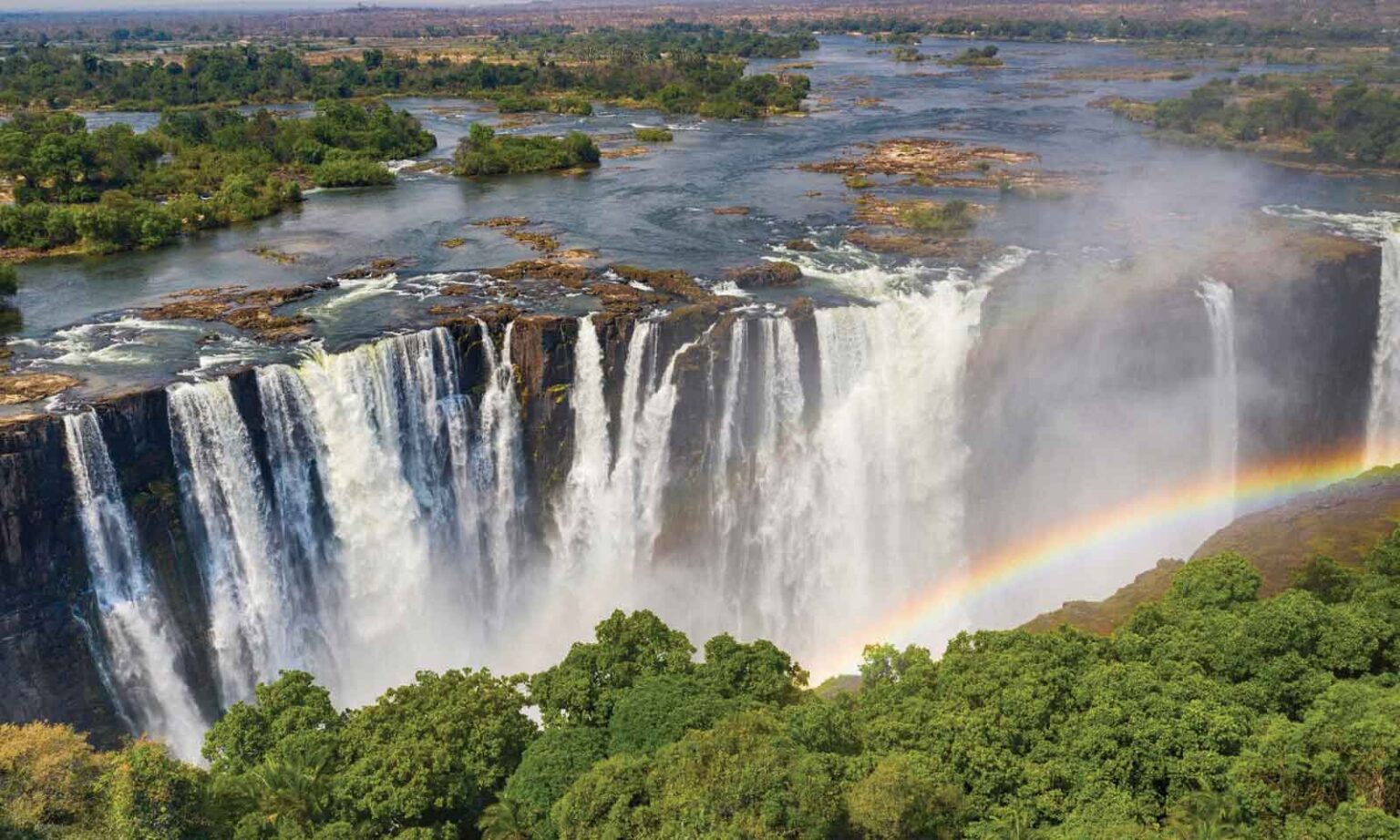
Mosi-oa-Tunya (Victoria Falls: The Smoke That Thunders) has always commanded awe.
But a quieter revolution is underway in the town and its surrounding bush. Boutique lodges have introduced forest bathing walks along the Zambezi’s edge, guided by rangers who narrate not just wildlife but the philosophy of living in rhythm with nature.
Sunrise yoga platforms overlooking the gorge, sound healing ceremonies rooted in Shona tradition and silent canoe journeys at dusk are now standard offerings at properties like Masuwe Lodge and Elephant Camp.
Sarah Mitchell, a behavioural therapist from London who chose Victoria Falls over Ubud for her annual wellness retreat, describes the difference plainly: Bali is beautiful, but it’s busy.
The moment my canoe drifted past that first pod of hippos in silence, I understood something that no meditation app had ever taught me. The wild does the healing.
You just have to show up. Her experience reflects a growing trend. Regional data from Zimbabwe Tourism Authority shows a 34 percent increase in travellers citing mental wellness and digital detox as primary travel motivators between 2022 and 2024: a figure that mirrors global shifts but with a distinctly African character.
Branding Runyararo: Strategy beyond slogan
What separates a powerful destination brand from a forgettable tagline is depth. Rwanda’s Visit succeeded because it was backed by infrastructure, storytelling and an authentic national narrative. Botswana’s Our Pride, Your Pleasure anchored conservation in luxury. Zimbabwe’s Runyararo has the same potential, but only if it is built on genuine cultural architecture.
Operators and tourism strategists are beginning to do precisely this. Community-based wellness experiences are being developed in partnership with rural villages, where travellers participate in traditional bira ceremonies: ancestral healing rituals involving music, movement, and communal prayer.
In the Eastern Highlands, Nyanga’s misty mountains are being positioned as Zimbabwe’s answer to the Swiss Alps or Japan’s Hakone: destinations synonymous with contemplative travel.
The Zimbabwean approach differs from Western wellness frameworks in one critical dimension: it is inherently relational. Healing, in Shona philosophy, is not a solo pursuit.
It is achieved through reconnection: with the land, with community, with one’s own ancestral lineage. This is an extraordinary differentiator in a global market saturated with solitary retreats.
The competitive landscape: Lessons from the region
Africa is not short of wellness-adjacent narratives. Kenya’s Magical Kenya brand leans into safari adrenaline. South Africa’s Cape Winelands offer indulgent relaxation.
Mozambique sells coastal escape. But none have yet claimed the specific territory of intentional, culturally rooted peace as a primary positioning.
Zimbabwe’s early mover advantage here is significant, provided it acts with strategic consistency. The risk, as Rwanda and Tanzania discovered, is that authenticity erodes under commercial pressure.
The Runyararo brand must be governed by a covenant: community benefit, cultural integrity, and environmental accountability must be non-negotiable conditions of every experience sold under its name.
Conclusion
The post-pandemic traveller is not merely choosing a destination. They are choosing a philosophy. When a guest selects Victoria Falls over Bali, the Zambezi over the Ganges, Nyanga over Napa Valley, they are making a statement about what they believe healing looks like.
Zimbabwe, through Runyararo, offers something neither Europe’s grand hotels nor Asia’s ancient temples can replicate: the experience of peace held in a landscape that has never been tamed.
In a world exhausted by noise, that stillness is not just a selling point.
Charles Mavhunga co-authored textbooks in Business Entrepreneurial Skills and is currently studying for a PhD in Management at Bindura University. He can be contacted at charles.mavhunga@ gmail.com.Cell:0772989816-herald