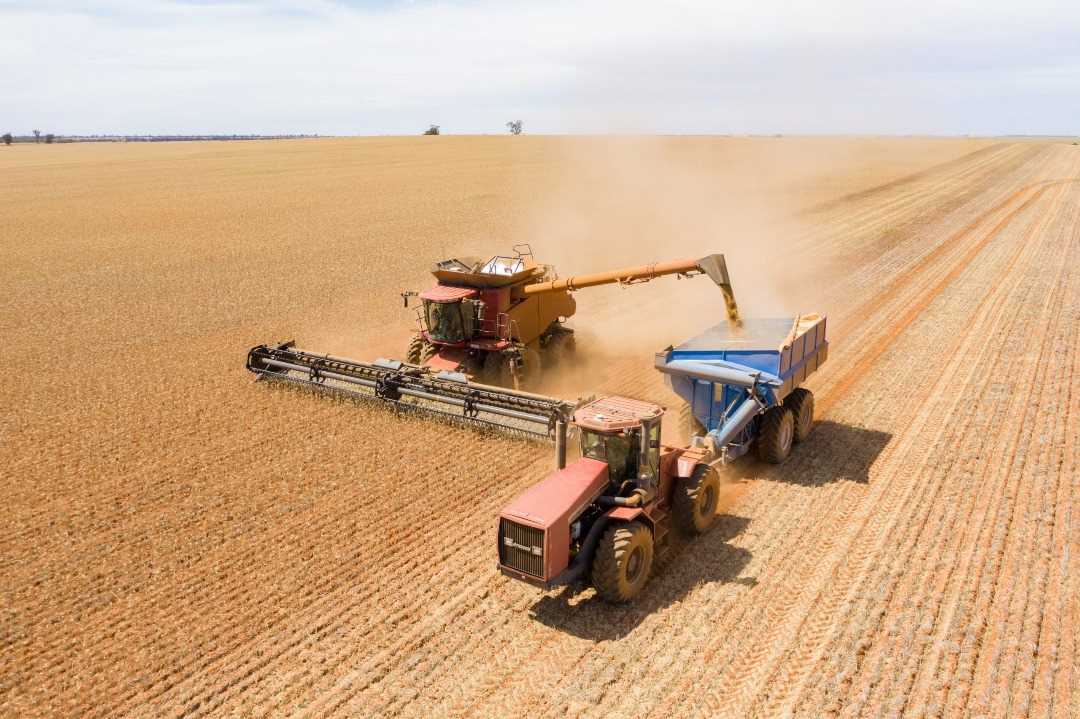
THE Government has mobilised 293 combine harvesters for winter wheat harvesting and strategically deployed the machinery as authorities race to secure the crop while tightening measures against veld fires that could destroy the fields and harvested grain.
Permanent Secretary for Agriculture, Mechanisation and Water Resources Development Professor Obert Jiri, who on Wednesday toured some wheat farms in Zvimba, said harvesting was expected to accelerate over the next three to four weeks as rising temperatures speed up crop drying.
The permanent secretary was assessing progress in harvesting the 2026 winter wheat crop.
“Wheat harvesting has started in earnest. We are officially in the wheat harvesting season following irrigation and quelea bird control, and our farmers have begun harvesting,” Prof Jiri said
“Most of the wheat is now at physiological maturity and drying out. We expect harvesting to escalate in the next three to four weeks as temperatures soar.
‘‘We should see the wheat drying very quickly and combining rapidly as well,” he said.
Prof Jiri said the country had sufficient harvesting capacity, with 293 combine harvesters active and strategically organised into wheat production clusters to facilitate swift deployment to farms where the crop is ready.
“We have organised these combine harvesters into our wheat clusters, so we know exactly where wheat is mature and ready for harvesting, and we deploy the combines to those areas,” he said.
“So far, it is all good. We have already harvested daily, while the others are ready for deployment as the harvesting season gathers momentum.”
With harvesting coinciding with the fire season, Prof Jiri warned farmers against leaving dry wheat stover exposed in fields, saying it could become highly vulnerable to veld fires.
Farmers, he said, should maintain adequate fireguards, establish fire-fighting gangs and quickly bale wheat straw after harvesting.
“Our message to farmers is that they must bale the straw and not burn it,” Prof Jiri said.
He said regulations encourage farmers to treat wheat stover as livestock feed instead of burning it, turning what could become a fire hazard into a valuable resource during the dry season.
“All the stover remaining after wheat harvesting must be converted into feed. Once it is baled, it should be removed from the field and stored safely so that fire incidents do not harm harvested or standing wheat,” he said.
Zvimba North wheat farmer Mr Job Dalu said he had harvested 70 hectares of a 100ha wheat have been harvested.
Mr Dalu attributed the strong crop to timely planting and early mobilisation of inputs and machinery.
“We started planting by April 15 and completed within 10 days.
‘‘All the required inputs and implements were available at the right time, so the crop grew well,” he said.
The farmer is recording an average yield of 7,5 tonnes per hectare, with individual sections producing between 6,5 and nine tonnes per hectare.
“We have already harvested 70 hectares and are left with 30 hectares. By October 1, we want to start planting maize,” Mr Dalu said.
“With the wheat now coming off the fields, bakeries will have supplies and the country is on course for wheat self-sufficiency.”
The rapid transition from wheat harvesting to summer maize planting highlights the intensification of land use under irrigation, as farmers seek to maximise production from the same land while ensuring harvested wheat is secured before the onset of the rains and heightened fire risks.-herald