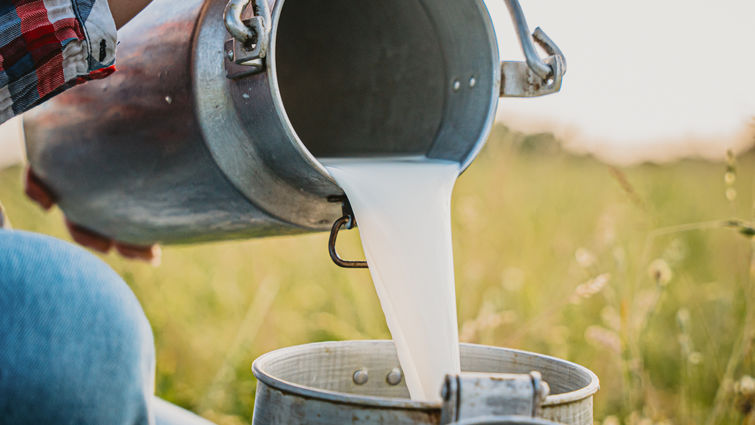
ZIMBABWE’S commercial milk production climbed to 40 million litres in the first four months of the year, marking a seven percent jump from 38 million litres in the same period last year, as efforts to attain milk self-sufficiency intensify.
Statistics from the Dairy Services Unit (DSU) show that milk production has been increasing since January this year compared to the same period last year.
In January 2026, it increased nine percent to 10,6 million litres against 9,8 million litres in the same month last year.
In February, production rose by eight percent to 9,4 million litres from 8,7 million litres during the same period last year.
Similarly, March’s output grew by six percent to 10,2 million litres from 9,6 million litres.
In April production increased five percent to 10,1 million litres, up from 9,6 million litres.
Agriculture, Mechanisation and Water Resources Development Minister, Dr Anxious Masuka, said the country would achieve milk self-sufficiency this year.
Zimbabwe produced 155 million litres of milk in 2025, with 121 million litres being for commercial production and the balance going towards home consumption. The country has made significant progress in revitalising the dairy sector, guided by deliberate policy reforms and strategic investments.
Dr Masuka said the country was targeting commercial milk output to exceed 200 million litres by 2030, in line with the Agriculture Food Systems and Rural Transformation Strategy 2: 2026-2030 (AFSRTS 2), which prioritises increased production and productivity, enhanced sector viability, and expanded value addition and beneficiation.
“From 2026 onwards, the country should be self-sufficient in milk production, with the sector having grown by 129 percent since 2017,” he said.
Last year, the country’s commercial raw milk production rose six percent to 122 million litres from 115 million litres in 2024.
The country requires 131 million litres of milk for self-sufficiency annually.
With stakeholders targeting a 10 percent growth this year, milk output is expected to reach 134 million litres by year-end.
Stakeholders in the dairy industry, however, maintain that milk production has remained significantly below levels recorded in the 1990s, with current output still falling short of national consumption requirements.
Industry representatives acknowledged that farmers have continued to perform commendably despite operating in a challenging economic environment marked by high production costs and limited access to affordable financing.
The positive outlook aside, several structural challenges continue to affect the dairy value chain, including high feed costs, expensive utilities and limited access to key raw materials required for fodder production, competition from illegal imports, the proliferation of counterfeit dairy products and the need for improved veterinary and testing services.
Meanwhile, statistics from the Zimbabwe National Statistics Agency (ZimStat) show that the country’s dairy product imports rose 72 percent to US$8,7 million in the first four months of this year against US$5,1 million in the same time last year.
In volume terms, the imports rose by 54 percent to 2,5 million kilogrammes from 1,6 million kgs.
Zimbabwe Dairy Industry Trust (ZDIT), chairperson Mr Themba Mutsvairo, said the growth in imports was reflective of increasing demand for dairy products as a result of 6,6 percent Gross Domestic Product (GDP) growth in 2025 that spurred economic activity and boosted disposable income and consumption.
“The Government’s blitz on smuggled goods and the grey market has boosted local manufacturing, therefore needing more ingredients for our factories.
“Our capacity as dairy processors is expanding in response to the growing demand; we will continue to deploy a two-pronged approach of supporting the growth of local primary milk production and closing the demand gap through importing dairy ingredients for products that use dairy components,” Mr Mutsvairo said.
As the country sets its sights on becoming a prosperous and empowered upper-middle-income society by 2030, the demand for dairy products is expected to rise as citizens become more knowledgeable on the importance of dairy protein.
Livestock and Meat Advisory Council (LMAC) executive administrator, Dr Reneth Mano, concurred that demand for dairy protein tends to increase when disposable family income rises, as expected by 2030 when the country becomes an upper-middle-income society.
With imports included, Zimbabwe’s per capita dairy consumption is under 10 litres per year and highly concentrated, with wealthy families consuming over 80 to 100 litres per person per year.
Dr Mano said many low-income families removed milk and cheese from their daily diet some years ago.
The LMAC boss said, according to World Health Organisation (WHO) guidelines for low to middle-income countries, the target was 45 litres of dairy milk equivalent per person per year.-herald