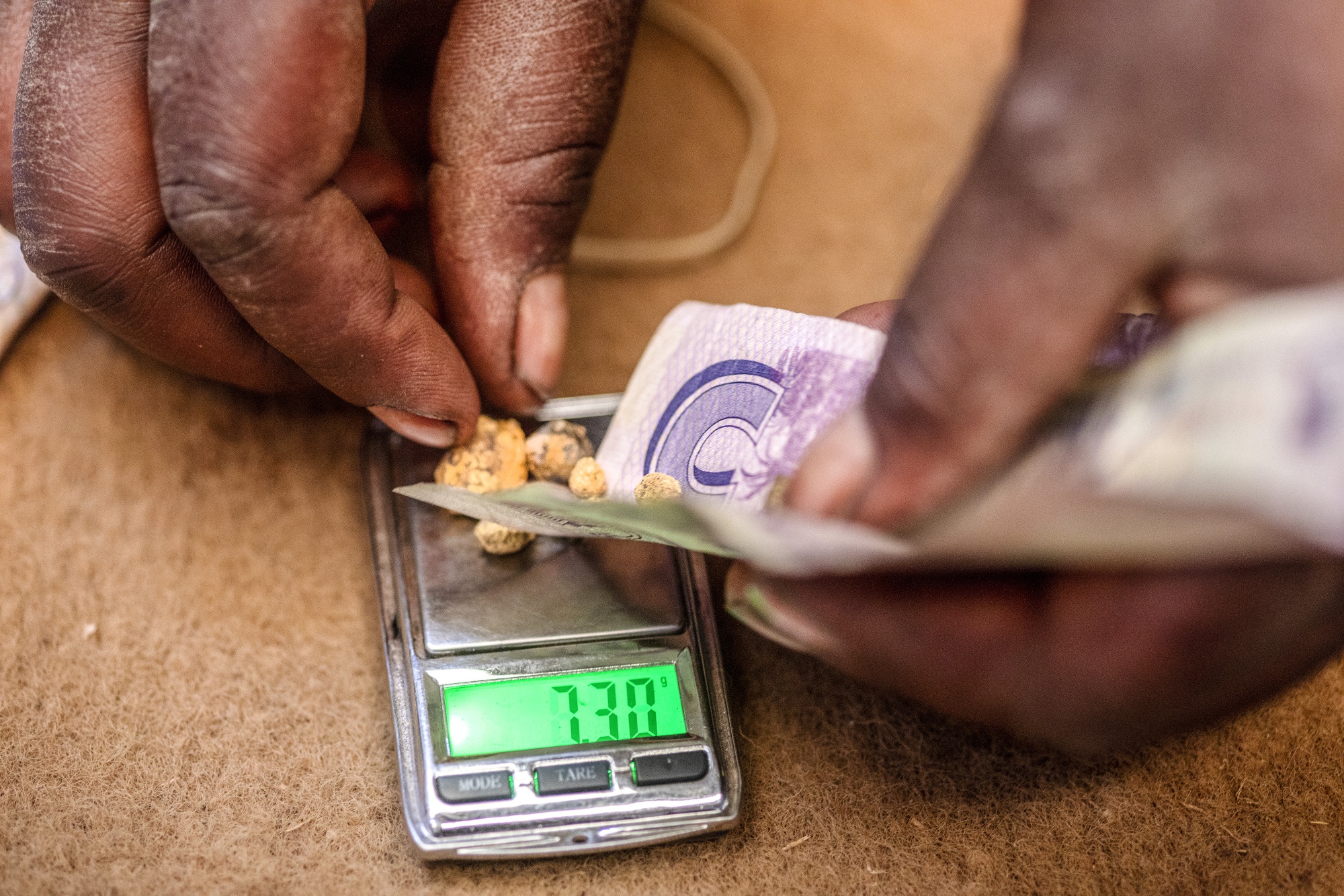
GOLD deliveries to Fidelity Gold Refinery between January and September this year reached 35,88 tonnes, translating to about 71,8 percent of the 50-tonne goal and leaving a 14,12-tonne gap for the final three months of the year.
Zimbabwe must now pull off a final-quarter push and realise at least 14,12 tonnes by December to hit its baseline production target of 50 tonnes, based on deliveries through September.
While reaching the upper end of the 50- to 55-tonne target range might be a long shot requiring a 60 percent average leap in monthly output, achieving the lower 50-tonne threshold remains well within reach.
To achieve the 50-tonne mark, deliveries need to average about 4,71 tonnes per month through December— an 18 percent increase over the year-to-date monthly average of 3,99 tonnes.
Crucially, the fourth-quarter production slump that typically accompanies the onset of the summer rainy season is expected to be muted this year, with projected delayed rains allowing small-scale and artisanal miners to maintain strong operational momentum into the final quarter.
Over the nine months to September, artisanal and small-scale miners delivered a weighty 25,78 tonnes — nearly 72 percent of total gold purchases — compared to 10,1 tonnes from the large-scale miners.
Quarterly output expanded steadily through the year, rising from 9,31 tonnes in the first quarter to 12,09 tonnes in the second, before peaking at 14,48 tonnes in the third quarter, figures show.
While monthly deliveries eased to 4,72 tonnes in September, following August’s peak of 5,12 tonnes, underlying run-rates remain historically strong.
Even under a conservative scenario where monthly output averages around four tonnes through
December, full-year output could comfortably exceed 47,8 tonnes, thus eclipsing last year’s record of 46,7 tonnes.
Gold is Zimbabwe’s primary export mineral and main foreign-currency earner. The country sits on vast greenstone belts that host more than 4 000 documented gold deposits, sharing geological characteristics with major mining jurisdictions in Western Australia and Canada.
Beyond direct foreign exchange earnings, gold has assumed a central structural role in Zimbabwe’s economy following the introduction of the gold-backed currency, the Zimbabwe Gold (ZiG).
The Reserve Bank of Zimbabwe relies heavily on physical gold reserves to anchor the ZiG’s exchange rate.
Government policies, including competitive payout ratios in foreign currency and dedicated support funds for small-scale miners, have encouraged miners to sell through formal legal channels rather than informal cross-border routes, significantly boosting official gold deliveries.
Sustained high global gold prices have also resulted in fresh capital into the sector.
Strong international market trends have created a favourable tailwind for miners, encouraging primary producers to invest in expansion projects, underground exploration and dump retreatment operations.
Major corporate players, including Caledonia Mining Corporation (operator of the Blanket Mine),
Kuvimba Mining House and Dallaglio Investments, continue to execute multi-million-dollar expansion plans.
These investments focus on deep-level shaft sinking, solar power installations to offset grid instability and modernising processing plants to boost efficiency.
With global safe-haven demand keeping gold prices at or near historic highs, Zimbabwe’s gold sector is positioning itself to cement 50 tonnes as its new record and make a sustained push towards 55 tonnes in the near term.-herald