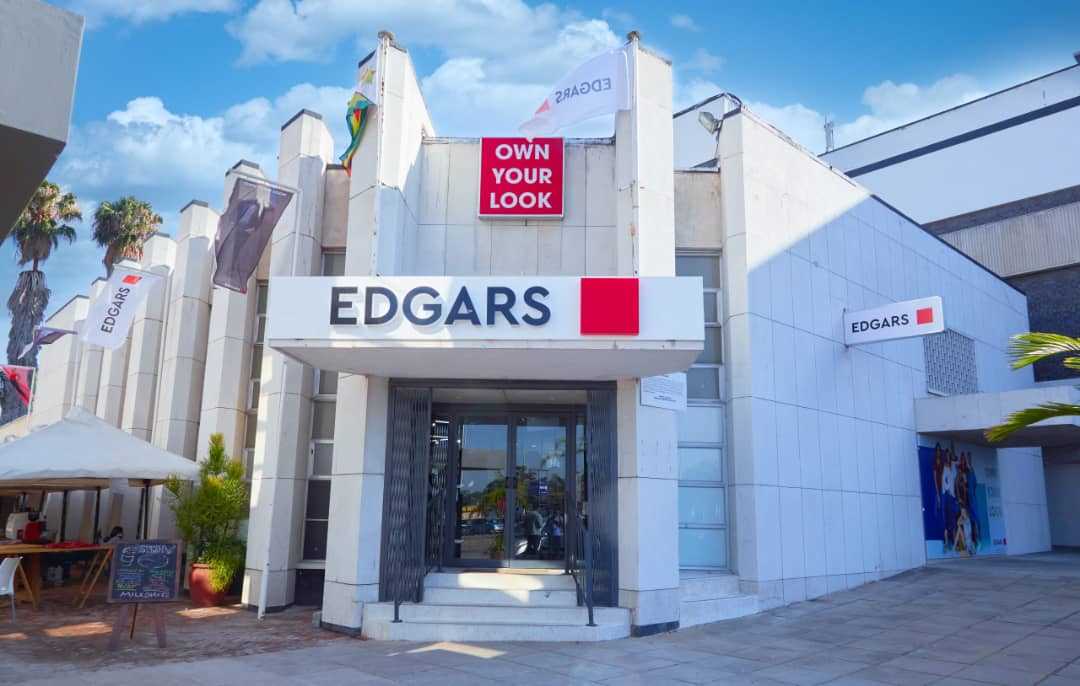
CLOTHING retailer, Edgars Stores Limited’s revival of its Express stores is paying dividends as the company captures cost-conscious shoppers, helping offset the impact of the second-hand clothing market while driving significant growth.
Strategically located in high-traffic areas across the country, the Express stores form part of the group’s expansion strategy aimed at increasing its retail footprint and competing more effectively in the low-cost clothing segment.
Minister of State for Bulawayo Metropolitan Province Hon Judith Ncube is accompanied by JOC members as they tour Edgar’s Carousel Factory on Tuesday. -Picture: Joshua Muswere
Giving an update to the Minister of State for Bulawayo Provincial Affairs and Devolution, Cde Judith Ncube, during a visit to Carousel Factory on Tuesday, Carousel managing director Mr Menfree Tanyanyiwa said the company was focusing on introducing affordable clothing capable of competing with second-hand clothes popularly known as amabhele or mabhero.
“We brought back the Express stores specifically to target the lower end of the market. We want to take head on that market where people are going to amabhele/mabhero.
“We want to be able to sell things in the Express stores for US$2 or US$3, and only that the difference is that these items will be brand new as opposed to second-hand clothing. So, we were trying to regain our market share, as it were, by also targeting that end of the spectrum,” he said.
“We rebirthed the Express Chain, which used to be there back then. At some point, what we are now calling Jet was called Express. Then we rebranded to Jet, so then we had now two chains and we are now back to having three chains, Edgars, Jet and Express.”
Mr Tanyanyiwa said Carousel Factory currently employs 581 workers, with 537 directly involved in production.
Of these, 353 are women, representing 65.7 percent of the workforce.
He said the company anticipates increasing employment levels to more than 650 workers by August as preparations begin for the peak summer trading period.
“Clothing generally sells much, much more during your October, November, December period and from a manufacturing perspective, we need then to have produced those items around about September and October. This then allows us to have the merchandise in store in time for high Christmas trade,” he added.
Meanwhile, Government has gazetted regulations banning the importation of second-hand clothing except where importers have obtained valid permits authorising imports strictly for charitable purposes.
The regulations are contained in Statutory Instrument 59 of 2026, the Control of Goods (Import and Export) (Commerce) (Amendment) Regulations, which provide the legal framework for enforcing the ban.
Government has argued that restricting second-hand clothing imports is aimed at reviving Zimbabwe’s textile and clothing industry, which has struggled to compete against cheap imported alternatives.-herald