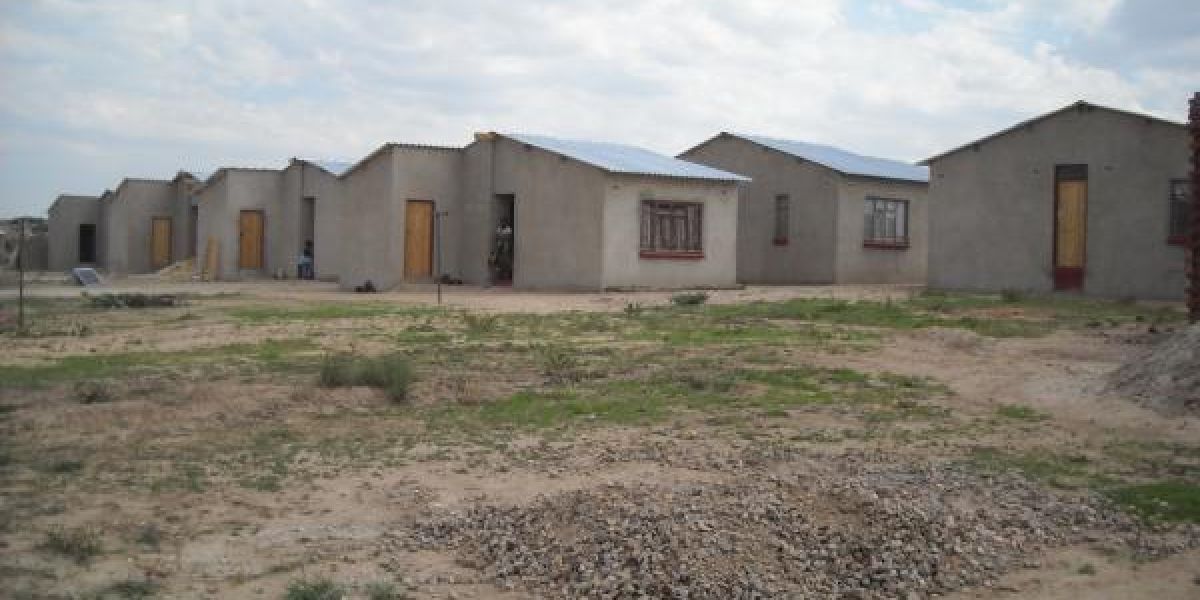
An association of property developers has called for a comprehensive overhaul of Zimbabwe’s planning laws, arguing that outdated regulations rooted in the colonial era constrain housing development and urban growth.
According to the Property Developers Association of Zimbabwe (PDAZ), the country’s current planning framework fails to keep pace with rapid urbanisation and growing demand for housing.
The call comes as Zimbabwe grapples with a housing backlog estimated at more than 1,5 million units, rising property prices, and increasing pressure on urban infrastructure. Developers say reforming planning laws could unlock investment, accelerate housing delivery and improve affordability, particularly for low- and middle-income earners.
Property developers argue that restrictive regulations and lengthy approval processes limit investment and slow efforts to address the country’s housing deficit.
PDAZ interim chairperson Arnold Khanda told NewsDay Business that Zimbabwe’s planning framework must be reviewed to unlock growth in the property sector and help address the country’s housing challenges.
Advertisements
“The Regional, Town and Country Planning Act of 1976, which was reviewed in 1996, is based on a pre-independence Zimbabwe that was structured around racial segregation,” he said.
“The black majority were confined to the high-density suburbs we now refer to as ‘kughetto’, while whites were free to buy large, low-density stands.”
Khanda said that although racial barriers were removed after independence, planning regulations continue to reinforce social class divisions.
“The planning ethos still associates small residential stands with lower-income communities, and this mindset needs to change,” he said.
He argued that automatic densification should be permitted without lengthy application processes, saying this would increase housing supply and promote more efficient land use.
According to PDAZ, reforming planning regulations would stimulate investment in property development while making urban housing more accessible and affordable for Zimbabweans.
“The association is in active dialogue with the Ministry of Justice, Legal and Parliamentary Affairs, the Ministry of National Housing and Social Amenities, and the Ministry of Finance,” Khanda said.
“We are working alongside the Real Estate Institute of Zimbabwe, the Estate Agents Council and the Valuers Council to promote professional integrity and a fair property market.”
He also stressed the need to urgently address the national housing backlog to prevent worsening affordability challenges.
“The national housing backlog exceeds 1,5 million units, and urban property prices have increased by 40% over the past five years,” Khanda said.
“To put it in layman’s terms, the houses that need to be built outnumber the houses that have been built. There is no room for fumbling or hesitation, as this shortage, if left unattended, will lead to higher prices and social unrest.”
Research by UK-based realtor Knight Frank confirms that Zimbabwe’s residential property market is characterised by a significant housing deficit.
“Development activity is dominated by informal, unregulated housing projects that often lack adequate infrastructure, including roads, water, sewerage, and electricity. This places increasing strain on existing urban infrastructure, which was not designed to accommodate current population growth,” Knight Frank said in its Africa Report 2026/27.
“Depending on location, medium- to low-cost serviced land is priced between US$18 and US$65 per square metre. Supply remains limited, with very few developments delivering fully serviced housing projects of more than 1 000 units despite steadily rising demand.
“High-density housing units are transacting within the US$25 000 to US$45 000 range, while properties targeting the middle-income segment are priced above US$45 000.”
In the upper market segment, average prices stand at approximately US$100 000 across most cities, rising to around US$500 000 in prime suburbs such as Borrowdale in Harare.
“Overall, demand remains strongest in the low- and middle-income segments, with the majority of transactions conducted on a cash basis due to limited access to mortgage financing,” Knight Frank said.-newsday