RioZim Limited widened its losses during the year to December 2025 after gold production plunged by 80 percent, limiting its ability to capitalise on the record-high bullion prices.
The Zimbabwe Stock Exchange-listed diversified miner has been buckling under prolonged operational and financial constraints, attributable to various challenges.
RioZim is among entities that have often cited the impact of the central bank’s export retention policies, which required the company to surrender a 30 percent portion of its foreign currency earnings for local currency, as eroding profit margins.
Additionally, frequent foreign currency shortages and delayed payments from key debtors have hindered liquidity.
A shift in ore type at the flagship Cam & Motor mine — from oxide to refractory sulphide — required a massive US$35 million capital investment for new infrastructure. In the absence of the required fresh capital injection, persistent plant breakdowns, severe power outages and equipment downtime drastically reduced output and profitability.
Notably, though, while RioZim has struggled for viability, fellow industry giants like Blanket Mine have seen remarkable success — evidenced by consistent production exceeding 75 000 ounces per annum — stemming from continuous capital investment, including the completion of its Central Shaft and a dedicated solar power plant.
RioZim has struggled to attract external investment while local lenders could only offer short-term, high-interest loans.
The group recorded a net loss of ZiG739,1 million during the review period, compared to ZiG628,5 million in the same prior period last year, as its flagship gold mining operations remained inactive.
The tragic passing of the majority stakeholder, Mr Harpal Randhawa, in 2023 caused some leadership uncertainty.
Subsequently, the company was hit by severe allegations of financial impropriety, including asset stripping, unremitted statutory/pension deductions and unpaid employee salaries, which led to court battles and corporate rescue applications.
However, the management says it remains focused on securing funding and implementing a turnaround programme.
Total gold production fell to 84 kilogrammes (kg) in 2025 from the 428kg achieved in 2024, representing an 80 percent decline.
A significant drop in output meant the company was unable to fully benefit from strong international gold prices, which continued their historic rally in 2026 amid heightened geopolitical tensions, global economic uncertainty and sustained purchases by central banks seeking safe-haven assets.
The group’s performance was further affected by a protracted legal dispute after the Zimbabwe Diamond and Allied Minerals Workers union filed an application seeking to place the company under corporate rescue.
According to RioZim, the dispute delayed the implementation of critical initiatives under its turnaround strategy and created uncertainty around the group’s recovery plans.
The court application by workers was ultimately after the reporting period, clearing the way for management to proceed with its recovery programme and recapitalisation efforts.
“Total production declined by 80 percent from 428kg in 2024 to 84kg in 2025. As a result, the company was unable to fully benefit from favourable gold prices. The group recorded a net loss of ZiG739,1 million for the year, compared to a net loss of ZiG628,5 million in the prior period.
“However, the board believes that the combination of robust funding arrangements, renewed operational activity at both Renco and Cam and Motor and favourable gold prices will drive the group’s recovery and return to profitability,” said RioZim chairman Mr Caleb Dengu in the group’s financials for the year to December 2025.
During the year under review, RioZim’s gold operations at Renco Mine and Cam & Motor Mine remained subdued, as management pursued recapitalisation initiatives to restore optimal production capacity.
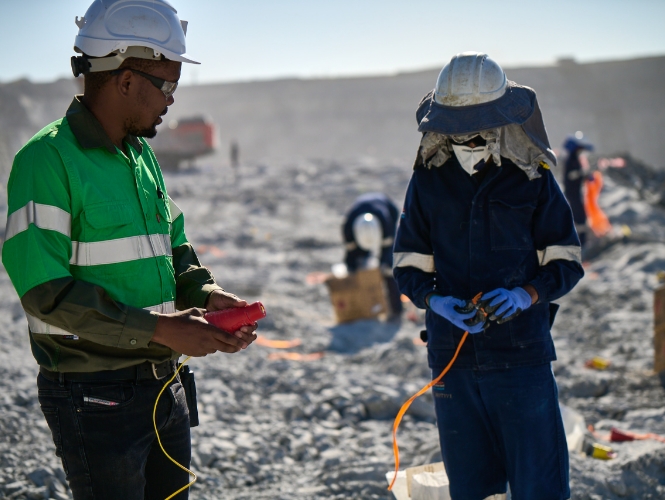
Renco Mine resumed operations during the final quarter of last year under a contract mining arrangement with a third-party operator.
The mine produced 84 kilogrammes of gold, accounting for the group’s entire output for the year.
Kadoma-based Cam & Motor Mine did not record any gold production during the period.
The prolonged shutdowns and reduced activity levels significantly constrained revenue generation at a time when international gold prices were reaching unprecedented levels.
While gold mines globally have benefited from the elevated bullion prices, companies facing operational and capital constraints have struggled to translate the favourable market environment into improved earnings.
Beyond gold, RioZim continued its efforts to unlock value from other assets within its portfolio as part of its broader turnaround strategy.
The Empress Nickel Refinery remained under care and maintenance, with management continuing engagements with potential strategic partners to identify sustainable pathways for restarting operations.
The refinery has remained idle for several years due to viability challenges and the need for substantial capital investment.
In the chrome segment, RioZim pursued a low-capital strategy focused on extracting value from its chrome claims in Darwendale.
The company entered into collaborative agreements with third-party contractors, enabling mining activities to commence without significant capital expenditure from the group.
The group’s recovery prospects now hinge on the successful revival of production at both Renco and Cam & Motor mines, improved access to funding and the continuation of favourable gold market conditions.
With the corporate rescue application now resolved and operational activity gradually resuming, RioZim is positioning itself to rebuild production levels and restore profitability after one of the most challenging periods in its recent history.-herald