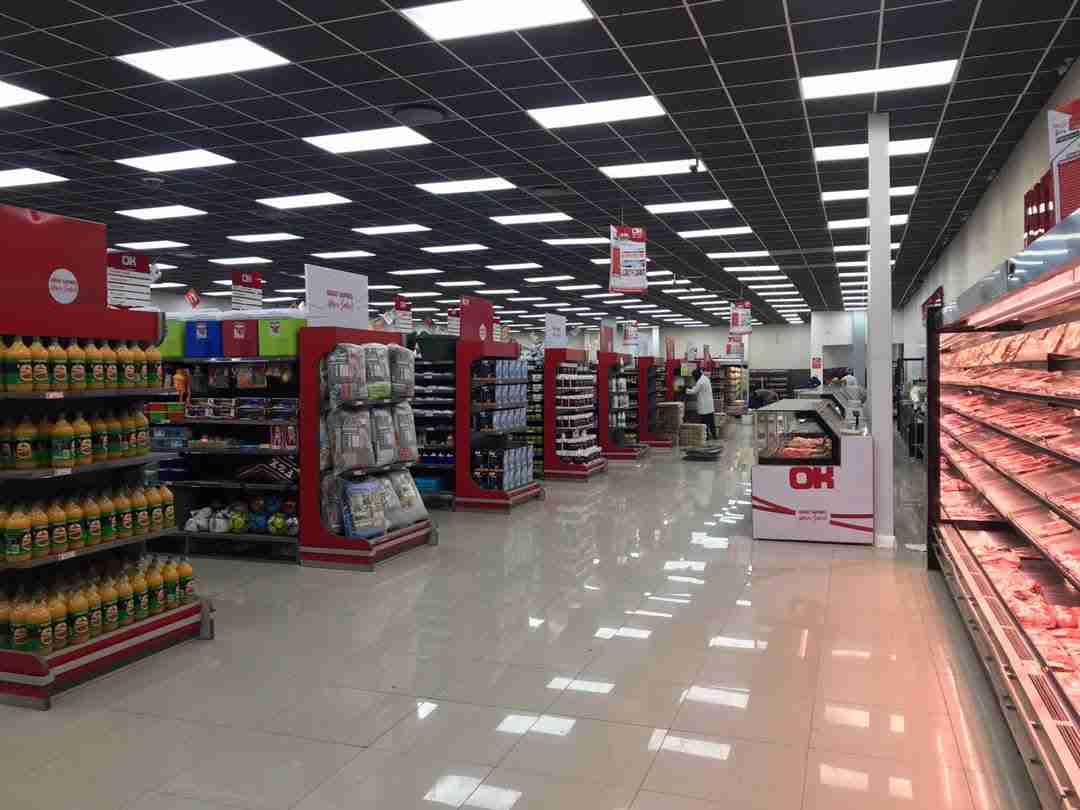
Creditors and shareholders of OK Zimbabwe Limited will hold their first meeting next week following the retailer’s placement under corporate rescue on March 2, 2026, as efforts to stabilise the struggling supermarket group get underway.
Grant Thornton corporate rescue practitioner Mr Bulisa Mbano said in a notice that the inaugural meeting of creditors and members will be held on March 18, marking the first key step in the formal rescue proceedings to rescue the stuttering retailer’s operations.
Mr Mbano, who was appointed corporate rescue practitioner after the company was placed under business rescue in terms of the Insolvency Act, said the meeting will allow stakeholders to formally engage in the process.
“The first meeting of creditors and members of the company will be held on the 18th of March 2026. The meeting is for proof of claims, an overview of the corporate rescue proceedings, a statement from the Master of the High Court regarding reasonable prospects of rescuing the company and the appointment of a committee of creditors,” he said.
Under the corporate rescue framework, the practitioner assumes oversight of the company’s affairs and implements measures aimed at restoring financial stability.
Mr Mbano said that during the corporate rescue process, legal proceedings against the retailer will be temporarily halted unless authorised by the practitioner.
“During the corporate rescue proceedings, no legal proceeding, including enforcement action, against the company or in relation to any property belonging to the company, or lawfully in its possession, may commence or proceed without the authority of the corporate rescue practitioner,” he said.
Corporate rescue is designed to provide financially distressed companies with temporary protection from creditors while restructuring plans are developed to restore viability.
Experts say in many cases, companies delay seeking corporate rescue until their financial position has significantly deteriorated, making it more difficult to revive operations.
By the time rescue proceedings begin, struggling firms may have already experienced asset stripping, declining employee morale, reduced supplier confidence and the suspension of some business operations; hence, these factors can increase both the time and cost required to successfully rehabilitate an insolvent company.
The updated insolvency framework also introduces stronger accountability measures for company directors.
Under the law, directors can be held liable for allowing a company to incur debts when they know, or reasonably suspect, that the company will not be able to repay them, a practice commonly referred to as insolvent trading.
The provisions are intended to encourage early intervention and responsible corporate governance by prompting boards to initiate rescue proceedings before financial distress becomes irreversible.
In a sworn affidavit supporting the corporate rescue, OK Zimbabwe board chairperson Mr Charles Msipa said the retailer’s financial challenges intensified despite efforts to strengthen its balance sheet.Investment in Zimbabwe
Mr Msipa noted that the company raised US$20 million through a rights offer approved by shareholders in July 2025, but the capital injection failed to fully restore supplier confidence.
A board resolution, dated February 23 and signed by all directors, indicated that declining supplier credit had led to significant stock shortages in stores, triggering a sharp fall in revenue and cash flows.
Mr Msipa said part of the funds raised through the rights offer were used to reduce creditor debt, while the remainder was allocated to working capital, capital expenditure and transaction costs.
However, suppliers continued to limit credit extension, worsening stock availability across the retailer’s outlets.
Despite the financial distress, the board maintains that the company remains viable and capable of recovery.
According to Mr Msipa, the retailer still holds significant assets, including property, equipment, skilled employees, a loyal customer base and extensive industry knowledge, which could be leveraged to restore operations to sustainable levels under the corporate rescue process.-herald