The Government has assured farmers that the Grain Marketing Board will pay for grain and oilseed deliveries within 30 days of delivery, starting this season.
The grain marketing season starts on April 1.
Deputy Chief Secretary to the President and Cabinet, Dr Willard Manungo, yesterday said GMB was clearing all outstanding payments owed to farmers.
“The GMB is clearing all outstanding payments owed to farmers. As articulated by the Government under the National Development Strategy 2 (NDS2), payments for future deliveries to the GMB will be honoured within 30 days of delivery,” he said.
The Government’s role in the agriculture markets through GMB will remain limited to the purchase and management of the strategic grain reserve and providing storage facilities for the Zimbabwe Mercantile Exchange (ZMX).Zimbabwe travel guide
According to the 2026 National Budget Statement, the Government is targeting the procurement of a strategic grain reserve of about 500 000 tonnes to increase the stock levels to over 1,5 million tonnes over the medium term.
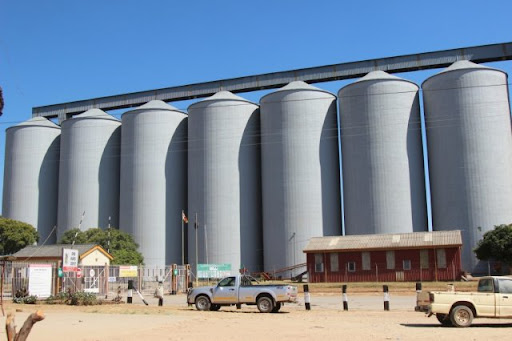
GMB has called on farmers and processors to take advantage of its grain trade and storage model, where it introduced third-party storage leveraging on its current silo storage capacity of 862 000 tonnes, with an additional 672 000 tonnes under construction.
The parastatal has reduced storage fees to encourage grain processor participation, while contractors can participate by allowing their farmers to deliver grain to the nearest GMB depot, thereby reducing costs and minimising side marketing.
Farmers and other players in the industry have raised concerns over delays in payments for the grain deliveries by the GMB.
Stakeholders in the Zimbabwe Agricultural Think Tank (ZATT) social group are optimistic that adequate funding of GMB will see the agricultural economy explode.
ZATT secretary general, Mr Taruvinga Magwiroto, after providing farmers with inputs, GMB should complete the transaction by paying farmers on time.
“If we want to achieve ‘food security every day everywhere,’ and not just talk about it, we need to fix GMB.
“We need to capacitate GMB so that it becomes once again the viable market for the smallholder farmers in Nyajena, Dotito, Magunje, Buhera and Nembudziya, among others,” he said.
Mr Magwiroto emphasised the need to introspect on the conditions that ensure national food security, those who drive this security and policies that can empower these contributors.
An agricultural expert, Dr Reneth Mano, said the ministries of Lands, Agriculture, Fisheries, Water and Rural Development and Finance, Economic Development and Investment Promotion ought to take full responsibility for ensuring farmers are paid on time.
“When farmers fail to repay their loans on time, their domestic credit ratings are irreversibly undermined and future capacity to access commercial loans from banks is compromised,” he said.
Dr Mano said the Treasury should consider compounding any outstanding balances that GMB owed to farmers using the prevailing monthly lending rate used by the commercial banks to take account of the time value of money.
“To restore the reputation of GMB as farmers’ preferred market, GMB must restrict itself to buying grain strictly when it has the cash in its trading account to pay cash within seven to 14 days of delivery,” he said.
Dr Mano said in cases where the Treasury was slow in releasing money, GMB has to take some business measures to protect its reputation from further damage.
“One strategy for managing such inevitable cash flow challenges is for the board to take full advantage of the strategic business partnership with Zimbabwe Mercantile Exchange (ZMX) warehouse receipt system and daily spot market auction.Zimbabwe travel guide
“The ZMX marketing institution brings new financing options that GMB can utilise to ensure timely cash payment for all grains that farmers deliver to GMB,” Dr Mano said.
Under the Agriculture Food Systems and Rural Transformation Strategy 2 (AFSRTS 2) 2026-30, GMB is morphing into being the grain supply chain manager for the nation by ensuring timeous inputs distribution, receiving local strategic grain resources (SGR) on behalf of communities during surplus years and being a competitive buyer for the national SGR.
The board will offer state-of-the-art logistics, storage and warehousing services for the Government and private sector.
“It will use its extensive depot network for commercial agri-services for the benefit of rural farmers and stabilising food prices through appropriate market intervention.
“GMB’s massive real estate must be sweated to generate cash flow required to energise the transformation of GMB into a full commercial entity, weaned from fiscus funding by 2027,” read AFSRTS 2.-herald