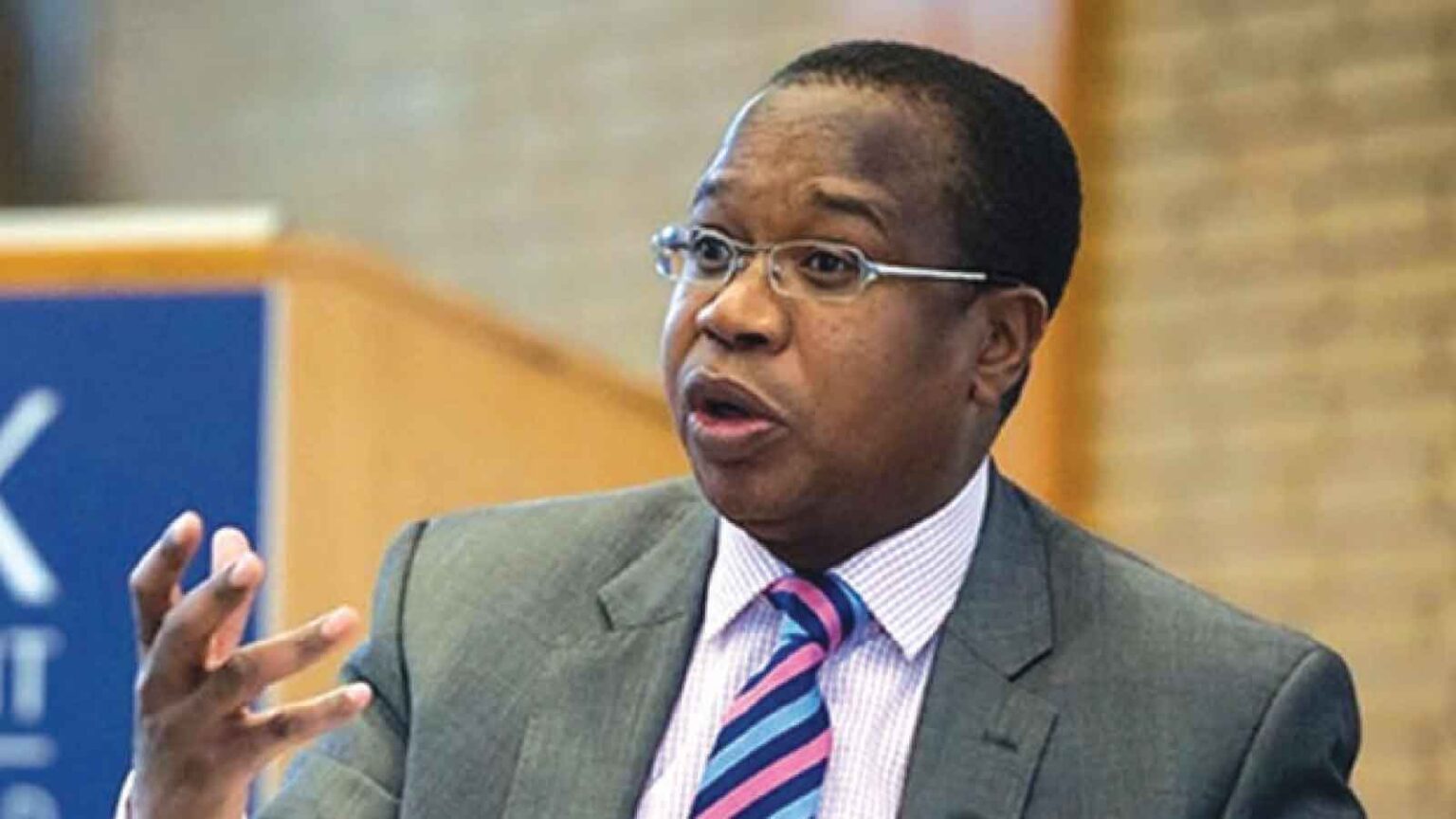
ZIMBABWE’s economy is on track to surpass initial growth projections, with Finance, Economic Development and Investment Promotion Minister Professor Mthuli Ncube expressing strong confidence in a 5 percent expansion this year, underpinned by macroeconomic stability and unexpected gains from global commodity shifts.
Already basking in a good cropping season, the country is set to achieve a bumper harvest this year, with value chain impact on the productive sector, while other key sectors such as mining, tourism and manufacturing are also set on a solid footing.
In an exclusive interview last Friday, Prof Ncube revealed that the final growth figures for last year are also set to be revised upwards, exceeding the initial forecast of 6,6 percent.
He attributed the country’s resurgence to a newly established synergy between monetary and fiscal authorities, which has tamed inflation and created a predictable environment for business planning.
“We are confident that the growth projections will be met. I expect a growth rate of five percent and above. We should be able to meet that,” said Prof Ncube.
“In fact, the growth for last year will be higher than even the 6,6 percent that we have projected. We are just waiting for Zimstats to finalise their numbers, but it will be higher.”
The optimistic trajectory is being maintained despite significant turbulence in the global geopolitical landscape, which has recently unsettled oil prices and trade patterns.
Prof Ncube acknowledged that tensions in the Middle East and Eastern Europe pose a double-edged sword for the domestic economy.
While these conflicts introduce uncertainty and risk, Zimbabwe is emerging as a net beneficiary in key sectors, he stated.
Prof Ncube said the flight to safety by international investors during times of geopolitical strife is driving up the price of gold and as a significant gold producer, Zimbabwe is capitalising on this trend.
Crucially, the benefits are being felt at the grassroots level, with small-scale producers accounting for approximately 60 percent of the nation’s gold output.
“The uncertainty tends to shift investors towards gold. So, being a gold producer for Zimbabwe, we are benefiting actually from such crises as gold prices keep going up.
“Sixty percent of our gold is produced by small-scale producers. So, this is benefiting our ordinary economic players, and that’s a positive thing,” he said.
Furthermore, Prof Ncube said key commodity destination markets for Zimbabwean exports remain robust, insulating the country from a more severe global economic slowdown.
However, he was candid about the primary downside risk emanating from the global turmoil, which is the spike in international oil prices.
As a net importer of fuel, Zimbabwe is not immune to these shocks. The recent adjustments to local petrol prices were cited as a direct consequence of this external pressure.
Prof Ncube then detailed the Government’s interventionist approach to shield citizens from the full brunt of these increases.
He said mechanisms such as taxes and reserve levies are being deployed to cushion consumers.
“On the downside, of course, is the issue of the oil price, which has spiked up. We have seen the petrol prices being increased also locally in response to that. We do not manufacture those things; we import,” he said.
“So, that’s an issue, and we try to use our taxes and reserve levies and so forth to try to cushion citizens.
“But some of that price increase passes through to the citizens. It’s unavoidable. We do everything we can to protect our citizens.”
Despite these imported inflationary pressures, Prof Ncube said the foundation for the projected growth is the hard-won macroeconomic stability achieved through close coordination between the Treasury and the Central Bank.
He argued that this stability allows companies to plan with greater certainty, fostering an environment ripe for investment and expansion.
By keeping inflation low and predictable, the authorities are creating the fertile ground needed for the private sector to thrive.
“And now that we have macro-economy stability, strong collaboration and coordination between monetary and fiscal authorities, we expect inflation to remain low, and that will then create the right environment for growth to come through,” said Prof Ncube.-herald