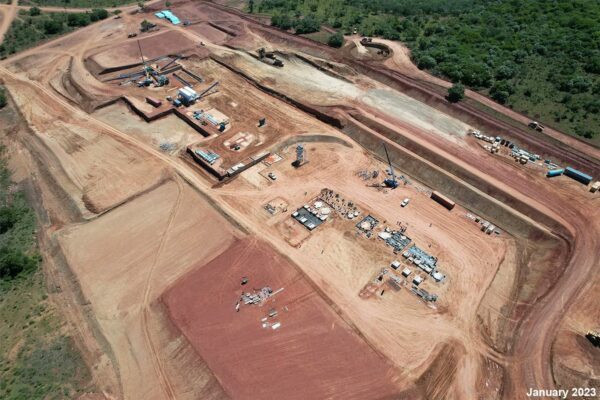

Forex retention rules trap US$114m in Unki earnings
THE Reserve Bank of Zimbabwe (RBZ) and Zimbabwe’s Treasury owe ZAR1,9 billion (US$114,15 million) to Valterra Platinum Limited from export proceeds generated by its Unki Platinum Mine, forcing the platinum producer to recognise credit losses totalling ZAR572 million (US$34,38 million).
The obligation stems from the RBZ’s 70%/30% export retention rule, under which exporters surrender 30% of proceeds for local currency. Delays in accessing these funds have frustrated miners, with Zimplats Holdings revealing the RBZ was holding US$78,1 million in deferred liquidation accounts.
The debt highlights growing concerns over Zimbabwe’s export retention policy, which locks up a portion of foreign currency earnings and strains cash flows in the country’s capital-intensive mining sector.
Unki Platinum Mine generated ZAR8,05 billion (US$485,34 million) in net revenue for the period ended December 31, 2025, an increase of nearly 8% from the prior year. Total expenses were recorded at ZAR5,38 billion (US$323,47 million) over the same period, down nearly 11% from the prior year.
Advertisements
Valterra, which is based in South Africa, owns Unki Mine and a smelter in Zimbabwe.
“Other receivables include amounts due from the Reserve Bank of Zimbabwe and the Ministry of Finance, Economic Development and Investment Promotion of Zimbabwe arising from the conversion into local currency of a portion (30%) of Unki’s export proceeds,” Valterra said in its annual report for the period ended December 31, 2025.
“During 2025, difficulties were experienced in accessing, on demand, the full portion converted into local currency. Due to a lack of accessibility to the funds, the amounts are no longer considered to meet the requirement of being readily convertible into cash.”
Valterra said that as these balances no longer met the definition of cash and cash equivalents under IAS 7 statement of cash flows, ZAR1,099 million (US$67,17 million) was reclassified from cash and cash equivalents to other receivables during the year.
- Rampaging inflation hits Old Mutual . . . giant slips to $9 billion loss after tax
- Monetary measures spur exchange rate stability: RBZ
- Zim deploys IMF windfall to horticulture
- Banker demands $21m from land developer
“Receivables from the RBZ and Ministry of Finance, Economic Development and Investment Promotion of Zimbabwe totalled R1,904 million at 31 December 2025, before expected credit losses, and are expected to be settled within a period of two years,” Valterra said.
“Expected credit losses of R9 million (2024: R30 million) were raised on trade receivables and R572 million (2024: Rnil) on other receivables.”
Valterra said that in determining the expected credit losses on receivables from the RBZ and the Ministry of Finance, several key judgments and estimates were made.
“The cash flows are expected to be received over a period of two years, the timing of which was considered in arriving at the cumulative default rates applied,” Valterra said.
“A weighted average probability of default was estimated, applying a range of typical cumulative default rates that correspond to distressed sovereign credit ratings that are publicly available. The default rates ranged from 20% to 40%. A 5% increase in the probability of default would result in a ZAR95 million increase in the expected credit loss.”
Unki recorded retained earnings of ZAR9,71 billion (US$584,73 million) for the period under review, down from the prior year’s ZAR9,867 billion (US$593,65 million), which would attract a withholding tax of 10% if distributed.
“Cash held in ZiG and by the RBZ can only be utilised in Zimbabwe, therefore, these amounts are not available for use by the company and its other subsidiaries,” Valterra said.
Valterra’s local non-current assets totalled ZAR6,49 billion (US$418 million) as of the end of 2025.
Both the RBZ and the Zimbabwe Treasury are yet to comment on these debts.