ZIMBABWE’S foreign currency reserves are projected to reach US$2,2 billion by year-end, after more than doubling to US$1,5 billion in June 2026, from US$697 million at the same time in 2025, as the country bolsters its external reserve position, Finance Minister Professor Mthuli Ncube, has said.
A strong gold and foreign currency reserve position is expected to reinforce Zimbabwe’s capacity to support currency stability, meet essential import requirements and withstand external economic shocks.
Higher reserves provide the Reserve Bank of Zimbabwe (RBZ) with a sufficient buffer to intervene in the foreign exchange market, facilitate legitimate foreign payments and provide adequate backing for the Zimbabwe Gold (ZiG) currency.
Speaking at the 2027 National Pre-Budget Seminar in Bulawayo on Wednesday, Minister Ncube said the developments have boosted foreign currency inflows and improved the country’s external position.
“Our gold and foreign exchange reserves have doubled from US697 million in June 2025 to US$1,5 billion in June 2026, and are projected to reach US$2,2 billion. Our reserves now cover roughly 4 times the entire stock of ZiG reserve money and market deposits,” Minister Ncube said.
He noted that for the full year, the current account surplus is projected to reach US$3,9 billion in 2026, up from US$2,1 billion in 2025.
Minister Ncube said the strength of exports and remittance inflows reflected in the country’s improved current account position. During the first half of 2026, Zimbabwe recorded a current account surplus of US1,1 billion, compared with US$248,2 million during the corresponding period in 2025.
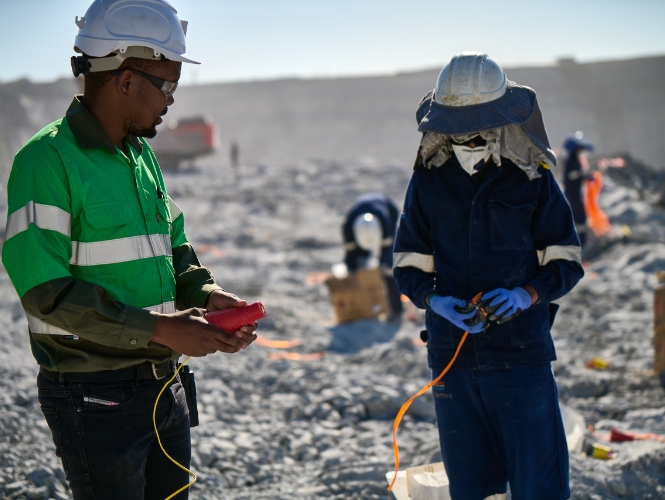
“This improvement was supported by a 47,8 percent increase in foreign currency receipts, which reached US$10,7 billion. Exports accounted for 70,3 percent of these receipts, while remittances contributed 14,4 percent. The improvement reflects the combined benefits of strong diaspora remittances and higher gold and platinum group metals prices,” he added.
The Treasury chief said domestic factors shaping inflation and exchange rate developments stem from a prudent monetary policy, which continues to contribute to price and exchange rate stability.
He noted that the bank policy rate was reduced from 35 percent to 30 percent in June 2026 and further down to 27,5 percent in September 2026, reflecting a structural shift towards low and stable inflation.
Commenting on statutory reserve requirements, he stated: “They are maintained at 30 percent for demand and call deposits and 15 percent for savings and time deposits, for both local and foreign currency deposits. “Prudent money supply and liquidity management continued to be supported by open market operations.”
Regarding open market operations, Minister Ncube said Non-Negotiable Certificates of Deposit (NNCDs) were employed and the ZiG Denominated Term Deposit Facility (ZiGDTDF) was operationalised in 2026 to absorb excess liquidity.
He added that in line with National Development Strategy 2 (NDS2) priorities, the Government will continue to pursue fiscal consolidation in 2027, focusing on three targets.
These entail achieving an overall budget deficit of less than 3 percent of Gross Domestic Product (GDP) ensuring public resources are directed toward programmes and projects that accelerate economic transformation and promoting inclusive growth while improving the overall quality of life for the general citizenry.
“To advance the economic transformation agenda under NDS2, the Government will sustain structural reforms designed to enhance public spending efficiency and foster dynamic, private sector-led growth,” Minister Ncube added.
Minister Ncube said that as the Treasury consolidates the milestone achievements of NDS1, it will prioritise creating an enabling and attractive environment for both domestic and international investment.
Ultimately, he said, collective success rests on shared momentum and joining forces to pinpoint and unlock high-potential sectors, which will not merely sustain progress, but propel a resilient, future-ready economy that delivers long-term prosperity.
The four-day event, which started today, is being held under the theme: “Accelerating Economic Transformation and Building Resilience to Climate and Global Shocks.”
The seminar will feature deliberations on policy measures, sectoral priorities and funding requirements to inform the formulation of the 2027 National Budget.
Held at the Zimbabwe International Conference and Exhibition Smart City (ZICES), the seminar has brought together Government ministries and parliamentary portfolio committees to examine proposed programmes and make recommendations ahead of the budget presentation on November 19.
The seminar forms part of Parliament’s budget oversight and consultation processes, providing a platform for legislators and Government ministries to assess sector-specific funding needs and identify development priorities.-herald