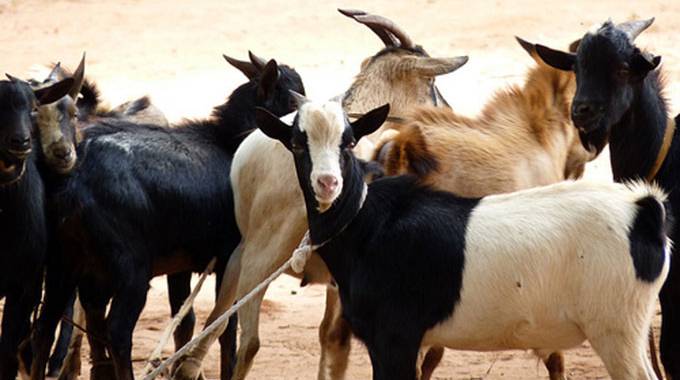
ZimTrade, the national trade development and promotion organisation, is working with the Goat Breeders Association of Zimbabwe (GBAZ) on a cluster model for goat farmers to assist them with exports to the Middle East.
Demand for goat meat is rising, particularly within the country, but vast opportunities exist to diversify into markets in the Southern Africa region and beyond, notably the Middle East.
Speaking on “Unlocking Export Potential: Building Competent Goat Clusters for Global Markets” during the recent 5th Annual Goat Indaba in Bulawayo, ZimTrade Client Advisor Mr Velile Dube said Matabeleland South would be the pilot province for the cluster model.
“We encourage goat farmers to come together, and, as ZimTrade, we are trying to work on clusters. The cluster model is a grouping of small-scale farmers coming together to meet a big order,” he said.
“So, we encourage them to do that because exports with these types of products are a numbers game. You would not expect a buyer to purchase something like 100 kilogrammes (kg) for exports all the way to the Middle East; they will be talking about tonnes,” he said.
“Our pilot will be in Gwanda District, Matabeleland South, and we are starting next year. We hope to experience some successes and then replicate that to other parts of the country.”
He said it made more sense for small-scale farmers to come together as a cluster to be able to meet export requirements and demand, while GBAZ is assisting them to identify the goat breeders for the cluster.
Mr Dube said they have been conducting preliminary discussions, preparing the groundwork, and working with the association to inform goat breeders of the requirements and best practices.
“Ultimately, our role as ZimTrade is at the market end, where we identify and secure opportunities. We are not the ones involved in the actual breeding of goats, so we need the association to help the breeders with quality control and measurements that must be done. We then assist with the market side of things,” he added.
“Essentially, the Middle East presents a very good market for us because they are an authority unto themselves. They can decide whether they work with you or not without necessarily having to cross-check on anything.”
He said the barriers to entry are also fewer in the Middle East, as they do not require as many certifications as those often required in Europe, such as Global GAP.
Mr Dube said countries in the Middle East are less stringent; however, he encouraged goat farmers to ensure they obtain Halaal certification.
GBAZ vice chairperson, Mr Xolisani Mpofu, said most farmers are now seeing business potential in small stock that can multiply in a short period.
“The current demand from farmers joining the industry to farm with goats is, we generally believe, driven by climate change, which is making it difficult for us to farm with large animals, and also by diseases affecting large animals,” he said.
“Goats are easy to manage because they are small animals; they can multiply very quickly, allowing one to generate income in a short period of time.”
He said goats also play a crucial role within Zimbabwe’s economy by contributing to foreign exchange, making the hides very profitable for local tanneries and the leathercraft industries.
Experts have said goat meat demand in the Middle East is strong and growing, driven by religious festivals like Eid al-Adha, traditional cuisine, and its staple status in the region. The market is supported by imports of both live animals and processed meat, with countries such as Saudi Arabia, the UAE, and Jordan being major consumers and importers.
Hospitality and institutional demand are also increasing, contributing to a booming export market for goat meat producers in regions such as East Africa.-herald