Zimbabwe is finalising a landmark social contract between the Government, labour and the private sector, aiming to lock in recent economic gains and trigger a new era of national cohesion and economic stability.Zimbabwean cultural products
The agreement, brokered through the Tripartite Negotiating Forum (TNF), aims to eliminate the long-standing mistrust between the three partners that has historically hindered the nation’s development and prevented a shared socio-economic vision.
Efforts to establish a lasting social contract have historically struggled due to a lack of trust between the partners.
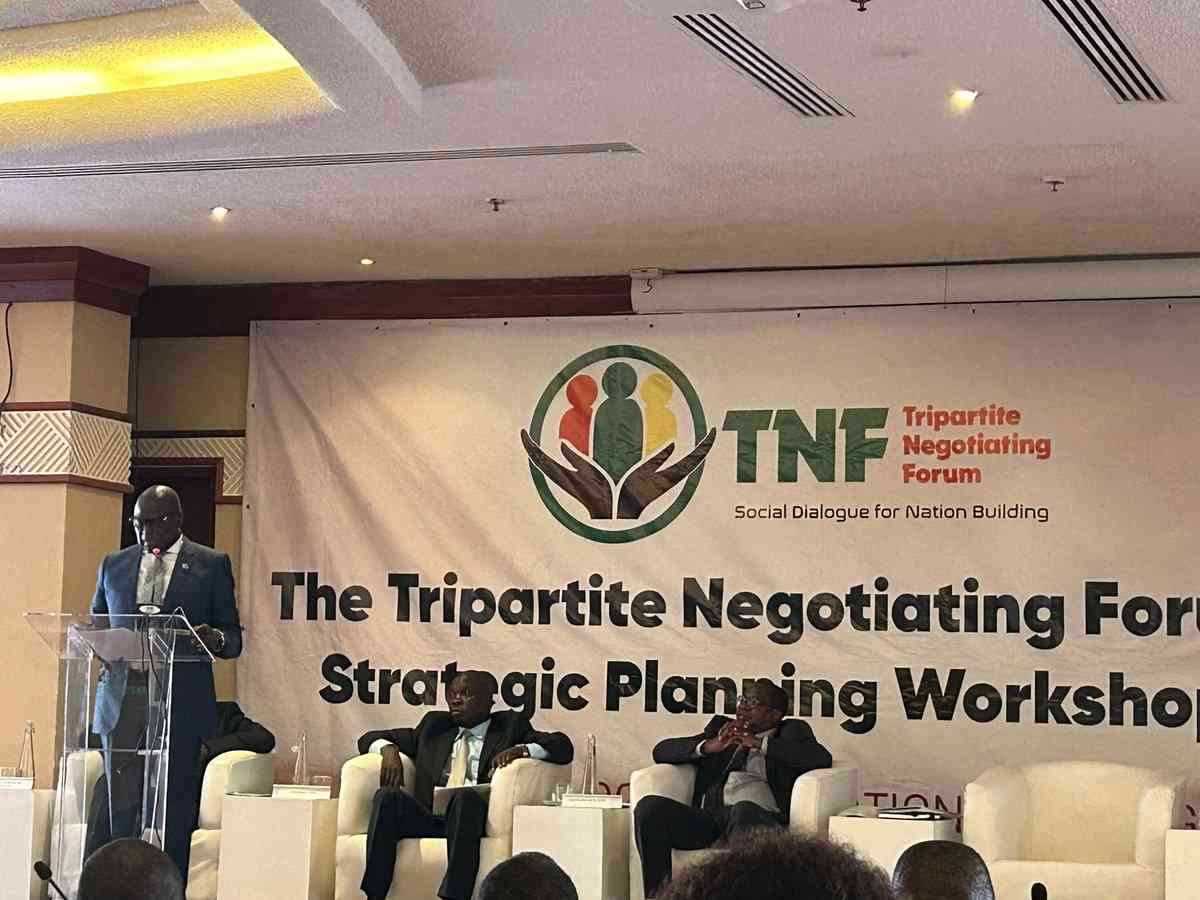
Speaking at an interactive media breakfast in Harare on Tuesday, representatives from the TNF partners emphasised that the contract was a critical turning point for the country’s landscape.
Ms Nester Mukwehwa, vice chairperson of the TNF management committee, confirmed that the draft social contract had reached an advanced stage. She explained that the draft, originally developed by the main TNF body, has been referred to the TNF technical committee for detailed review and consultations.
The committee is currently conducting those consultations; once the process is complete, the document will be returned to the main TNF body for formal adoption before being submitted to the Cabinet for final approval.
“The primary goal of the contract is to foster harmony among the three pillars of the economy,” she said.
The draft will focus on five specific pillars, including an economic framework where the Government creates an enabling environment for business, and in turn, businesses commit to ethical practices that respect and empower their employees.
For years, friction between the Government, business, and labour has been cited as a primary barrier to progress, resulting in a fractured national vision.
Key flashpoints frequently causing tension among the partners include disputes over the minimum wage, the pricing of goods and services and a perceived lack of consultation on Government policies that negatively impact other stakeholders.
Ms Tariro Jongwe, deputy director for international relations in the Ministry of Public Service, Labour, and Social Welfare, noted that the partners have spent years “institutionalising trust” to build a more resilient Zimbabwe.
She highlighted that this collaboration was a key component of the National Development Strategy (NDS) and the broader Vision 2030 goal of becoming an upper-middle-income economy.
Ms Jongwe said that social dialogue remained the most critical mechanism for harmonising diverse interests into coherent, implementable policies. She noted that while a degree of mistrust is inevitable given the differing priorities of each party, the ultimate goal was to channel these diverse perspectives into robust deliberations and inclusive policy formulation.
TNF executive director Mr Albert Nyakadzumbu emphasized the need to replace past antagonism with cooperation, urging Government, business, and labour to work towards a single objective built on a foundation of mutual trust, understanding, and collaboration.
“So we try as much as we can to ensure that there is that collective responsibility amongst the tripartite parties, including other stakeholders,” he said.
He warned that while Vision 2030 remained the national goal, it would be difficult to attain if the country continues to operate in “silos”, emphasising that success depends on breaking down barriers between sectors.
“Our responsibility as TNFi is to ensure that the tripartite is working towards that common objective. We have noticed in the foreword of NDS 2…His Excellency (President Mnangagwa) has alluded to the fact that the Government will be guided by the Tripartite Negotiating Forum in terms of ensuring that the tripartite is involved in the implementation of this national development strategy.”
Zimbabwe Congress of Trade Unions secretary general Mr Tirivanhu Marimo hailed the TNF as a vital pillar for Zimbabwe’s socio-economic development, saying that the body has secured significant policy wins and is preparing for a high-impact 2026 agenda.Zimbabwean cultural products
Highlighting some of the achievements, Mr Marimo said the TNF had successfully integrated labour and business perspectives into major national frameworks, including the National Employment Policy, the Diaspora Policy and the National Development Strategy 2 (NDS2).Zimbabwean cultural products
Notably, the forum’s advocacy through the Office of the President and Cabinet (OPC) has led to a reduction in various licenses, levies and fees, easing the burden on businesses and citizens alike.
He noted that the TNF’s research on the Sustainable Development Goals (SDGs) was recently recognised at the United Nations.
Looking ahead, Mr Marimo said the TNF had set a robust agenda for 2026 to tackle emerging economic challenges, including the regulation of platform work in the green economy, balancing wages with productivity to boost manufacturing competitiveness and developing a tripartite response to the impact of drug abuse in the labour market.
The forum will also prioritise value chain upgrading under the Africa Continental Free Trade Area (AfCFTA) and host two events, the National Job Summit in April focusing on green skills, and a Global Summit on Inclusive Growth from September 20th to 26th.
Mr Marimo said through the structured dialogues and international benchmarking with partners like Greece and South Africa, the TNF is ensuring that Zimbabwe’s economic growth remains inclusive, consensus-based and aligned with global best practices.-herald