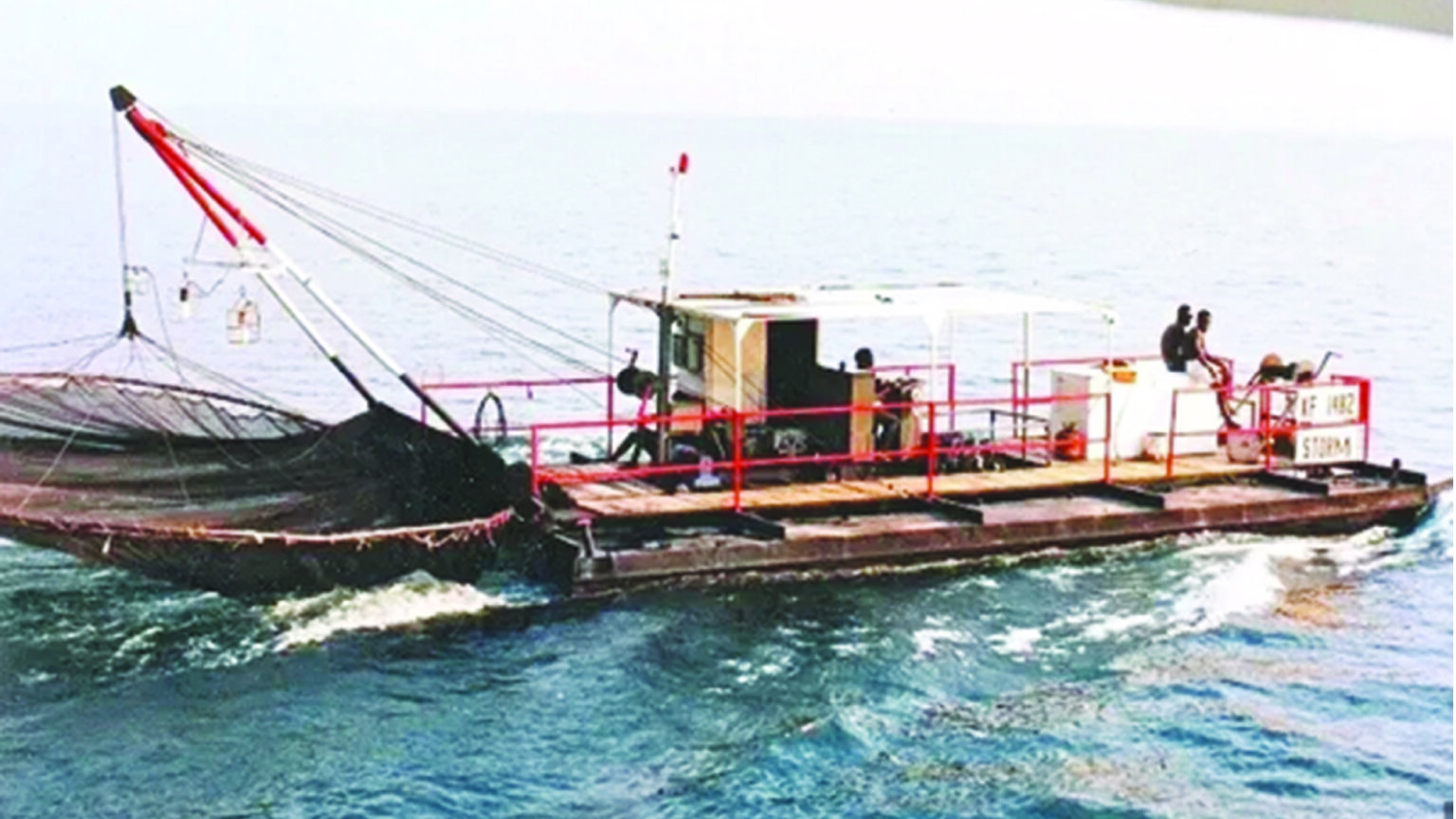
THE Zimbabwe Parks and Wildlife Management Authority (ZimParks) has announced a temporary adjustment in the allowable minimum fishing depth in Lake Kariba, reducing it from 20 to 17 metres.
This decision comes as recent studies revealed stagnant kapenta catches despite previous conservation efforts.
Originally implemented from November to February last year, this measure was a direct response to shrinking water levels caused by climatic irregularities, particularly those related to El Niño.
The decision to extend the allowance until June 30 is part of ZimParks’ adaptability and concern for sustainable fishing practices.
In a recent notice to kapenta operators on Lake Kariba, ZimParks director general, Professor Edison Gandiwa, said they had returned to the lower water level mark because water levels were lower than expected at this time of the year.
“ZimParks has been proactively monitoring lake levels and recent assessments by our research unit indicate that current water levels are lower than expected for this time of the year.
“In light of these findings, the Authority is considering adjustments to water depth restrictions on Lake Kariba to accommodate the diminishing extent of viable fishing grounds,” he said.
Prof Gandiwa said his organisation had decided to reinstate the temporary measures for the Kapenta fishery of Lake Kariba that were first introduced through the October 22, 2024 correspondence and other extensions that followed and expired.
“Minimum allowable depth to be at 17 metres for the period December 1 to March 31, 2026. This intervention will see a continuation of the corresponding monitoring of the catch quality (size of Kapenta caught) from the industry,” added Prof Gandiwa.
ZimParks said fishers from Basin 1 (Mlibizi) and 2 (Binga) are allowed to fish in Basin 3 (Sengwa) waters from December 1, 2025, to March 31, 2026; however, this extended intervention shall not allow Basin 3 fishers to fish in Basins 1 and 2.
A group representing kapenta fishers, Zimbabwe Kapenta Producers Association (ZKPA), said that though they were happy with the extension, the directive barring Basin 3 fishers from fishing basins 1 and 2 was disadvantageous to the concerned parties.
“Basin 3 fishers are deprived in that when catches start to improve, the free-moving Basin 1 and 2 fishers come and crowd the few deep areas, causing overfishing in such locations and causing the subsequent low harvests.
“We call upon ZimParks to create a Binga basin (1, 2 and 3) that allows basin sharing for basins 1, 2 and 3 permit holders,” ZKPA vice chairman Mr Bernard Munsaka said.
Mr Munsaka bemoaned the decline in catches to as low as nine kilogrammes of wet Kapenta per night per fishing rig.
Statistics show that kapenta catches have plummeted from 30 000 tonnes in the 1990s to just 5 175 tonnes in 2023, an 83 percent drop.
The country’s new agriculture roadmap, the Agriculture Food Systems and Rural Transformation Strategy 2: 2026-30 (AFSRTS 2) concurred, saying the Kapenta value chain faced significant challenges, primarily due to excessive and unsustainable fishing leading to overfishing.
“Operating within this subsector is expensive because of high permit fees and the costs of inputs and equipment. Additional issues include illegal fishing practices stemming from limited monitoring, surveillance and control,” read AFSRTS 2.
Climate change and water pollution also continue to diminish available fishing areas. The proposed Fisheries and Aquaculture Act will enhance monitoring, surveillance and investment in the Kapenta value chain.
“Production and gross value of Kapenta are expected to remain subdued at 7,000 tonnes from 2025/26 to 2030/31, with a gross value of US$21 million.
“However, the Kapenta value chain is projected to contribute 0.1 percent to the gross value of agriculture by 2030/31 with the proposed Fisheries and Aquaculture Act enhancing monitoring, surveillance and investment in the Kapenta value chain,” continued AFSRTS 2.
Kapenta plays a vital role in national food and nutrition security and provides employment and a source of livelihoods.-herald