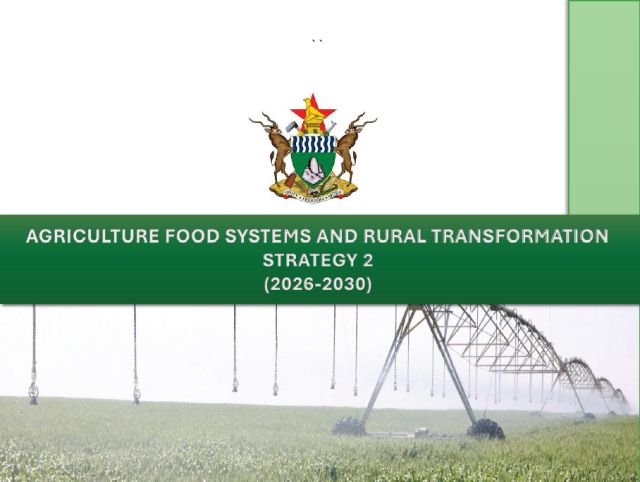
THE Government is boosting local production of high-demand crops such as rice, pasta and potatoes, as part of its import substitution initiative. This follows a shift from maize to other alternatives. This is contained in the country’s new agriculture roadmap, the Agriculture Food Systems and Rural Transformation Strategy 2: 2026-30 (AFSRTS 2), which replaces AFSRTS 1, which ends this year.
“Zimbabwe is currently witnessing a shift in consumption patterns from maize to rice, pasta and Irish potatoes.
“AFSRTS 2 seeks to increase local production of the imported foods, to reduce the import bill,” read the document.
Statistics contained in the blueprint show that maize imports for human and livestock consumption dropped 147 percent from 966 329 tonnes in 2020 to 391 844 tonnes last year.
To show the gradual shift of maize being the main staple crop, pasta and rice imports have surged 362 and 237 percent, respectively.
Pasta imports rose from 11 376 tonnes in 2019 to 52 593 tonnes last year.
Rice imports also increased from 77 265 tonnes in 2019 to 260 599 tonnes in 2024.
“The increasing prominence of rice, pasta and traditional grains and potatoes signals a move away from over-reliance on a single staple, which is likely to intensify as consumption patterns continue to morph, as consumer awareness of health, nutrition, environmental impact and sustainability continues to grow.
“There is a growing awareness of the nutritional benefits of traditional grains compared to maize. During the AFSRTS 2 implementation period, it is expected that demand for maize will stabilise and even begin to decline,” read AFSRTS 2.
AFSRTS 2, noting the pivotal role of traditional grains in national food security, nutritive value and drought tolerance, targets to increase their production from 634 650 tonnes in 2026 to 797 000 tonnes by 2030, through agro-ecological tailoring.
Though being the fourth most important starch after maize, wheat and traditional grains due to shifting consumer preferences, driven by an increasingly urban youth population, the rice value chain faces numerous challenges.
AFSRTS 2 aims to increase rice production as a result of the unveiling of the New Rice for Africa (NERICA) variety release in 2004, and its recent nationwide promotion at irrigation schemes.
The projected gross value of rice is expected to increase from US$788 000 in 2025 to US$111,675 million by 2030.
NERICA, which is an upland rice, holds great potential to contribute towards food security, hunger reduction and poverty alleviation and also to reduce foreign currency expenditure through import substitution.
The Government also declared potato a strategic crop to enhance food security at the household and national level and instituted several measures, chief among them a ban on table potato imports since 2010.
The Government allowed supervised importation of certified potato seed by seed houses to complement local seed production.
As a result of Government policy measures, all Irish table potatoes consumed locally are being produced by farmers in collaboration with agro-processors through off-take arrangements for enhanced production, market access and sustainability.
AFSRTS 2 projects the potato value chain to increase production from 735,000 tonnes in 2025/2026 to 1 million tonnes by 2030/2031.-herald