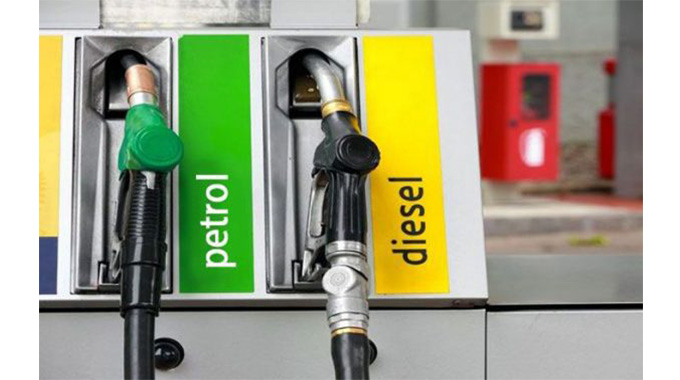
ZIMBABWE’S markets, businesses and motorists have been jolted by steep government fuel price hikes, with diesel and petrol surging nearly 16% and 27% per litre, respectively, to US$2,05 and US$2,17, intensifying cost and inflationary pressures across the economy.
On Wednesday, the government, through the Zimbabwe Energy Regulatory Authority (Zera), hiked the price of diesel and petrol per litre to US$2,05 and US$2,17, respectively, from US$1,77 and US$1,71.
This was prompted by the current war pitting the United States and Israel against Iran, which has rocked global commodity prices, particularly oil, where trading is ranging from US$106 to US$115 per barrel of brent crude.
However, the fuel price increase has made Zimbabwe the second most expensive country in Sadc, after Malawi, according to fuel price tracker Global Petrol Prices.
According to the tracker, the price of petrol per litre in Angola was US$0,327 and US$0,43 for diesel, Botswana (US$1,14 and US$1,20), the Democratic Republic of Congo (US$1,06 and US$1,05), Eswatini (US$1,16 and US$1,19), Lesotho (US$1,07 and US$1,16) and Madagascar (US$1,17 and US$1,11).
For Malawi, this was US$2,85 and US$2,84, Mauritius (US$1,25 and US$1,26), Mozambique (US$1,30 and US$1,25), Namibia (US$1,17 and US$1,17), Seychelles (US$1,40 and US$1,37), South Africa (US$1,18 and US$1,27), Tanzania (US$1,09 and US$1,09) and Zambia (US$1,36 and US$1,19).
In Zimbabwe, businesses are scrambling to pass on the cost to consumers. Consumers now have to cut family budgets deeper in line with the fuel increase.
“The increase in fuel prices to above US$2 per litre has immediate and economy-wide implications for business, primarily through costs, pricing and demand.
“First, fuel is a core input across all sectors. Higher diesel prices directly raise transport and logistics costs, which are already a significant component of doing business in a landlocked economy like Zimbabwe,” Zimbabwe National Chamber of Commerce (ZNCC) president Tapiwa Karoro told NewsDay.
“This affects the movement of raw materials, finished goods and agricultural produce. For manufacturers and retailers, distribution costs rise almost instantly.
“Second, the increase feeds into production costs. Sectors such as mining, agriculture and manufacturing rely heavily on diesel for operations, especially where firms are off-grid or supplementing unreliable electricity supply.”
He said while larger firms were investing in alternative energy, many businesses still depended on fuel, so margins will come under pressure.
“Third, there is a pass-through to prices. Businesses will attempt to adjust prices to preserve margins, particularly in fast-moving consumer goods. This creates upward pressure on inflation,” Karoro said.
“However, the ability to pass on costs is constrained by weak consumer demand, so in many cases firms absorb part of the shock, which compresses profitability.”
The ZNCC boss said the impact on working capital would be significant.
“Higher transport and input costs increase the amount of liquidity firms need to maintain operations. In a high interest rate environment, this becomes an additional burden, especially for SMEs [small and medium enterprises],” Karoro said.
“Fourth, there are second-round effects on demand. As transport costs and basic commodity prices rise, household disposable incomes are eroded.
“This reduces consumption, particularly for non-essential goods, affecting sales volumes across the economy.”
He said it was also important to note that while the fuel sector was largely US dollar-based, the broader effect would be imported inflation, which affects both US dollar and ZiG pricing structures.
The inflation effect was alluded to by respected economist Tony Hawkins.
“Much will depend on how long the war continues and how much lasting damage is done to oil and gas infrastructure in the Middle East. Fuel prices in Zimbabwe are already up 40%. There is more to come in the short term,” he said.
“Although oil prices will fall when the war ends, the many far-reaching second-round effects will remain and become long-term if not permanent.
“Inflation will increase this month with further hikes in subsequent months moving into double digit year on year. The exchange rate will devalue, and gold exports to the Middle East may be adversely affected.”
Confederation of Zimbabwe Industries chief executive officer Sekai Kuvarika: “The increase in diesel prices will have an inflationary impact on the cost build ups, and the economy may need to brace for price adjustment. This development could negatively efforts of RBZ (Reserve Bank of Zimbabwe) to stabilise prices.”
While the war is the reason behind the price hikes, it is not entirely the reason for Zimbabwe.
Locally, fuel prices are high due to taxes and levies. Fuel has a high number of regulatory fees.
These include duties, scenario levy, carbon tax, strategic reserve levy, petroleum levy, free on board, freight, Zimbabwe National Road Administration’s road levy, debt redemption and storage levy.
Other factors are handling, clearing agency fees, financing costs, inland bridging costs, storage and handling costs, and secondary transport costs.
To illustrate just how high the fuel cost build up is, typically, fuel dealers only take between US$0,06 and US$0,10 as profit from the diesel and petrol prices, which currently stand at US$2,05 and US$2,17 per litre of diesel and petrol, respectively.
This means the balance mostly goes to the government and fuel operators’ costs. “For Zimbabwe, which imports all of its fuel, global price increases quickly translate to higher domestic fuel costs,” economist Chenayi Mutambasere said.
“Because fuel is a core input across the economy, this immediately affects transportation, production and power generation.
“The likely immediate impact is liquidity risk as businesses have to spend more on fuel without necessarily a rise in sales.”
Consumers should now deal with these costs at a time when nine out of 10 citizens say the tax burden no longer match their ability to pay, according to the Zimbabwe Tax Perception Survey 2025. It is also coming at a time of stagnant wages resulting in shrinking disposable incomes.
On Wednesday, Zera, in a statement, explained that the new price of diesel had been set with a view to mitigating the impact of the increase on mining, agriculture, haulage services and passenger transport sectors.
It also explained that the government is taking deliberate action to ensure that fuel brought into the country is accessed by all fuel stations, especially those in far-flung areas of the country, and the government, through its companies, PetroTrade and Noic.
The government added: “Government will endeavour to keep the price of diesel lower than what it ought to be.
“Without government intervention, the price of diesel would have been US$2,20 per litre.” -newsda