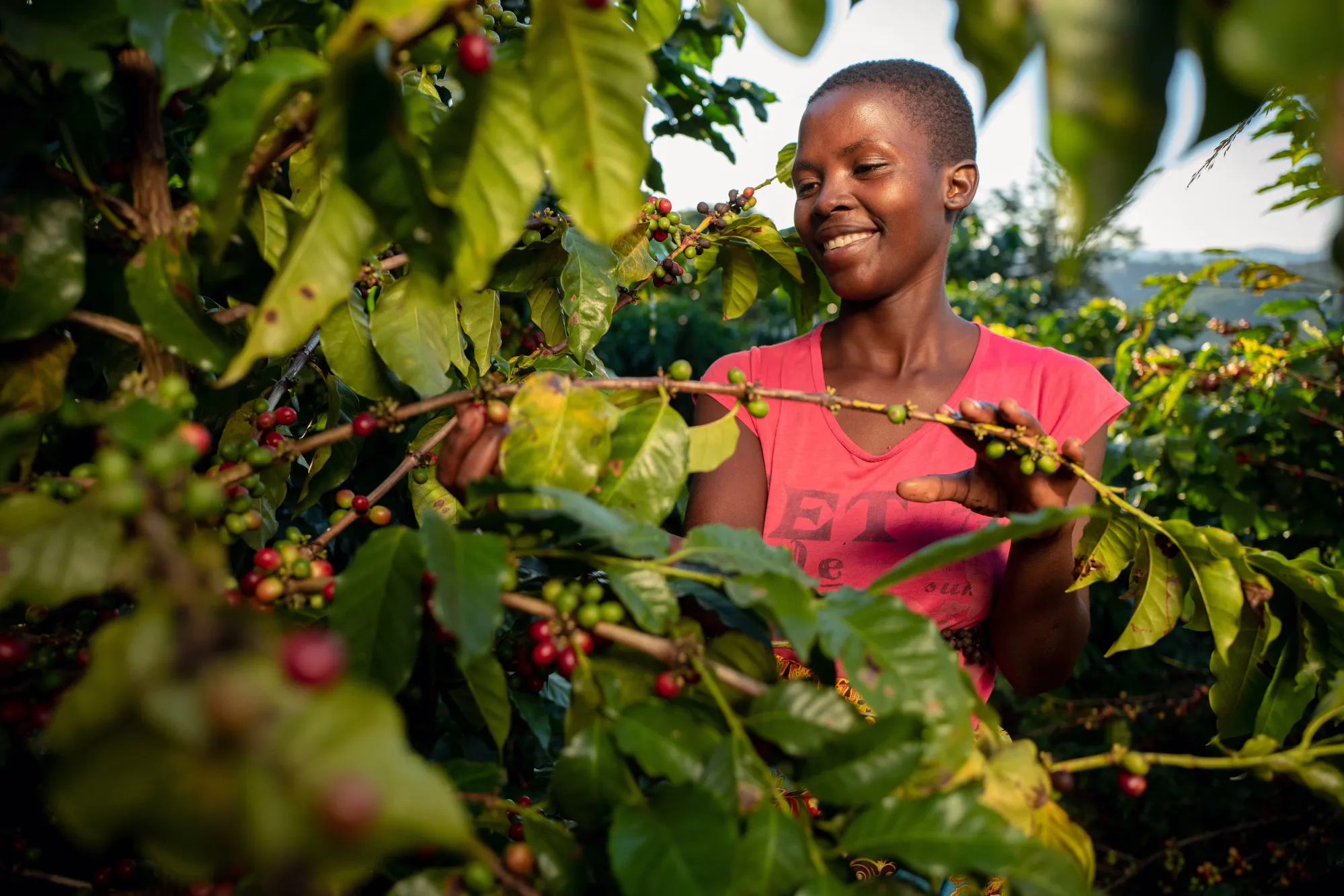
Zimbabwe’s coffee industry can undergo a major transformation if the country secures structured capital to shift from exporting raw green beans to producing fully processed, branded specialty coffee, according to a new Akribos Research industry report.
The report stressed that this shift is critical for increasing per kilogramme returns, stabilising farmer incomes and boosting export earnings in a market where global buyers are actively seeking traceable single-origin coffees.
Akribos Research says the evidence is clear that the country is forfeiting significant value by continuing to ship unprocessed beans to offshore roasters.
“Structured capital can convert Zimbabwe from a green-bean supplier into a domestic brand story, raising per-kg realisations, stabilising farm incomes, and diversifying export earnings,” the note says.
It adds that Zimbabwe already has an advantage in the premium specialty segment, where demand for floral and citrus-forward Arabica continues to rise in Europe, Asia-Pacific and emerging African café cultures.
The economic analysts point out that Zimbabwe is losing out not because of quality, but because of missing domestic capabilities.
“Zimbabwe already produces the cup quality, the constraint is the domestic ability to verify, finish, and ship,” the report says.
Global buyers are demanding traceability, certified quality, and origin-packed products, yet Zimbabwe continues to export washed green beans, leaving most of the value to be captured offshore.
Akribos identifies three key gaps suppressing domestic value addition. The first is the absence of a national quality-assurance system that can authenticate the consistency needed for premium markets.
The note calls for quality labs and certified quality graders for rigorous intake testing and lot-level traceability.
The second is inadequate liquidity in the value chain, which weakens supply aggregation. According to the research, “The sector urgently needs sufficient working capital and liquidity to promptly purchase parchment coffee from producers.”
Immediate payments would help assemble larger, traceable lots and strengthen compliance with specialty-grade standards.
The third gap is the lack of domestic processing capacity. The analysts say the country must develop roasting, grinding and packaging infrastructure to reduce its dependence on green-bean exports. They stress that investment in these facilities is commercially justified, stating, “Financing these is not speculative; it aligns with buyer demand already visible in specialty markets.”
The Zimbabwe Coffee Sector Road Map targets a surge in annual production to 5 000 tonnes by 2030, a level Akribos says is achievable if capital flows increase. The Horticultural Development Council estimates that the industry requires about US$22 million to scale, a figure the researchers support.
“We anticipate a realistic US$22 million sector financing envelope, phased and performance-linked, to stand up this value-addition layer and crowd in trade finance,” the report states.
If this funding is secured, cultivated area could rise from 600 to 1 000 hectares in the short term, pushing output above 2 000 tonnes. By 2030, expansion to 5 000 hectares could push production beyond 10 000 tonnes, lifting export revenues from US$1,3 million in 2024 to more than US$50 million.
The note emphasises that the Eastern Highlands’ terrain gives Zimbabwe a natural edge, but warns that scaling without strict post-harvest discipline would erode cup scores. “The strategic imperative is quality over quantity,” it says.
Akribos’ research also highlights the risk of remaining dependent on green bean exports.
Without domestic processing, producers remain exposed to price volatility and concentrated buyer power. The research firm says policy intervention is required to modernise quality infrastructure, improve logistics and create conditions that attract private capital.
To unlock growth, the analysts propose the establishment of a roasting and packaging hub capable of supplying both domestic retailers and export markets, along with a quality-lab network and a revolving working-capital facility.
Akribos also recommends a dual-channel export strategy that includes private-label supply agreements with specialty roasters abroad.
“Zimbabwe already produces the quality the market pays for. The opportunity and the need are to capture that value at origin,” the note says.
It adds that by building the quality backbone and modern processing capacity, investors and farmers can jointly secure a durable premium position for Zimbabwean coffee.
The findings indicate that the sector’s future competitiveness will depend not on increasing volumes alone, but on capturing the full value of every kilogramme produced.-herald