The Zimbabwe Energy Regulatory Authority is set to launch a nationwide audit of household power generation to eliminate critical data gaps in the country’s national energy balance sheet.
In an interview with The Sunday Mail Business, ZERA chief executive Edington Mazambani explained that the exercise will quantify electricity produced by domestic solar installations, a move set to redefine the national electrification rate and streamline grid integration.
The data, Mr Mazambani noted, is essential for strategic planning, enabling the Government to determine actual energy access levels and manage the technical inclusion of private systems into the national grid.
“It is done firstly to determine the electrification rate, secondly, national planning and thirdly to anticipate integration within the grid,” said Mr Mazambani. “We are at the procurement stage (for a contractor to undertake the study) for the fieldwork . . . we need capacity to cover the whole country.”
According to the 2022 Zimbabwe National Statistics Agency (ZimStat) census, the official electrification rate in Zimbabwe was 62 percent, with about 1,1 million households on off-grid power, representing nearly one-third of people with access to electricity.
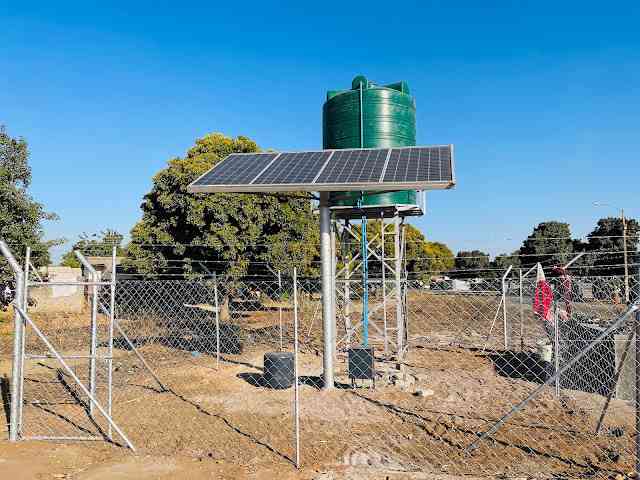
The development coincides with a massive shift in consumer behaviour, as many households across both urban and rural divides pivot towards solar energy. While the initial adoption was largely driven by acute power cuts and the resultant yawning energy supply gap, the motivation has evolved.
Currently, rooftop solar power is no longer just an “emergency backup”; it is viewed as a permanent, sustainable alternative to the conventional grid.
The transition is being accelerated by a significant decline in the cost of solar components, including high-efficiency panels and lithium-ion batteries, and a flood of diverse low-cost solar products entering the local market.
Solar energy has reached a price tipping point in Zimbabwe, with the long-term cost of rooftop power now lower than conventional grid tariffs. A standard 3,2kVA system that once cost US$3 000 can now be installed for as little as US$1 000.
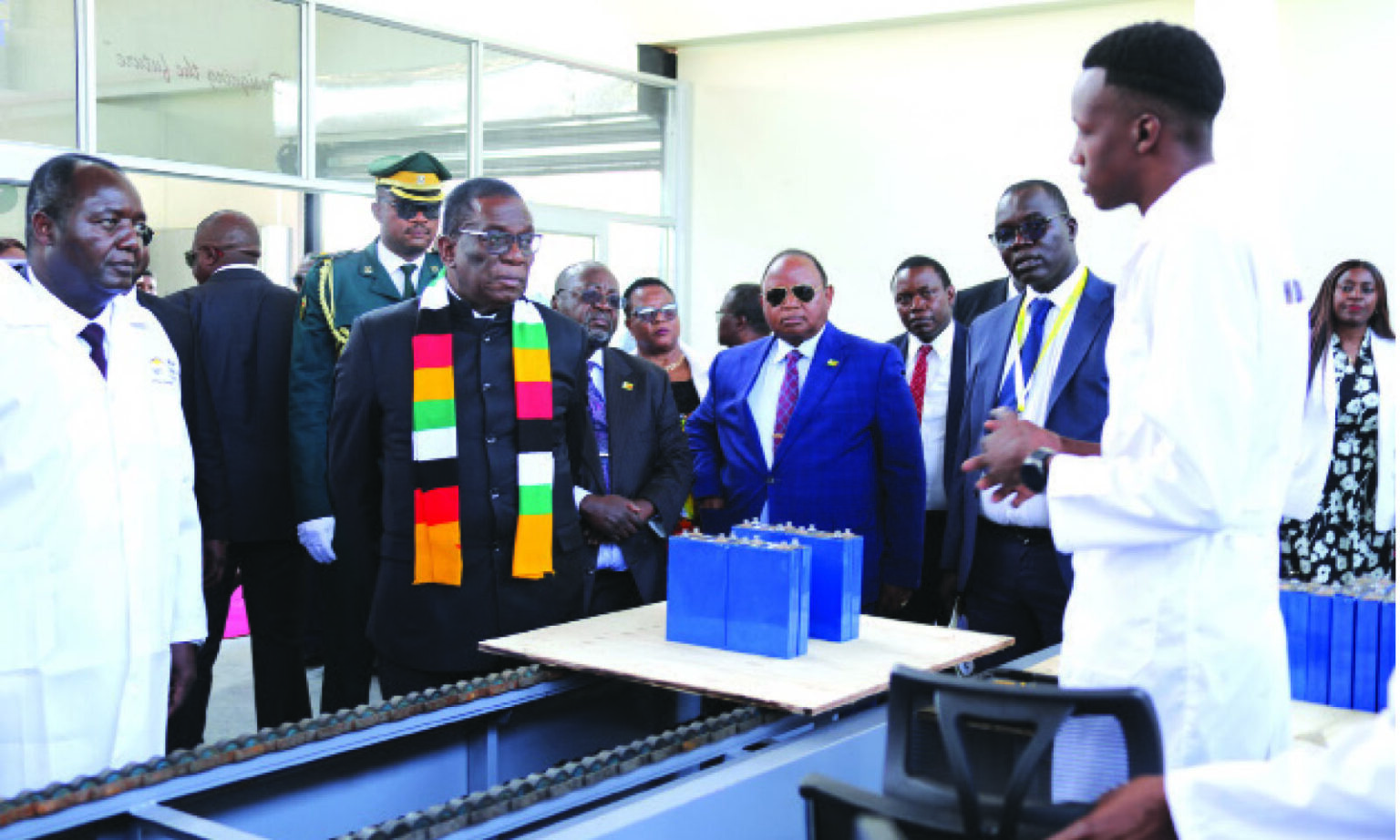
The shift is being supported by a deliberate tilt towards lithium-ion batteries, which offer superior lifespans and make solar a permanent solution rather than a temporary backup.
The massive uptake of domestic solar has created a “shadow grid” that experts believe masks the true extent of energy access in the country. A critical challenge remains the mid-day energy surplus.
With batteries often reaching full charge by mid-day, a significant volume of clean energy could be “lost” rather than being harvested by the national power utility to boost the broader grid.
Because many homes are not yet on net-metering, the solar panels simply “throttle back” or stop producing, wasting potential energy that could power nearby industries or schools.
Once the procurement process is finalised, the authority will be able to establish a definitive timeline for the exercise, said Mr Mazambani.
“I think we can have timelines after procurement and have agreed on the implementation schedule,” he said.
Energy islands
While integrating “micro-generators” via net-metering could stabilise the local grid, experts warn that severe infrastructure deficits remain a major hurdle.
“In many newly developed urban settlements, the national utility has yet to install basic power lines, creating a grid-less environment that makes it impossible for households to evacuate surplus solar energy to the national system,” energy expert Eng Travor Sande said.
“This lack of connectivity is equally pronounced in rural areas, where the absence of a physical interface prevents these domestic power plants from contributing to the country’s wider energy needs.
“On one hand, the country has an abundance of private generation; on the other, it lacks the pathways to move that energy because ZESA has not yet moved in (with infrastructure). Without poles, (power) lines, and substations, these homes remain energy islands,” Eng Sande added.
As such, the exercise allows for more accurate forecasting of when and where ZESA needs to deploy infrastructure.
Last year, Energy and Power Development Minister July Moyo said about 75 megawatts of net-metered solar power was feeding into the grid. He noted the growing trend of self-generated solar power by companies and individuals and urged those producing it to utilise net metering, thereby feeding surplus energy into the grid.
“Right now, they (ZESA) were saying 75 MW is coming from net metering,” said Minister Moyo.
“There is a lot of room for net metering. We have now said to ZESA, make sure that everybody, big or small, can net metre. If you have solar (at your business), please make sure that you do net metering. If you have solar at your house, and you are not using it, mostly during the day, that is when we need more power during the day for industries, do your net metering, “ Minister Moyo added.
Electricity market dynamics
Meanwhile, some energy experts say ZERA must maintain a deep understanding of evolving electricity market dynamics, particularly how diversifying power sources would impact pricing.
As customers transition into “prosumers”, entities that both consume and produce power, traditional utilities like ZESA face significant revenue erosion. When the volume of energy sold decreases, the utility may be forced to increase the unit price of energy to recover its fixed operating costs.
If ZERA grants a tariff increase to cover revenue gaps, it inadvertently makes self-generation more financially attractive. Higher grid prices encourage even more capable customers to “defect” from the grid or reduce their reliance on it, further shrinking the utility’s revenue base.
A critical concern for ZERA is social equity. Not every customer has the capital to invest in solar technology.
Those who cannot afford to become “prosumers” are often left to bear the brunt of increased tariffs, effectively subsidising the grid’s fixed costs that were previously shared by a larger pool of consumers.
“ZERA needs to have a good understanding of the electricity market,” said a former top ZESA executive. “It needs to know the dynamics of the electricity prices vis-à-vis many sources available to supply power.”
For instance, when customers become “prosumers”, it means ZESA loses some of its revenue. Put differently, recovering the same revenue from a reduced volume of energy means the unit price of energy has to increase.
“This increase is not always granted, but if granted by the regulator, it may incentivise more customers to produce their own power. The real truth is that not every customer will be able to produce their own power so some will have to bear the increased price. So ZERA needs to understand these dynamics.”-newda