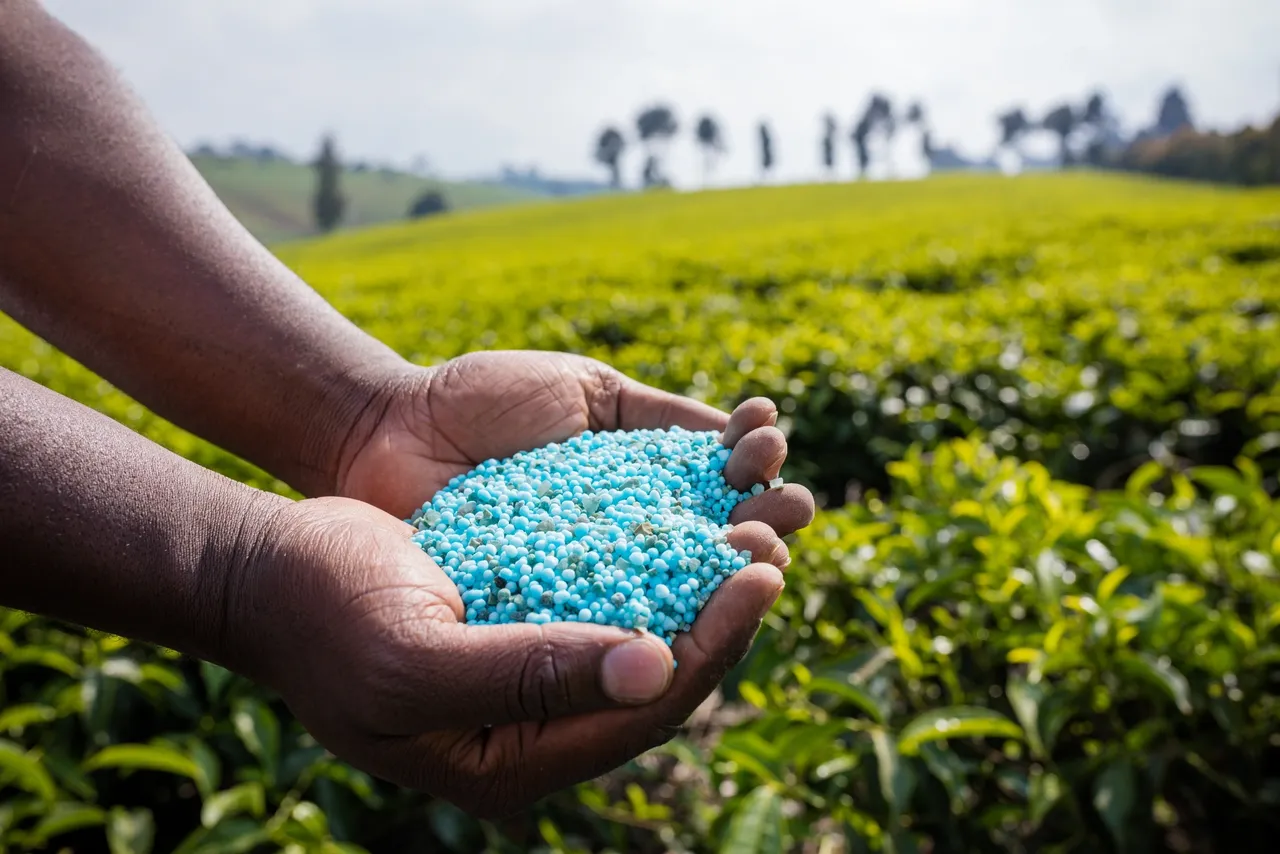
ZIMBABWE’S fertiliser industry is facing severe working capital challenges at a time when the United States and Israel’s conflict with Iran is disrupting global supply chains for the import-dependent nation, NewsDay Farming can reveal.
In response, the Parliamentary Portfolio Committee on Industry and Commerce visited several fertiliser firms this week to assess the health of the value chain.
The government is pushing to localise fertiliser production after the sector reportedly cost Zimbabwe over US$331 million in imports during the 2023/24 agricultural season.
“We might not have the specific figures, but all fertiliser companies are facing capital challenges,” committee chairperson Clemence Chiduwa told NewsDay Farming following a tour of fertiliser manufacturer Windmill (Private) Limited on Monday.
“There is a need for the businesses to be provided with capital, and we are happy that from the government side we now have an Industrial Development Fund, which was budgeted at about ZiG101 million, which these companies can access through the National Venture Capital Company of Zimbabwe.”
He also noted that firms could tap into the target finance facility introduced by the Reserve Bank of Zimbabwe to help local companies.
“What is critical is for us to continue to reform the ease of doing business environment because we have seen that if we look at electricity, regulatory charges, and all those fees, they need to be looked at so that our companies can become competitive,” Chiduwa said.
According to the committee, electricity is the sector’s biggest cost driver.
“Energy costs are high. If you go in the region, we have countries where their average costs are around 6 US cents per kilowatt hour, yet ours are now up to 16,01 US cents. So, you can see that our companies may not be that competitive with those high tariffs,” Chiduwa said.
“Then the other one is on labour. Our labour costs are high, especially if you look at the efficiency levels. We are still on the lower side given our capacities.
“The other issue also that is negative is on regulatory fees, but we are happy that those regulatory fees are being reformed.
So, it’s mostly electricity and labour.”
He stressed the importance of localising fertiliser production and prioritising domestic procurement.
“We have also said from the procurement side, let’s prioritise local procurement. So, these (efforts) are being done through PRAZ [Procurement Regulatory Authority of Zimbabwe] and also the Ministry of Industry and Commerce.
“We have said we need to localise.
“And then from the government’s side, when it comes to tenders, we have said we need to consider locals first. All this is meant to make sure that we promote localisation.”
The committee is preparing a report on its findings to guide legislative support for the sector.
The government is taking concrete steps to boost local production. In the 2026 National Budget, Finance minister Mthuli Ncube revealed support for Sable Chemicals to complete plant refurbishments, enabling production of 20 000 metric tonnes (MT) of top-dressing fertiliser. The plant, currently closed, is expected to resume operations in May.
“Mutapa Investment Fund will resuscitate phosphate concentrate production at Dorowa Minerals (major producer of phosphate), to the tune of US$5,3 million,” Ncube said.
“Beyond the near-term, government through Mutapa Investment Fund will mobilise resources to finance the expansion of rail tank wagons for Sable Chemicals and the installation of a granulation plant at ZimPhos, with the aim of raising domestic production to 470 000 MT of basal fertiliser by end of year 2026.” -newsda