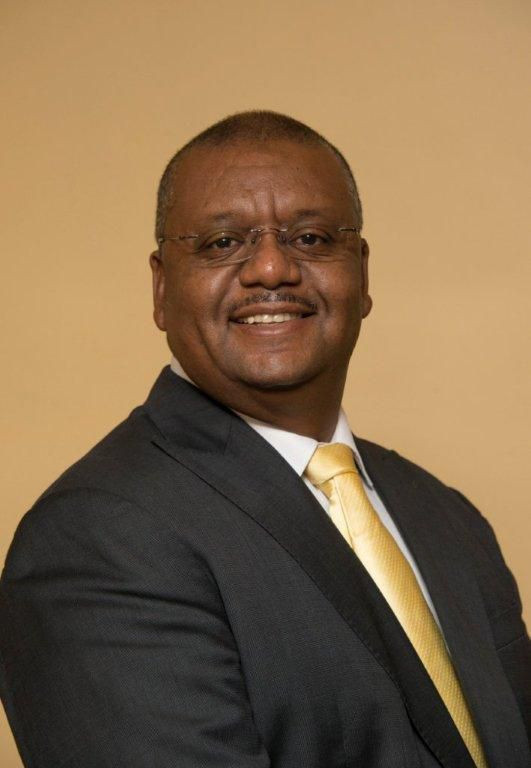
Econet Wireless Zimbabwe has appointed veteran executive Mr Fayaz King as the chief executive officer of its newly established infrastructure business, Econet InfraCo, marking a pivotal moment in the group’s long-term strategy to unlock value from its extensive network and real estate assets.
The appointment comes ahead of Econet’s planned delisting from the Zimbabwe Stock Exchange and subsequent listing of the carved-out infrastructure entity on the Victoria Falls Stock Exchange (VFEX).
Mr King, a seasoned business leadership executive with more than 30 years’ experience spanning telecommunications, information technology, the digital economy and innovation, will assume the role with effect from March 1, 2026.
His appointment comes as Econet InfraCo prepares to debut as a standalone entity on the VFEX at the end of March, subject to shareholder approval of the parent company’s delisting from the Zimbabwe Stock Exchange (ZSE) to an over-the-counter trading platform administered by the VFEX.
A former chief operating officer at Econet Wireless Zimbabwe, Mr King is no stranger to the group’s operations.
He left the company in 2019 to take up a senior international role at the United Nations, but his return signals Econet’s intent to place experienced and globally connected leadership at the helm of one of its most valuable businesses.
Beyond Econet, Mr King brings extensive board-level experience as he is serving as chairman of BancABC Zimbabwe and Meikles Limited where he has played a role in banking, retail and digital transformation.
His career has been defined by driving operational excellence, implementing strategic initiatives and optimising business processes to enhance efficiency and profitability across diverse sectors and regions.
His global credentials were cemented during his tenure at the United Nations, where he served as a special adviser at the Assistant Secretary General (ASG) level to the United Nations Secretary General’s Envoy on Technology, where he consulted on the global impact of technology, emerging trends and policy implications.
In that role, he championed digital connectivity, inclusion and capability development, while advocating for a secure, accessible and trusted internet.
He was assistant secretary-general and deputy executive director for field results and innovation at Unicef, overseeing the integration of ICT systems across 154 international offices, directing large global teams and managing complex, high-impact programmes.
Notably, he supervised the distribution of Covid-19 vaccines to more than 141 countries, while also expanding innovation funding and establishing global innovation centres.
Econet believes this blend of operational, policy and innovation expertise positions Mr King well to lead Econet InfraCo as it transitions into a listed infrastructure business with international appeal.
According to a circular published to shareholders last week, Econet InfraCo, which has until now operated as a division within Econet Wireless, generates nearly US$150 million in annual revenues and earnings before interest, tax and depreciation of more than US$50 million.
Crucially, the infrastructure company carries no debt, with all borrowings remaining at the parent company level, a factor that has contributed to valuing the business at around US$1 billion.
Analysts have likened Econet InfraCo’s business model to that of a real estate company, as its core activities include leasing telecommunications towers, power infrastructure, land and buildings.
The company also holds a substantial real estate portfolio after Econet invested heavily in property as a hedge against balance sheet erosion.
These assets, now housed within Econet InfraCo, give the company flexibility to develop or dispose of properties independently.-herald