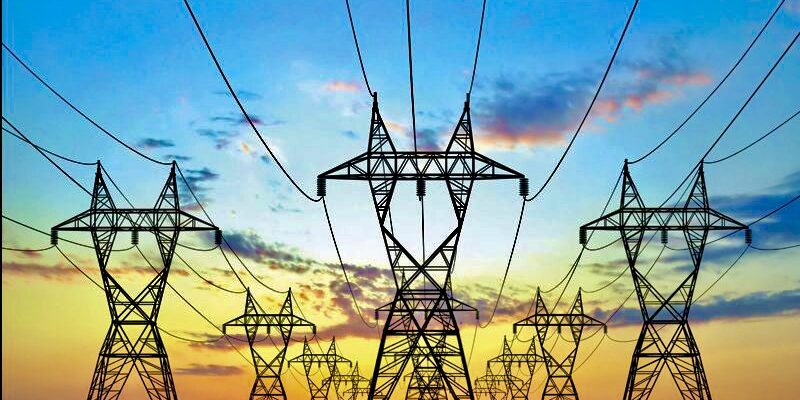
Zimbabwe plans to spend up to US$668 million on electricity generation, transmission and distribution projects over the next five years to facilitate infrastructure development, a key enabler for implementing the country’s new blueprint, the National Development Strategy 2.
This would be achieved by implementing a new framework that aggressively promotes private sector participation, according to the blueprint, which was launched last week and runs until 2028.
NDS2 succeeded NDS1, which ran from 2021 to 2025, and both policies form the basis for attaining the broader Vision 2030 target to transform Zimbabwe into an upper-middle-income economy by 2030. While there has been massive investment in power generation over the past four years, energy experts say the investment did not coincide with a corresponding investment in transmission and distribution facilities.
The new policy mandates that a framework to promote private sector participation in new power generation projects, as well as segments of electricity transmission and distribution, will be implemented through “concession arrangements”.
These concessions will operate under the oversight of the State-owned Zimbabwe Electricity Transmission Distribution Company.
“Government will (also) capacitate ZESA Enterprises and promote private sector involvement in the manufacturing of electricity transmission and distribution components, including transformers, cables, concrete poles and tubing points,” the five-year economic blueprint says.
The planned investment is central to the overall NDS2 goal of expanding the national electricity grid by a total of 1 715 km and enhancing connectivity between major generation sites, urban centres, and underserved rural communities, the NDS says.
The seven prioritised projects account for 1 283km of new lines and are scheduled for completion between 2028 and 2029.
The flagship project is the Hwange B-Sherwood B 330 KV transmission line, a massive undertaking covering 690km. The project is budgeted at US$386 million and scheduled for completion by 2028.
Its purpose is to efficiently evacuate the substantial power generated from the expanded Hwange Thermal Power Station to the central demand areas of the country, significantly boosting overall grid capacity and reliability.
A significant portion of the Budget is also allocated to reinforcing the grid in the southern and eastern regions.
These include the Orange Grove-Triangle-Tugwi covering 300km.
The project, costing about US$150 million and due for completion by 2029, aims to strengthen the transmission network in the country’s south-eastern Lowveld agricultural and industrial areas.
Hwange-Mukuni, stretching 100km, would cost US$32 million and is earmarked for completion in 2029.
It is key for interconnectivity and trade, likely linking Hwange’s generation to the regional power network, possibly as part of the broader ZIZABONA interconnector strategy.
Tugwi-Zvishavane, 55km shorter, is a vital link, costing US$15 million and due by 2028, which enhances local distribution in the Midlands region.
Key northern and metropolitan upgrades, while smaller, yet critical, are focused on improving power stability and distribution closer to major population and industrial centres.
Bindura-Mutoko, 70km long, is budgeted at US$22 million and set for completion by 2028.
Stamford-Westgate-Pomona, a 132 KV (23 km) lie, is expected to cost US$45 million and is scheduled for completion by 2028.
This is a high-cost-per-kilometre upgrade, indicating its focus on reinforcing the high-demand metropolitan grid network, likely in the Harare area.
Hwange B-Deka 88 KV (45 km) is a rapid, one-year project costing US$18 million, intended to ensure the local distribution of power from the Hwange complex is reliable.
Beyond new construction, the NDS2 outlines key interventions to improve the operational health of the power sector.
Targeted interventions will be implemented to significantly reduce electricity transmission and distribution losses, which currently stand at around 20 percent.
The strategy commits to the re-purposing and modernisation of the country’s existing traditional coal-fired and hydro-power plants to create a more sustainable and reliable energy supply base.
Energy efficiency will be prioritised across all industries through the adoption of the ISO 50001 standard.
This includes optimising industrial processes, improving building designs, running countrywide awareness campaigns, and promoting the adoption of smart energy-saving technologies and regular energy audits.
The Government will also provide incentives for sustainable practices to reduce carbon footprints and promote investment in cooking infrastructure to provide sustainable cooking solutions for citizens.-herald