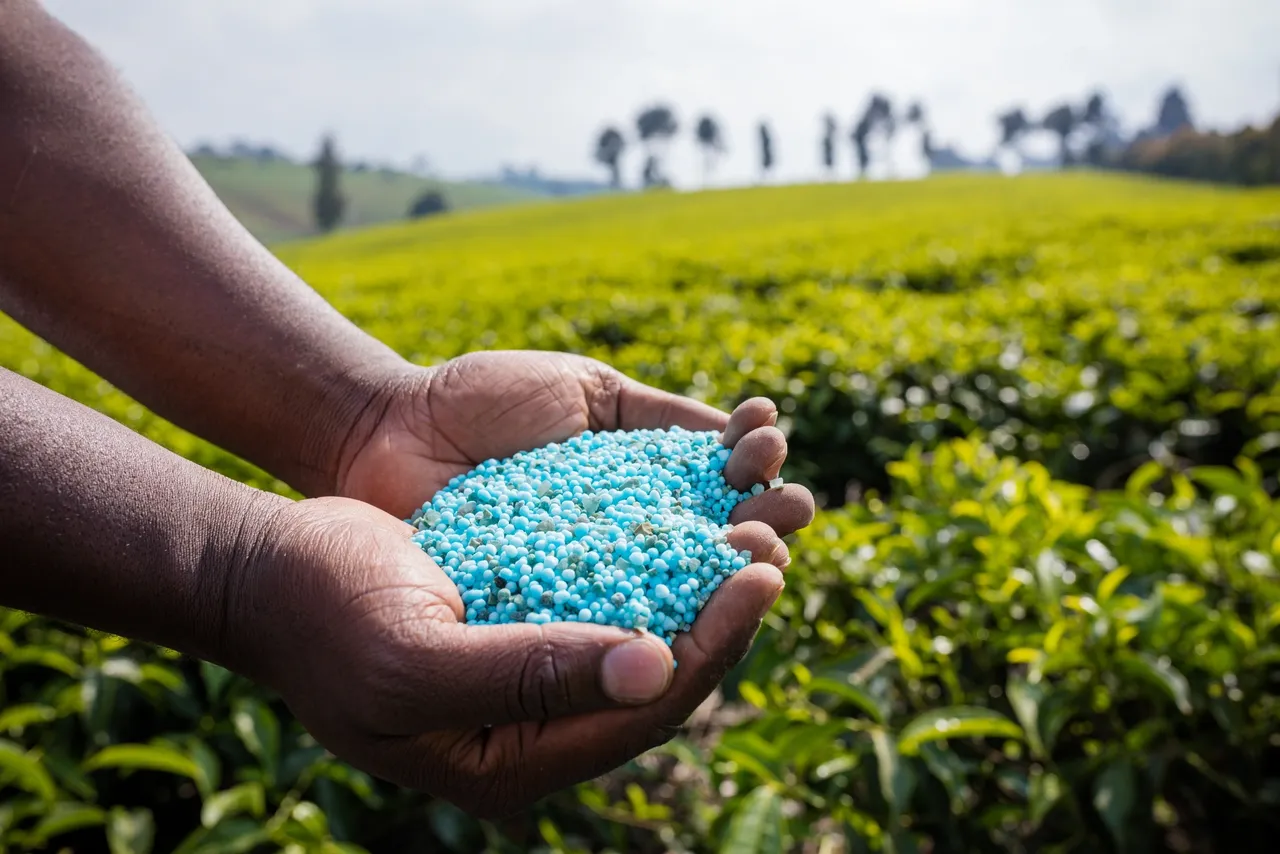
The Government is facilitating new investments in the country’s fertiliser value chain, with plans afoot to inject US$500 million into coal-to-fertiliser production to bolster domestic supply and insulate the country against external shocks.
According to the Ministry of Industry and Commerce, representatives from Chinese firms Sunny Yi Feng and Wintrue Holdings recently met with the ministry’s permanent secretary, Dr Thomas Utete Wushe, in Harare to finalize investment modalities.
Sunny Yi Feng Tiles Zimbabwe is already a prominent player in the domestic market. Based in Norton, the Chinese-owned company specialises in ceramic and porcelain tiles, tableware, and roofing materials.Zimbabwe trade fair
“Extensive discussions with Sunny Yi Feng and Wintrue Holdings (Private) Limited regarding the establishment of a coal-based fertiliser production plant in Norton are at an advanced stage.
“A partnership between these two investors stands ready to help Zimbabwe bridge the domestic production gap,” the ministry stated.
The investment is estimated at US$500 million. Wintrue Holdings is a reputable, proven fertiliser manufacturer from China and Zimbabwean officials have already conducted site visits to its Chinese plants to assess operations.
Increasing local manufacturing is vital for agriculture—a key economic pillar contributing 12–16 percent of gross domestic product.
Strengthening the industrial value chain will ensure timely availability and lower prices for farmers. Dr. Wushe expressed excitement over the coal-to-fertiliser initiative, noting that Zimbabwe’s abundant coal reserves could eventually transform the country into a net exporter of nitrogen-based fertilisers.
“This investment will enable Zimbabwe to become self-sufficient in fertiliser production by 2030, producing over 300 000 tonnes of Urea annually,” said Dr Wushe.
The move comes as Zimbabwe seeks to reduce its reliance on imports and protect the economy from external supply shocks.Zimbabwe trade fair
During a recent tour of fertiliser manufacturer Windmill Private Limited, the chairperson of the Parliamentary Portfolio Committee on Industry and Commerce, Mr Clemence Chiduwa, noted that the country requires approximately 780 000 tonnes of basal and top-dressing fertilisers annually.
Despite having domestic manufacturing capacity, the country remains a net importer. Mr Chiduwa noted that fertiliser maker Windmill is currently operating at only 10 percent capacity—a level he described as far below national expectations.
To further address these challenges, the Ministry of Lands, Agriculture, Fisheries, Water and Rural Development confirmed that Zimbabwe’s sovereign wealth fund, Mutapa Investment Fund (MIF), recently injected US$153 million into the sector.
“The urgency of developing a resilient local fertiliser industry has been heightened by geopolitical tensions in the Middle East and the Russia-Ukraine war, which have disrupted global trade and inflated the cost of agricultural inputs,” the ministry added.
Currently, Zimbabwe imports urea and ammonium nitrate from Russia, potash from Belarus, and liquefied natural gas feedstock from Oman, the UAE and Qatar.
Localising production through the US$500 million coal-to-fertiliser project and the MIF’s support are expected to slash import bills and ensure a consistent supply for farmers, ultimately securing national food security.-herald