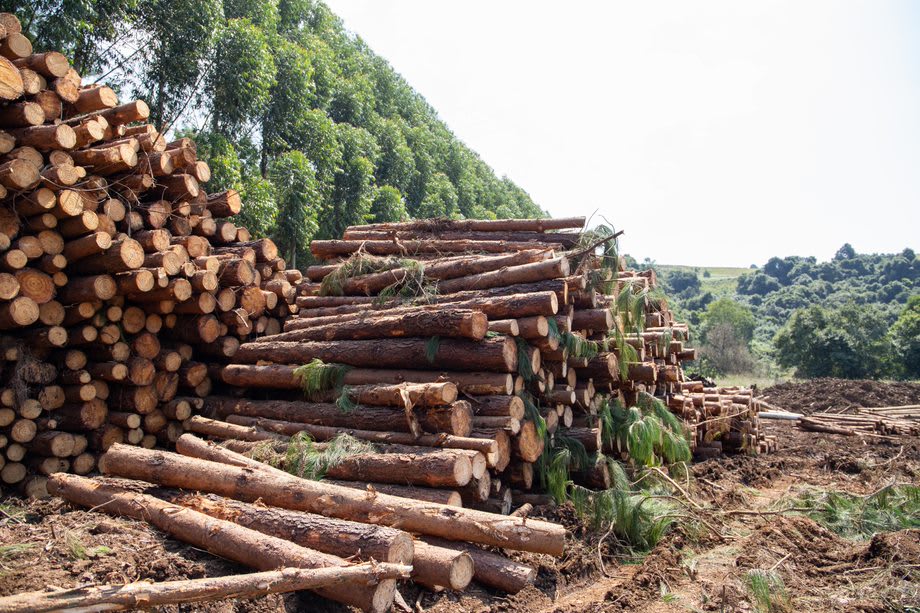
IN a bold step to revitalise the provincial economy, Manicaland is preparing for a grand revival of its timber industry, identified as a key pillar in the National Development Strategy (NDS2) economic blueprint.
Currently operating at a fraction of its potential, the sector is poised for a significant boost as Government intensifies efforts to increase production and create jobs along the value chain.
Director of Economic Affairs and Investments in the Office of the President and Cabinet, Mr Munyaradzi Rubaya, highlighted the underutilisation of timber estates by large-scale companies as a major challenge. He stressed that addressing this gap is critical to unlocking the sector’s full potential.
Mr Rubaya further noted that the province urgently requires more timber processing factories to enhance value addition and expand employment opportunities.
The revival of the timber sector is expected to generate a ripple effect across the provincial economy, strengthening Manicaland’s contribution to national development and accelerating the achievement of NDS2 targets.
With Government committed to supporting the sector, residents of Manicaland are optimistic that the initiative will usher in a new era of economic prosperity, industrial growth, and job creation.
“We are utilising only half of our timber plantation potential. There are 60 000 hectares under commercial timber plantations against a potential of 150 000 hectares. We are going to push for timber value-addition so that timber does not leave the province unprocessed. Investors are being invited to come and set up processing factories. There are huge gaps in the timber value chain that need to be closed to reap maximum benefits,” he said, adding that the province, particularly Mutare, has the potential to become the trade centre of the country due to its proximity to the Port of Beira and the Special Economic Zone in Fern Valley, which will soon come to life.
“We are the country’s gateway to the sea, either by road, rail or pipeline, and we are going to take advantage of that and be the trade centre of Zimbabwe. We want to attract logistics and manufacturing companies to set up operations in the province, as we are close to the Port of Beira. There is going to be a modern Dry Port to handle imports and exports of goods. There is ongoing work to expand and modernise Forbes Border Post and other smaller entry points, such as Cashel Valley, Mt Selinda and Katiyo. The operationalisation of the Special Economic Zone in Fern Valley is going to be prioritised,” said Mr Rubaya.
In mining, Mr Rubaya said minerals such as diamond, gold, lithium and other rare earth minerals have the potential to transform the economic outlook for the province, especially if they are value-added where they are being extracted.
“The province has a huge mining potential, in addition to the Chiadzwa mine, Zimbabwe Consolidated Diamond Company is expanding operations into Chimanimani. There is extensive gold mining in Nyanga and Mutasa districts. The Gemology Centre, which will house a School of Mining, will be expedited for the polishing and beneficiation of diamonds in the province. There is potential to set up a lithium battery processing plant and possibly an electric car production plant in Buhera. We have investors who have shown interests. There is an on-going prospecting of limestone so that the province produces its own cement,’ said Mr Rubaya.
Confederation of Zimbabwe Industries (CZI) Manicaland president, Mr Bernard Makoni said industry is ever ready to work in tandem with Government in aspects to develop the economy and improve lives.
He emphasised the need for industry concerns to be taken on board, particularly by long-term investors, on issues such as land tenure and removal of illegal miners from plantations.
“Manicaland is well positioned for tourism, industrial, timber and agricultural growth. The timber industry’s major problem is the issue around land tenure. The timber industry is on a 25-year cycle before an investor can get their return on investment, and during that period the investor needs the confidence that their money is secure.
“The very first step is the ownership of land, be it a 99-year lease or title deeds. The capacity is there to go back to where we used to be 20 years ago and plant 120 000 hectares. The industry is also under threat from invasions by artisanal miners who are going into plantations.
“The willpower to recover is there – the biggest companies are willing to go back to the heyday. The only elephant in the room is land tenure. Investors need confidence that their investment will be secure,” he said.
During the past two years, the industry has done a lot in terms of reinvestment in equipment to make sure that processed timber is produced.
Borders Timbers, Allied Timbers and Wattle Company have invested heavily in machinery to process their timber. They are making sure that the little available resource is value-added and they get as much income out of that as possible.
“It is the small players who are fuelling unprocessed timber into the market, which the Timber Producers Federation is fighting,” said Mr Makoni.-herald
Timber revival to transform provincial economy