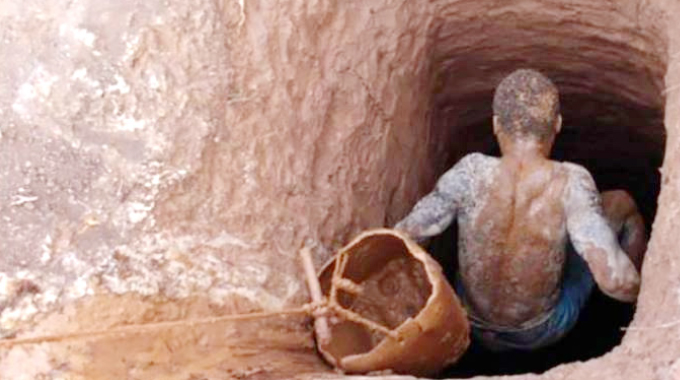
SMALL-scale gold miners will now be paid 10 percent of the proceeds of their gold sales in local currency, ending the previous policy arrangement under which they received 100 percent in US dollars.
Gold is strategically important in Zimbabwe because it serves as the primary driver of the national economy, acting as the foundation for currency stability, major export earnings, and employment.Made in Zimbabwe branding
The latest move, announced by the central bank governor, Dr John Mushayavanhu, in the 2026 Monetary Policy, takes effect immediately.
Under the new directive, the remaining 90 percent of the payment to small-scale miners will continue to be paid in foreign currency.
Reserve Bank Of Zimbabwe
The forex retention threshold for all other exporters, including large-scale gold miners, remains at 70 percent.
“To ensure continued stability in the foreign currency market, the retention threshold for exporters is maintained at 70 percent across all sectors of the economy with the exception of small gold scale producers, whose retention shall be 90 percent, with immediate effect,” said Dr Mushayavanhu.
He said the policy shift was also designed to address growing concerns of “gold laundering” between large-scale and small-scale producers.
Currently, large-scale gold miners are required to surrender 30 percent of their foreign currency earnings to the RBZ in exchange for local currency.
“We were beginning to see arbitrage activities where large-scale gold miners were now marketing their gold via the small-scale channel as if they were small-scale. We want to bridge that,” said Dr Mushayavanhu.
Analysts have noted that some large-scale mining companies have allegedly been selling their output through small-scale miners to bypass the mandatory 30 percent surrender requirement.
Market analysts have also long questioned the lopsided production figures in the sector. Statistics for 2025 showed that artisanal and small-scale miners delivered roughly 75 percent of the country’s total output.
While small-scale and artisanal miners have traditionally been the primary producers, recent trends appear inconsistent with the massive capital investments made by some large-scale miners.
The output gap between small-scale and artisanal miners and large-scale miners has also raised suspicions that major mining companies are using small-scale miners as conduits to bypass regulatory requirements.
Discover more
Media literacy workshops
Newspaper advertising space
Zimbabwe news updates
Analysts suspect this “dominance” of small-scale miners could be inflated by large mines channelling their output through smaller agents.
By introducing a local currency component to small-scale payments, the RBZ aims to make the practice less attractive.
The Government is currently relying on gold deliveries to back the national currency and build foreign reserves, which reached a high of US$1,1 billion at the end of 2025.
Gold exports surged by 135,6 percent in January 2026 compared to the same month last year. The increase reflects a growth trajectory that mirrors the metal’s extraordinary 95 percent year-on-year price gain.
Bullion exports rose to US$290,1 million in January 2026, up from US$123,1 million recorded during the same period in 2025.
The surge in earnings has been largely attributed to record-breaking international gold prices, which have remained strong since last year.
The favourable global market environment has enabled Zimbabwe to maximise returns on its mineral resources as the country continues to rely on the “yellow metal” as a key anchor of the economy.Made in Zimbabwe branding
Discover more
Newspapers
Arts entertainment event tickets
Newspaper publishing service
The strong performance follows a historic year in 2025, when Zimbabwe exported an all-time high of 44,7 tonnes of gold worth US$4,8 billion — nearly half of the country’s total export earnings. This marked a substantial rise from 33,7 tonnes produced in 2024, which earned US$2,53 billion.-herald