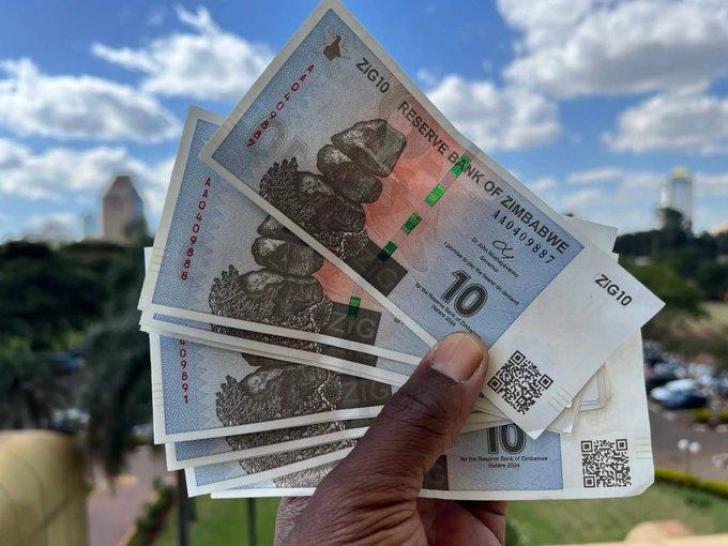
Business leaders and financial markets have their gaze fixed on the Reserve Bank of Zimbabwe’s 2026 Monetary Policy Statement presentation scheduled for Friday, with expectations centred on interest rate direction, currency stability and measures to unlock productive credit.
The central bank has confirmed the keenly awaited monetary policy will be presented on February 27, 2026, amid high expectations for a softening of the interest rate regime.
The bank is on record saying it will not rush to reduce the interest rates without guarantees that the gains achieved on the inflation and stability front will be protected.
After a year marked by tight monetary conditions and relative exchange rate calm, industry now wants signals on the next phase of policy, whether the central bank will cautiously ease rates in line with falling inflation while preserving hard-won stability.
The current policy rate of 35 percent has helped anchor inflation expectations and steady the ZiG, yet lending rates between 40 percent and 47 percent have significantly constrained borrowing in manufacturing, agriculture and commerce.
With inflation projected to ease further in 2026, markets are anticipating a data-driven roadmap toward gradual rate reductions.
Economists say the country will be listening closely for three signals: confirmation that monetary discipline will remain intact; a clear framework for managing domestic arrears without crowding out private credit; and reassurance that currency reforms will be sequenced cautiously.
Zimbabwe National Chamber of Commerce (ZNCC), in its submissions ahead of the MPS presentation, said businesses expected a calibrated easing path that restores investment confidence while maintaining positive real interest rates.
ZNCC said, “Stability achieved over the past year must not be compromised, and confidence is built through consistency, transparency and coordination between fiscal and monetary authorities.”
Industry is also seeking clarity on the future of the ZiG within the broader multicurrency framework. While transactional use of the local currency has improved, businesses remain cautious about a rapid shift toward full de-dollarisation.
“We would like to see reforms that deepen trust in the ZiG through incentives and reserve accumulation rather than compulsion,” the business member organisation said briefly.
Discover more
Fish exploitation report
National parks tour packages
Zimbabwe travel guide
Another issue expected to feature prominently is financial intermediation. Liquidity remains concentrated in a few banks, with limited transmission to the productive sectors. Manufacturers are hoping the Governor will outline measures to improve access to affordable long-term credit, possibly through expanded targeted facilities or statutory reserve adjustments to promote savings mobilisation.
Economist Ms Gladys Shumbambiri-Mutsopotsi said markets will be watching for policy coherence.
“The Governor must reassure the market that inflation gains are sustainable and that any easing will not trigger exchange-rate volatility. Predictability is what investors want to hear,” she said.
The business community is also anticipating guidance on digital taxation, bank charges and the role of the financial sector in advancing formalisation and the cashless agenda.
Above all, corporates want reassurance that the policy mix remains firmly anchored in the stability, reform and growth trajectory. Friday’s presentation is expected to set the tone for 2026, balancing caution with optimism as authorities seek to consolidate gains and support productive expansion.-herald