The 2026 Monetary Policy Statement demonstrates continuity of tight monetary management, as the Reserve Bank of Zimbabwe gradually deepens ZiG usage and lowers banking costs, analysts say.
This comes after the RBZ maintained its Bank Policy Rate at 35 percent, statutory reserve requirements at 30 percent for demand and call deposits and 15 percent for savings and time deposits.
The firm monetary policy stance comes amid rapid disinflation and exchange rate stability.
According to stockbroking firm IH Securities, broad money supply growth remained contained under disciplined reserve money targeting.
“Total broad money stood at ZiG108,09 billion as of December 2025, rising 36,98 percent from ZiG78,91 billion in December 2024,” the firm noted.
IH said that the RBZ attributed the controlled money supply to tight control of reserve money, with the local-currency component of broad money averaging 2,7 percent month-on-month growth in 2025, far below levels achieved in previous currency regimes.
Besides the unchanged headline policy rate, the 2026 monetary policy pivots towards practical reforms aimed at encouraging local currency usage.
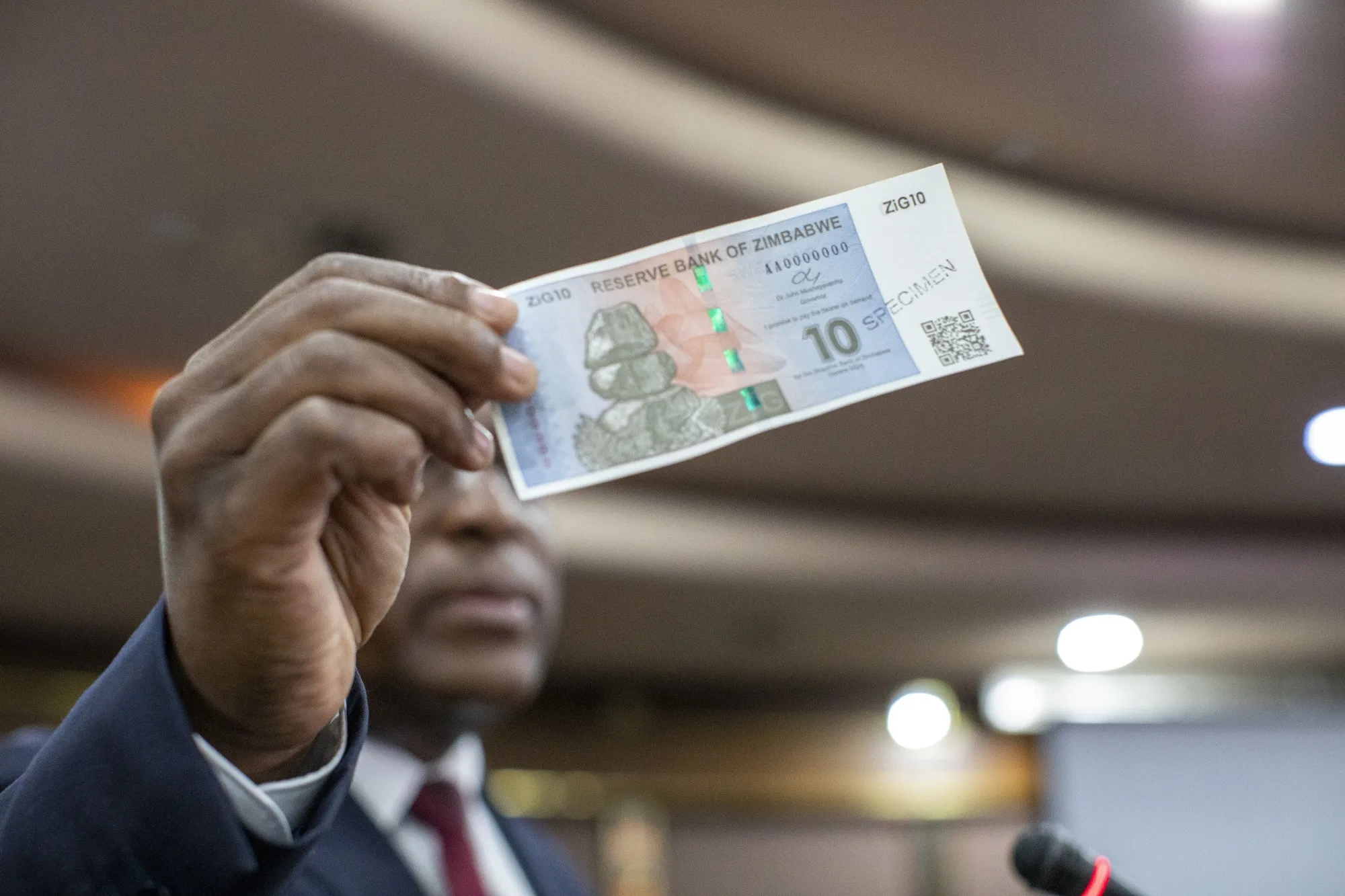
The RBZ introduced a ZiG-denominated term deposit facility with a minimum 90-day tenor, rolled out upgraded “Big 5” ZiG banknote series and increased the value of daily transactions for mobile money, ZIPIT and cash withdrawals.
After whittling down its own RTGS service fees to banks, the RBZ cut bank charges, while some were capped or removed.
IH Securities believes these measures fine-tune liquidity conditions without altering the overarching restrictive posture.
“In our view, the 2026 measures tilt marginally towards improving transaction liquidity in the formal system, but they do not change the core direction of tight monetary management,” the firm said.
The stock brokerage firm added, “Lower RTGS and bank charges, coupled with higher transaction limits, should lift payment velocity and improve cash availability, potentially supporting short-term liquidity-driven activity in financial markets.”
However, IH cautioned that with the tight stance still in place, market performance is likely to mirror liquidity cycles rather than underlying earnings fundamentals.
On the external front, foreign currency receipts rose to US$16,2 billion in 2025 from US$13,3 billion in 2024, underpinned by stronger export earnings from gold, tobacco and platinum group metals. The current account surplus widened significantly, reinforcing exchange rate stability and enabling reserve accumulation.
The RBZ’s mono-currency roadmap remains conditional on sustained price stability, stronger reserves and improved foreign exchange market efficiency.
FBC Securities views the 2026 Monetary Policy measures as a structured attempt to entrench stability while broadening financial intermediation.
On the ZiG Denominated Term Deposit Facility (ZiGDTDF) with a minimum 90-day tenure, FBC Securities noted that, “The instrument provides an alternative investment instrument for investing institutions, whilst enhancing monetary control for the central bank.”
Through locking in liquidity for longer periods, the facility strengthens policy transmission and gives pension funds, asset managers and corporates a defined local currency yield benchmark anchored to the policy rate.
The increase of the Targeted Finance Facility to ZiG1,2 billion is seen as supportive of agriculture, manufacturing and SMEs. FBCH said, “This will stimulate output and employment, though there is credit risk if projects underperform.”
IH said the proposed foreign exchange trading platform would improve transparency, price discovery and interbank efficiency.
ZB Financial Holdings said that the new BIG 5 banknotes would need a complementary policy package to ensure stability.
“History shows that new notes alone do not create lasting stability; their impact depends on the policy package (reserves, money supply control, fiscal discipline) and how the rollout is managed,” the analysis states.
“If the RBZ pairs higher denominations with credible backing and active liquidity management, the net effect should be positive or neutral for inflation and financial stability; if not, the risk of renewed distrust and price pressures rises.”
The analysts commended the plunge in annual ZiG inflation, which slumped to 4,1 percent in January 2026, with month-on-month inflation averaging near zero.
They described this as a historic milestone, breaking a cycle of hyperinflation (2008) and chronic instability that wiped out savings and trust in the local unit.
They said this allows banks to price loans with greater certainty and could reverse dollarisation of deposits.-herald