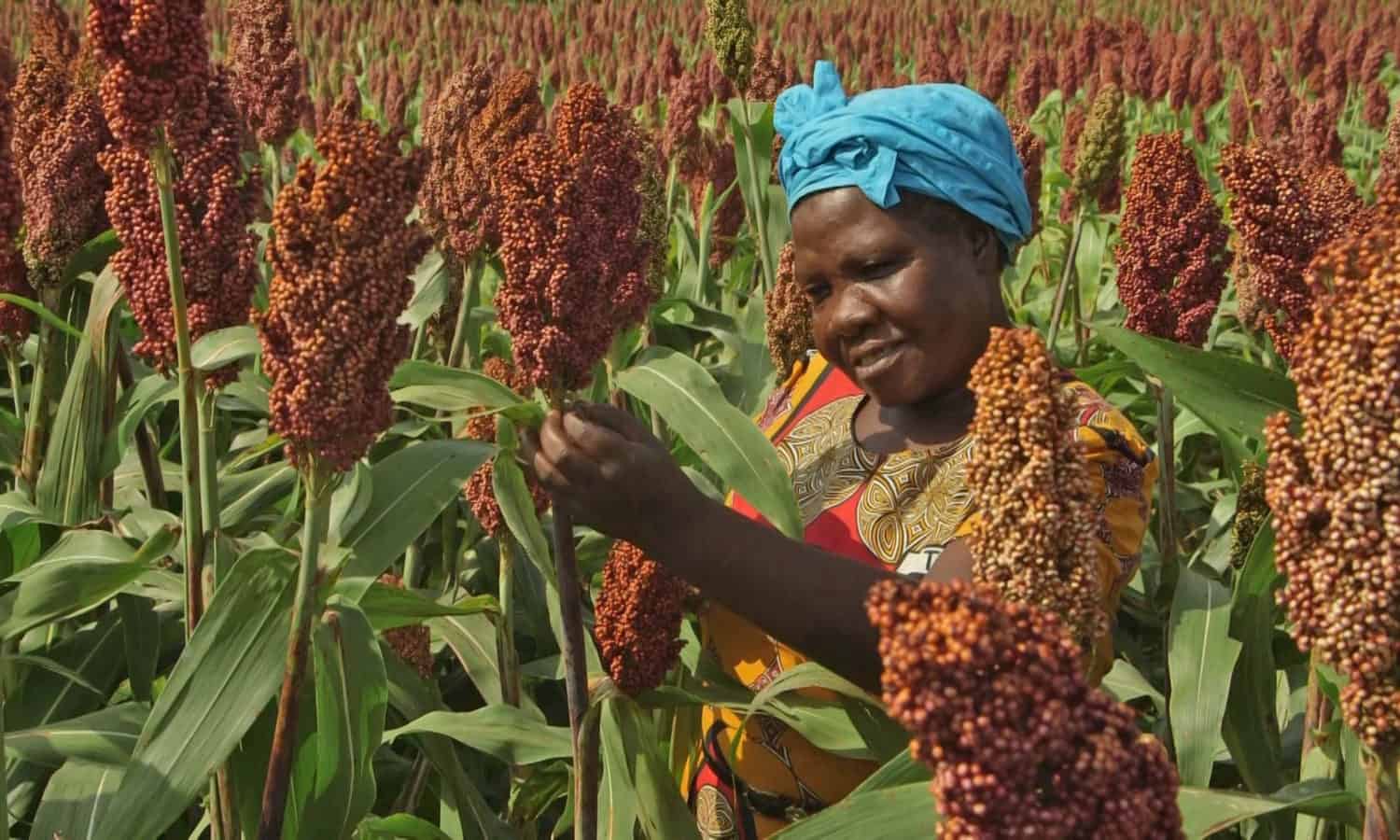
Farmers have put 553 325 hectares under the sorghum countrywide, with self-financed growers planting the largest hectarage.
Agriculture experts have attributed the increase in the production of traditional grains to a combination of climate, economic, health and food security realities.
The Ministry of Lands, Agriculture, Fisheries, Water and Rural Development’s department of Agricultural and Rural Development Advisory Services (Ardas) weekly report states that 553 345 hectares were put under sorghum, surpassing the targeted hectarage of 500 000 hectares.
This represents 111 percent of the national goal.
Leading the charge were self-financed farmers, who planted 354 916 hectares of the crop.
The report indicates that under the Presidential Inputs Programme (PIP) farmers planted 129 888 ha of sorghum, while the Food Crop Contractors Association (FCCA) 4 505 ha. AFC supported 1 645 ha and CBZ 411 hectares.
Masvingo is the leading province in terms of the area planted so far.
Farmers in Masvingo planted 134 607 hectares of sorghum, Mashonaland Central 76 053 hectares, Manicaland which planted 69 164 hectares, Midlands 68 611 hectares and Matabeleland South 63 241 hectares.
Matabeleland North farmers planted 50 931 hectares, Mashonaland East 50 073 hectares and Mashonaland West 40 643 hectares. Agriculture expert, Mr Ivan Craig, said the increase in sorghum production was due to several reasons.
“Traditional crops are naturally drought-tolerant and perform well in low rainfall conditions, making them strategic in the face of climate change. As rainfall patterns become more unpredictable, farmers are turning to resilient and dependable crops,” he said.
He said the trend would strengthen national food security, improve farmer incomes, and promote climate-smart farming.
“For rural communities, it presents an opportunity for value addition, job creation and greater participation in formal markets,” Mr Craig said.
Traditional grains have become popular due to their nutritional benefits. Traditional grains provide high-value nutrients in the form of iron, zinc, calcium and fibre compared to maize.
According to the Agriculture Food Systems and Rural Transformation Strategy (AFSRTS 2 ) document, there was a need to motivate farmers to grow traditional grains.
“The wider adoption of hybrid varieties, increased adherence to agro-ecological tailoring, promoting the use of bird-repellent varieties and adoption of mechanical harvesting and mechanical processing will endear traditional grains to more people, including the youth.
“Community-based seed production and distribution systems should be promoted. The policy by the Government for the Grain Marketing Board to swap traditional grains for maize is laudable,” read the document.
The strategy also noted that there are opportunities for the development of food products made from sorghum and millets, such as soft and stiff porridges, composite flours, traditional and industrial brewing, rice sorghum, and snacks (popped sorghum).-herald