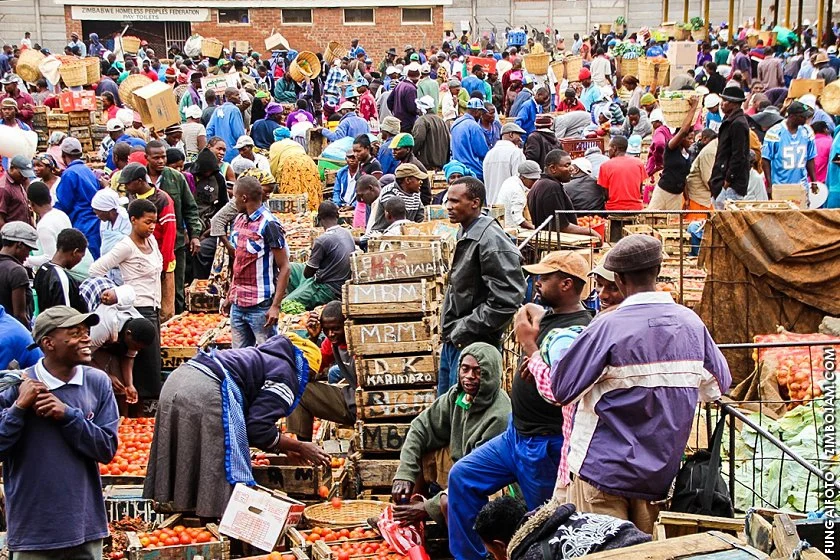
ONION traders at the country’s largest fresh produce market (Mbare) had an early surge in business after Mozambican buyers descended and purchased 15 tonnes of the product to fill the void in their country.
This comes after the Mozambican agricultural produce market was severely affected by the rains that swept across the country, destroying infrastructure such as roads to the market.
Giving an update on the fresh produce market across the country’s mass markets, Knowledge Transfer Africa (KTA) chief executive, Dr Charles Dhewa, said traders had an early cash harvest on Monday.
“Traders from Mozambique bought 15 tonnes of onions on Monday, but there is still too much onion in farming areas and on the market.
“Farmers should dry and preserve their onions because there are opportunities to export more to Mozambique,” he said.
Dr Dhewa said floods in Mozambique and parts of South Africa have made it difficult for traders to source from their traditional suppliers in South Africa.
Foreign buyers will continue to come to Zimbabwe in search of their horticulture product needs and local farmers should ensure that they have properly preserved and packaged commodities to seize this trade opportunity.
Dr Dhewa challenged Government departments to monitor these developments and advise farmers accordingly.
“While the Ministry of Agriculture is assessing and monitoring the condition of crops and
livestock in farming areas, no institution is assessing and monitoring market dynamics and food losses,” he added.
The KTA boss said yesterday white king onion was sold on the Mbare market at prices ranging from US$3 to US$5 per 10-kilogramme pocket.
“Red king onion was going for US$6 to US$9 per 10kg, while fresh shallots were sold at US$1 per bundle,” he disclosed.
Meanwhile, the country’s new agriculture roadmap, the Agriculture Food Systems and Rural Transformation Strategy 2: 2026-30 (AFSRTS 2) seeks to grow the horticulture value chains
under the Presidential Rural Development Programme.
A financial impact analysis of village business units (VBUs), school business units (SBUs) and youth business units (YBUs) shows that onion production is expected to hit 996 000 tonnes
annually by 2030 and a gross income of US$597 million is expected.
Rural Development 8.0 is a collective of outcome-based Presidential interventions in the agriculture sector to cause rural industrialisation, leading to rural development, which will catalyse economic development for the attainment of the Vision 2030 objective of a prosperous and empowered upper middle-income society.
VBUs are registered rural development enterprises meant to boost economic activity and improve the livelihoods of rural communities. They organise smallholder farmers into productive clusters, providing access to shared resources, inputs and improved infrastructure.
The VBUs are being rolled out in a whole of a Government Approach to establish 35 000 One-hectare self-sustaining units powered by solar-driven boreholes to support horticulture development in the rural communities and 9 600 SBUs.-herald