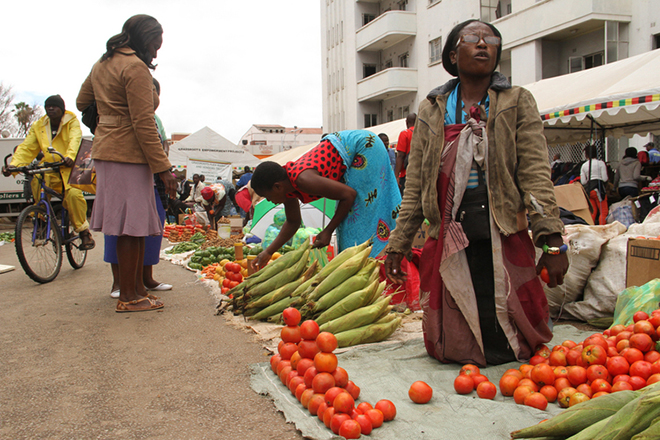
LOCAL firm, Genesys Corporation and the Bulawayo Vendors and Traders Organisation are working on a collaborative digital initiative to drive formalisation and the development of informal traders and micro-enterprises.
The initiative aligns with Vision 2030 and the National Development Strategy 2 (NDS2) policy targets.
The Smart Integrated Micro-Business Activation (SIMBA) digital platform, a mobile-first and web-enabled system designed to make informal sector formalisation simple, accessible and non-disruptive, anchors the initiative.
SIMBA enables vendors and traders to register, create a formal profile and activate a business partner number in under 60 seconds, either through a smartphone application or via Unstructured Supplementary Service Data (USSD) on basic feature phones, ensuring inclusivity across all levels of digital access.
In an update, the two organisations said this system can be integrated into the Zimbabwe Revenue Authority (ZIMRA) and local authorities’ administration platforms.
The system lowers barriers to entry and simplifies stakeholder engagement. SIMBA supports the gradual transition of informal economic activity into structured participation.
In doing so, the platform improves visibility of economic activity, enabling more accurate planning while contributing to the recovery of fiscal and municipal revenues that are currently difficult to capture due to informality.
The collaboration combines Bulawayo-based Genesys Corporation’s digital innovation and systems integration capabilities with BVTO’s grassroots reach within the trader community.
The initiative is positioned as a complementary tool to existing Government and local authority efforts, offering a practical mechanism to support livelihoods, compliance, and economic participation without disrupting day-to-day trading activities.
Commenting on the initiative, Genesys Corporation chief executive officer Mr Louis Herbst, said SIMBA is about making formalisation practical.
“By removing barriers and creating simple digital pathways, we enable traders to participate more fully in the economy while supporting improved planning and sustainable revenue outcomes at both local and national levels,” said Mr Herbst.
Both organisations emphasised that the initiative is collaborative, consultative, and implementation-focused, with further stakeholder engagements and phased rollout details to be announced in due course.
Beyond registration, SIMBA is designed as a service-linkage ecosystem that supports sustainable formalisation.
Registered informal traders and vendors on the platform will become eligible for access to entry-level affordable healthcare solutions, such as medical aid and funeral cover, alongside skills and productivity training programmes, such as Learning Factories and Work2Learn initiatives, offered through participating partners.
Collectively, these features are intended to strengthen resilience, workforce readiness and long-term economic stability within the informal sector, while reinforcing the value of formal participation.
Mr Herbst said to enhance innovation and sustainability, Genesys Corporation will work with strategic partners, including the National University of Science and Technology (NUST) and the Salutem International Medical Aid Fund.
“These collaborations will support research, skills development, and health-related solutions incorporated into the platform, while remaining coordinated under the Genesys–BVTO-NUST and Salutem implementation framework,” added.
As part of the rollout, Genesys Corporation and BVTO intend to engage constructively with relevant ministries and city council structures through the preparation of informative briefs.
These engagements are envisaged as collaborative working discussions focused on alignment with existing policy frameworks, municipal planning processes, and opportunities for coordinated implementation.
Through aggregated, real-time insights, the SIMBA platform has the potential to support evidence-based planning for trading spaces, infrastructure, and service delivery, assisting municipalities in responding more effectively to the realities of the informal economy.
BVTO executive director Mr Michael Ndiweni said: “This initiative supports traders by offering an accessible pathway into structured economic participation without threatening livelihoods.”
“It is a collaborative approach that recognises the value of the informal sector while creating shared benefits for traders, municipalities, and the economy.”-hearld