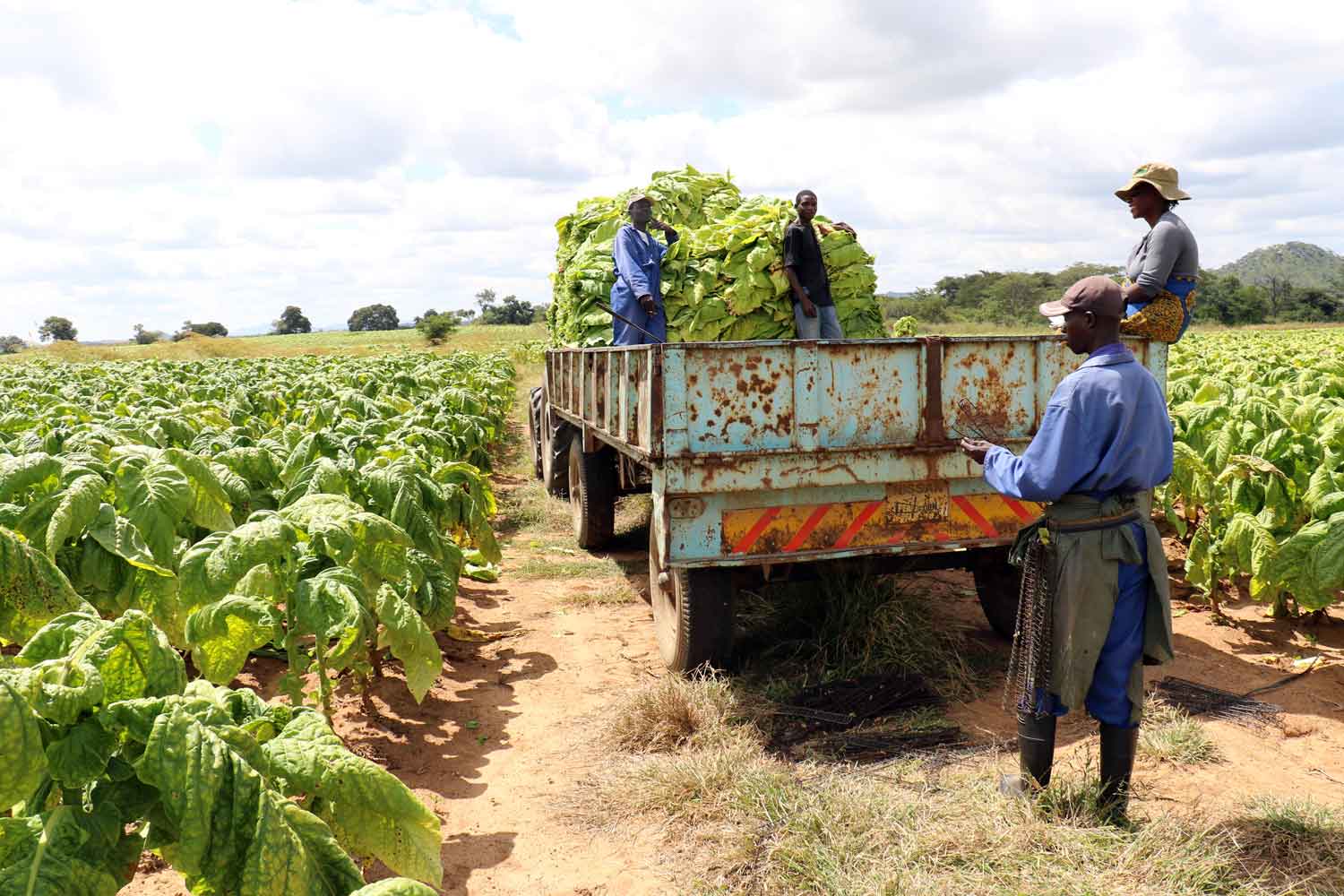
LOCAL financing now accounts for 67 percent of total funding in Zimbabwe’s tobacco sector, signalling growing domestic confidence as the Government pushes to build a US$7 billion industry by 2030.
During the 2024–2025 tobacco season, locally sourced funding amounted to about US$663 million, compared to US$330 million from offshore financiers, bringing total sector financing to approximately US$993 million.
The financing shift comes as the tobacco industry continues to record strong production growth.
Zimbabwe produced 355 million kilogrammes of tobacco in the 2024–2025 season, surpassing the 300 million kilogramme target set under the National Development Strategy One (NDS1).
In an interview, Lands, Agriculture, Fisheries, Water and Rural Development Permanent Secretary, Professor Obert Jiri, said increased localisation of funding reflects the success of Government policy reforms aimed at strengthening sustainability and farmer confidence in the sector.
“During NDS1, Zimbabwe not only surpassed production targets, but also significantly increased the localisation of tobacco financing,” said Prof Jiri.
“Under NDS2 and the forthcoming Tobacco Value Chain Transformation Plan Two, we are confident the sector will reach 500 million kilogrammes and a gross value of US$1,2 billion by 2030, while contributing meaningfully to employment creation and national development.”
Under the National Development Strategy Two (NDS2), the Government is targeting 500 million kilogrammes of tobacco from 89 667 contracted growers, cultivated on 164 536 hectares, signalling another anticipated record output.
Prof Jiri said the contract farming model, which now accounts for more than 80 percent of tobacco production, has played a key role in boosting local financing by providing farmers with guaranteed inputs, technical support and assured markets.
Local banks, concessional financing facilities and the TianZe tobacco financing model, established under Zimbabwe–China bilateral cooperation, are among the key drivers supporting farmers through low-interest loans and access to export markets.
Prof Jiri said strengthened research and innovation are also anchoring the sector’s growth, with Kutsaga Research remaining central to the development of high-yielding, drought-tolerant and disease-resistant tobacco varieties.
Kutsaga Research chief executive officer, Dr Frank Magama, said some of the newly released varieties have the potential to yield up to 5 000 kilogrammes per hectare, depending on agronomic practices and growing conditions.
“Our drought-tolerant varieties such as T79, T80 and T81 can produce more than 2 500 kilogrammes per hectare even under dry conditions,” said Dr Magama.
“With optimal agronomic practices, varieties such as T76, KRK70 and KRK73 can yield up to 5 000 kilogrammes per hectare, helping farmers mitigate climate challenges and improve productivity.”
Farmer organisations have welcomed the increasing localisation of financing, saying it enhances stability and predictability in the sector.
Commercial Farmers union president, Dr Shadreck Makombe, said the emphasis on local funding and contract farming is strengthening farmer confidence.
“The focus on local financing gives farmers security and improves productivity. We are confident the tobacco sector is headed for another strong season,” he said.
Zimbabwe National Farmers’ union president, Mrs Monica Chinamasa, said the financing reforms are positioning smallholder farmers to manage climate risks while maintaining leaf quality.
The first round of tobacco crop assessment has been completed, with most farmers under irrigation already harvesting, while rain-fed producers are preparing to begin reaping.
The tobacco marketing season traditionally opens in March.-herald