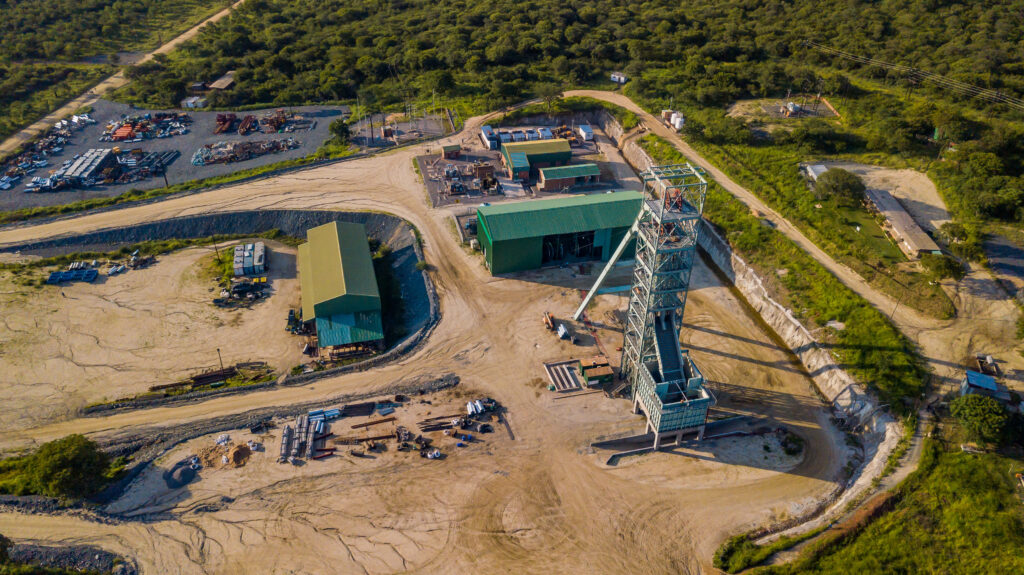
KARO Mining Holdings, the developer of Zimbabwe’s most promising platinum group metal projects, is bullish about the industry’s outlook, citing encouraging economic fundamentals, which have raised PGMs’ global prices.
The Karo Platinum Project is located in Mashonaland West Province, near Mhondoro-Ngezi, about 80 kilometres southwest of the capital Harare.
According to the World Platinum Investment Council’s (WPIC) platinum quarterly report for the third quarter of 2025 and its first forecast for 2026, Zimbabwe remains the world’s third-largest producer of platinum after South Africa and Russia, contributing a high single-digit share of global mine supply.
PGMs represent a significant source of exports for Zimbabwe, consistently ranking as the country’s second most valuable mineral export after gold.
Zimbabwe’s mining sector is a crucial economic pillar, generating significant foreign currency (over 70 percent of exports), contributing substantially to the gross domestic product (around 12-14,5 percent) and attracting foreign direct FDI (up to 70 percent), driven by gold, platinum, lithium and chrome.
Zimbabwe’s platinum industry is anchored by operations along the Great Dyke, with major producers including Zimplats, Mimosa Mining Company, Unki Mines and emerging projects such as Karo Platinum.
These operations are expected to underpin Zimbabwe’s contribution to the global PGMs market in the coming years.
Karo Holdings country manager, Dr Josephat Zimba, in an interview after a tour of the company’s PGM project on Thursday, said the outlook for PGMs was improving after a prolonged period of weak prices.
“PGM prices have been trending in the right direction and that helps in a big way. We have had a tough period for a long time, but it’s nice to see that they are coming up,” he said.
He added that new developments such as the Karo Platinum project would play a key role in sustaining production as older assets mature.
“The current project really represents the next generation of platinum production in this country, and it’s a fantastic opportunity to see something like that growing and obviously taking over as some of the older mines retire,” Mr Zimba said.
The WPIC expects conditions to stabilise in 2026, with the platinum market projected to be broadly balanced and showing a small surplus of 20 000 ounces (koz).
Total supply is forecast to rise 4 percent year-on-year to 7 404 koz, supported by a stronger recovery in recycling, while mine supply is expected to grow 2 percent to 5 622 koz.
Demand is also set to improve in 2026, particularly from the industrial segment, which is projected to increase by 9 percent, or 174 koz, to 2 076 koz, driven mainly by a recovery in chemical sector demand and the resumption of new capacity expansion in the glass industry.-herald