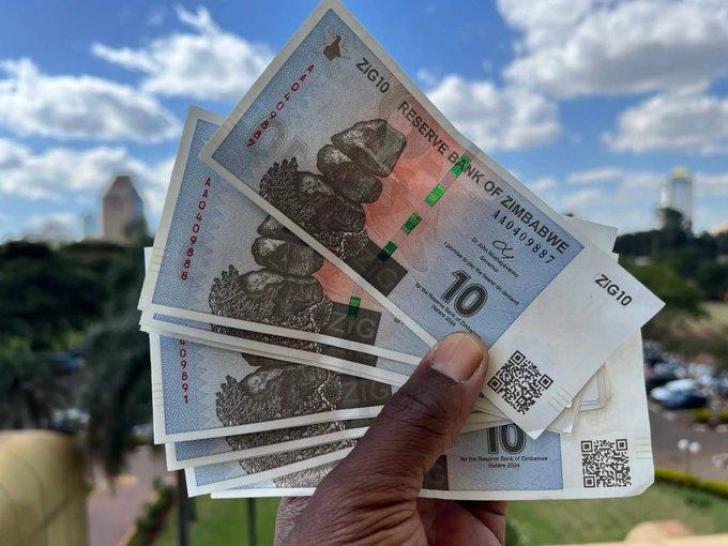
ECONOMISTS have said the proposal to include microfinance institutions in the Intermediated Money Transfer Tax (IMTT) net will increase transaction costs, affecting small businesses that usually access funding from these institutions.
IMTT is payable whenever a financial institution mediates the transfer of money between or among individuals or companies.
The tax is chargeable on domestic transactions denominated in both local and foreign currency, as well as on outbound foreign payments and ZiG-based digital token transfers, at the prevailing rate of 2 percent.
In his 2026 National Budget Presentation, Finance, Economic Development and Investment Promotion Minister, Professor Mthuli Ncube, said, consistent with the Government’s commitment to supporting business growth and maintaining fiscal stability, he therefore proposed “to expand the definition of Financial Institution for the purpose of IMTT to include Microfinance Institutions”.
He also proposed to reduce the IMTT rate on ZiG-denominated transactions from 2 percent to 1,5 percent, to promote the use of local currency and lower transaction costs.
Minister Ncube said IMTT on foreign currency transactions will be maintained at 2 percent, designated IMTT as a tax-deductible expense for purposes of Corporate Income Tax computation, and expanded the definition of ‘financial institution’ for the purpose of IMTT to include microfinance institutions.
Commenting on the issue, an economist and institutional analyst, Dr Shynet Chivasa, said including microfinance institutions in the IMTT framework means that SMEs (Small and Medium-sized Enterprises), which frequently use microfinance for loans and deposits, may face higher transaction costs.
“SMEs in Zimbabwe could experience both immediate increases in transaction costs and longer-term changes in their access to formal financial services due to this change introduced in the 2026 National Budget,” said Dr Chivasa.
“The IMTT is levied on money transfers mediated by financial institutions, so expanding its scope could increase the tax burden on funds SMEs receive or transfer via microfinance channels.
“This might reduce their disposable capital and increase their operating costs. However, the move broadens the tax net and enhances Government revenues.”
Professor Ncube said IMTT remains a major and stable source of non-discretionary revenue, contributing about 8 percent of total tax revenue annually.
However, he said its high incidence on business transactions and liquidity flows has made it distortionary, particularly in a dual-currency environment.
“Consequently, there have been consistent calls by various stakeholders for a review and re-design of the IMTT framework to mitigate unintended economic distortions, whilst maintaining the integrity and predictability of public finances,” said Professor Ncube.
Diamond Berry Enterprises chief executive, Mr Nhlanhla Dabengwa, said this proposal to include microfinance transactions under this IMTT would, without doubt, widen the tax burden on SMEs, saying the sector is already operating under high-cost pressures with impatient capital.
“Microfinance always remains the primary source of capital for many SMEs, because they are usually excluded from mainstream banking because of lack of compliance issues, and other things,” said Mr Dabengwa.
“So, any additional tax on these transactions, obviously, risks the increase in the overall cost of borrowing.
‘‘Entrepreneurship relies on fluidity, and when we are taxing the very same base that was actually financing the growth of SMEs, it’s obviously slowing down that.
“While the intention, of course, we accept, may be to put in a revenue collection for the country, it’s always important that our policymakers recognise the role microfinance plays in financial inclusion.”
He said SMEs need more affordable and patient capital, saying a more targeted approach, such as exempting productive loans or setting a threshold for micro borrowers, will strike a better balance between revenue generation and supporting entrepreneurship.-herald