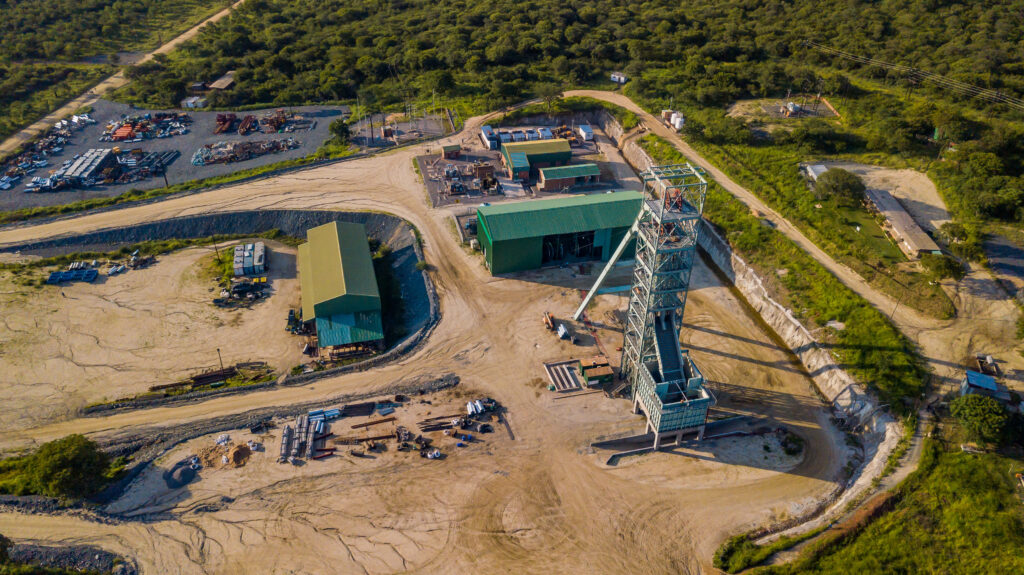
THE Government has expressed satisfaction with progress at the Karo Platinum Mine project in Mhondoro, describing it as one of the flagship investments under the Second Republic.
The Karo Mining project will become a significant addition to Zimbabwe’s pipeline of platinum group metals (PGM) mines currently under development. Zimbabwe presently has three active PGM operations owned by South African firms: Impala Platinum Holdings (Implats), which controls Zimplats; Valterra Platinum, formerly Anglo American Platinum (Amplats); and the Mimosa Mining Company, jointly owned by Implats and Sibanye-Stillwater on a 50-50 basis.
Mines and Mining Development Minister Dr Polite Kambamura provided an update during a tour of the Karo Platinum project earlier today, noting that the initiative had achieved major milestones since its launch in 2018.
“This is one of the signature projects of the Second Republic. They got this land in 2018 and His Excellency (President Mnangagwa) did ground-breaking here in 2018. Since then, they have been running around, working on the project,” he said.
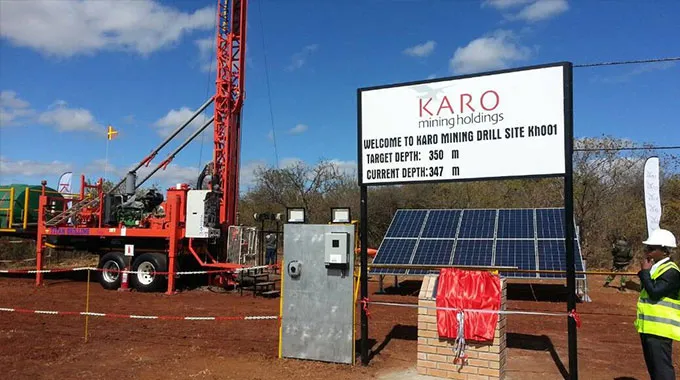
He said the project had progressed steadily from exploration to plant construction, with substantial drilling work now complete.
“They did an exploration of about 90 000 metres, about 90 kilometres of drilling. They did not stop there but went further to start construction works and the civil works are 100 percent complete,” he said.
Minister Kambamura also emphasised the strong local content element of the development, particularly during the civil works phase.
“The civil works were done by Zimbabweans. Just imagine the designs being done in South Africa and implemented in Zimbabwe by Zimbabweans,” he said.
He added that the ministry was encouraged by the project’s employment prospects, noting that Karo Platinum is expected to create about 1 000 direct jobs while currently sustaining around 8 400 indirect jobs.
“The project is one of those projects that the ministry is excited about. The mine, Karo, is targeting first production in the first-half of 2027, with construction and mining activities being undertaken in parallel ahead of that milestone,” he said.
Minister Kambamura further noted that the Karo Platinum Project has a projected life-of-mine of 50 years. Karo Holdings country manager Mr Joel Zimba said the project represents a major capital investment, with phase one alone costing approximately US$550 million.
Money
“The project is a big investment; this is only phase one of the project, worth about US$550 million investment and to date we have spent over US$190 million on development,” he said.
He said although substantial capital expenditure is still required, the company had managed its resources prudently.
“There is still quite a bit of spend ahead of us, but you can see clearly how we have optimised our spend to develop a project of this magnitude,” he said.
Mr Zimba also highlighted that the company’s listing on the Victoria Falls Stock Exchange (VFEX) had played an important role in raising domestic capital.
“The VFEX listing, which was actually the first of its kind, helped us to be able to raise about US$36,7 million on the VFEX, which allowed some of the local financial institutions and pension funds to participate,” he said.
He said the funding model had given local institutions an opportunity to earn meaningful returns while supporting a strategic national project.
“It is a unique way to fund a project, a local project, using some of the local resources that are in-country,” Mr Zimba said.
He reiterated that the Karo Platinum Project remained on schedule for first production in the first half of 2027, with construction and mining activities progressing concurrently.
“There is still a lot of construction, but we are running parallel with the mining and we have already started to develop the capacity to do so,” he said.
Mr Zimba added that improving global PGM prices were favourable for the project’s long-term outlook.
“PGM prices have been trending in the right direction, and that helps in a big way. We have had a tough period for a long time, but it’s nice to see that they are coming up,” he said.
He described the development as part of the next generation of platinum production in Zimbabwe.
“The current project really represents the next generation of platinum production in this country, and it’s a fantastic opportunity to see something like that growing and obviously take over as some of the older mines retire,” Mr Zimba said.
Karo Platinum head of processing Mr Qhubekani Moyo said the concentrator plant had been designed to process 220 000 tonnes of ore per month.
“We’ll be receiving our ore at a grade of 3,3 grams per tonne, between 2,8 grams per tonne and 3,3 grams per tonne from the mine,” Mr Moyo said.
He said the plant would use a two-stage milling process followed by flotation, targeting a recovery rate of 83 percent.
“From the 220 000 tonnes of ore that we treat in a month, we aim to produce 5 000 tonnes of concentrate, which we are going to be selling out to the market,” he said.
Mr Moyo said the plant is scheduled for commissioning in the first half of 2027 and would require 27 megawatts of installed power, supported by both grid supply and a planned solar facility.
“We are setting up a 30 megawatt solar plant and the power of the solar plant will only be able to sustain us during the day and for the evening, we will be relying on the national grid,” he said.-newsda