Farmers in rural Masvingo are being forced to feed ripened mangoes to livestock or dump them in cattle kraals as logistical hurdles make it impossible to transport their produce to national markets.
Mango is one of the key fruits in Zimbabwe’s national horticultural recovery plan.
Agricultural analyst and Knowledge Transfer Africa (KTA) chief executive, Dr Charles Dhewa, said recently that the Zimbabwe Agricultural Think Tank (ZATT) also confirmed the development.
“Recently, I received a call from farmers in the Gutu-Bhasera area who have ripened mangoes and are seeking buyers.
“Each household has more than 10 mango fruit trees and some have big orchards,” he said.
Dr Dhewa said while these communities had done their part by investing in the production of the fruit, the produce required buyers.
“The demand is there in all urban markets, but the challenge is that of moving the produce from production areas to customers,” he said.
Dr Dhewa said the Agricultural and Rural Development Authority (ARDA) at one point expressed interest in buying abundant mangoes in rural communities for processing at its Norton plant.
“However, ARDA is more interested in fibreless mango, while most communities have small sweet mangoes which grow naturally in many rural communities.
“Although they have superior flavour and taste, sweet mangoes are said not to be ideal for processing because the roughage sticks on the processing machine,” Dr Dhewa said.
In an interview with this publication, a communal farmer from Zvemidza Village in Gutu’s Ward 14, Mr Murehwa Harare, said ARDA had promised to buy their mangoes, but that has not yet materialised.
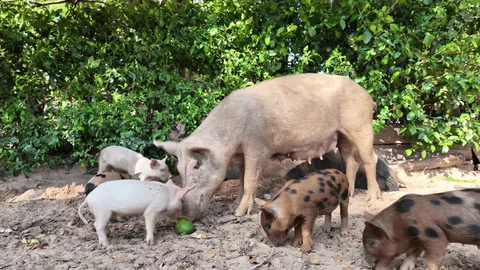
“We are still waiting for officials from ARDA who promised to come to our rescue. ARDA expressed interest in the “paraffin and brooks mango varieties but they are yet to come. We have resorted to feeding the mangoes to pigs or throwing them into cattle kraals as there are no buyers here,” he said.
In 2020, the Government crafted the Horticulture Recovery and Growth Plan (HRGP), whose overall purpose is to guide and support the revival of the conventional horticulture industry and stimulate a transformative rural horticulture sub-sector under the Presidential Horticulture Scheme covering all 1,8 million rural households.
The programme will see 600 000 households receiving 10 mango trees each. When mature, each tree will yield 100 kilogrammes of mango fruit per annum.
Each household will have a total production of 1 000kg annually. At an average price of US$0,5 per kg, each household will get an income of US$500 per season. Farmers will earn US$300 million across the country.
The HRGP also includes the Mango Recovery and Growth Plan, which seeks to increase the area under mango by 2 242 ha through the provision of virus-free planting material and good agronomic practices for US$1 000 per ha in order to exploit high demand in export destinations.
Mango trees will be distributed according to agro-ecological zones to Mashonaland Central and West provinces, Matabeleland South, Midlands, Manicaland and Masvingo provinces.
The plan will be based on cluster models to promote aggregation of produce and access to markets. The project requires US$2 242 000 from the private sector and donors.
The Zimbabwe Mercantile Exchange (ZMX) has introduced horticulture trading on its platform and this is expected to curtail post-harvest losses by smallholder horticulture farmers and enhance income.-newsda