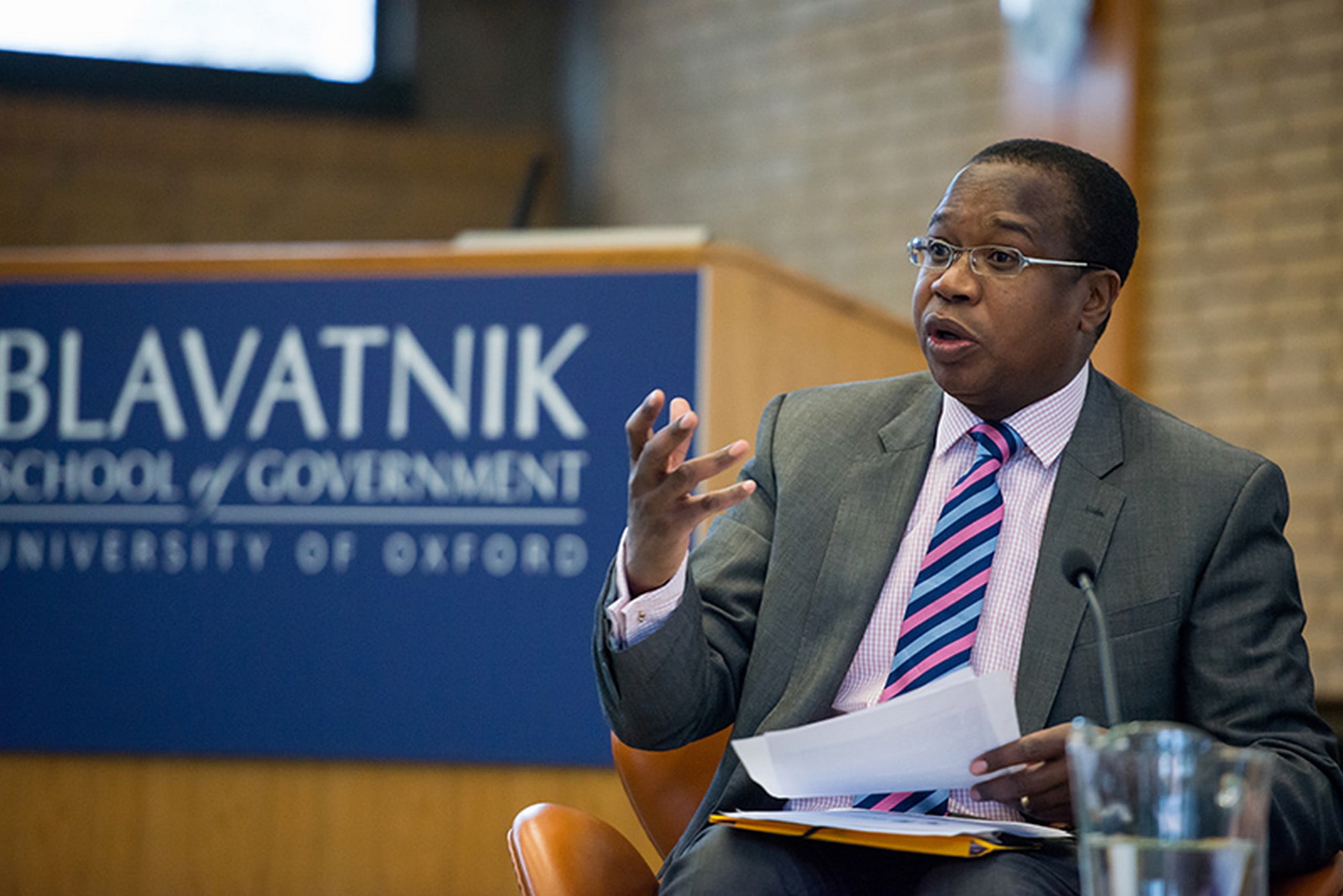
FINANCE, Economic Development and Investment Promotion Minister Professor Mthuli Ncube has said no company has claimed the Government’s employment incentive schemes designed to stimulate job creation and uplift vulnerable groups.
Prof Ncube, who has been vocal about the importance of employment incentive programmes in Zimbabwe, said despite the availability of tax rebates for companies that employ young people and persons with disabilities, there has been no uptake from the corporate sector.Zimpapers publication access
He made the remarks in his elaborate responses to National University of Science and Technology (NUST) economics students at a high-level academia-industry engagement held in Bulawayo last Friday, where he outlined Treasury plans to accelerate industrialisation and drive inclusive economic growth.
Students had asked the minister about the Government’s plans in creating employment for the youth.
“Our intention is to give incentives to companies on their employment models. A few years ago, I introduced an incentive to say that if a company employs anyone below the age of 35, they get a tax rebate equivalent to the sum of their investment.Made in Zimbabwe branding
“I then went further and introduced initiatives for companies that employ those with disabilities.
“We are trying to increase levels of employment,” said Prof Ncube.
He, however, expressed concern over the lack of response from the industry.
“But no one company has ever come to me to claim the rebate, but that incentive is still there,” he said.
Prof Ncube introduced the Youth Employment Incentive (YEIT) in the 2020 national budget, which offers tax exemptions to companies that employ youths below 35 years of age, as part of efforts to support the socio-economic development of young people and encourage corporates to invest in youth employment.
Section 13A of the Finance Act (Chapter 23:04) provides for a Youth Employment Incentive (YEIT) to a qualifying taxpayer who employs youths in their companies who are below the age of 30 years with effect from 01 January 2020.
The credit for each additional employee hired is US$1 500 per month up to a maximum amount of US$180 000 per annum.
The credit is applicable upon satisfying several conditions:
These include the requirement that the qualifying taxpayer must be a registered taxpayer and have a tax clearance certificate for the preceding year of assessment; and
The credit can only be claimed after the additional employee has served for twelve consecutive months of employment and should be earning at least two thousand dollars’ Zimbabwean dollars per month; and
It may not be claimed by companies engaged in trade or investment having an annual turnover exceeding one million United States dollars. If the credit exceeds the tax payable in a year of assessment, no refund shall be claimed.
The credit shall be added to the assessed loss and the amount is carried forward to the next year of assessment.
In addition, the minister has proposed targeted tax incentives for firms operating extended production cycles, a move expected to boost job creation, particularly within the manufacturing sector.
The employment incentives form part of the Second Republic’s broader economic reform agenda, anchored on fostering sustainable growth, enhancing industrial productivity and improving livelihoods.
The Government has consistently underscored the centrality of job creation in achieving Vision 2030, which seeks to transform Zimbabwe into an upper-middle-income economy.-herald