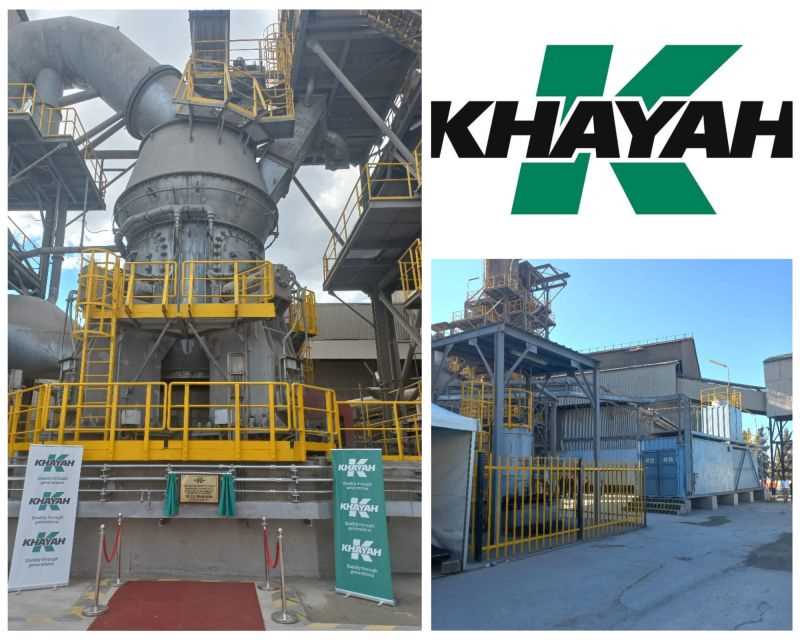
INDUSTRY and Commerce Minister Mangaliso Ndlovu has assured the nation that cement supply will significantly improve following a major US$20 million rehabilitation of the Khayah clinker kiln, which resumed operations in early December after lying idle for 26 months.
He made the announcement after touring the PPC Cement plant and the Khayah Cement plant yesterday.
A clinker kiln, or cement kiln, is the core equipment in cement manufacturing. It uses intense heat — around 1 600°C — in a large, rotating furnace to transform raw materials such as limestone and clay into clinker, the hard nodules that form the basis of cement.
Minister Ndlovu said the restoration of the kiln represents a major step towards meeting national cement demand.
“This kiln behind me had not been working for the last 26 months, and they have invested not less than US$20 million to repair it. They switched it on last Saturday after a combination of breakdowns, maintenance shutdowns, and border delays created a severe supply bottleneck in recent weeks.
It is still warming up, but this is a massive intervention in responding to the cement demand,” he said.
The Minister explained that the supply strain was triggered by several factors occurring simultaneously, including a breakdown at PPC’s Harare plant, scheduled maintenance at Sino Cement in Kwekwe, and a two-week disruption in clinker imports from Zambia. Furthermore, an audit process at the border further slowed inflows.
“All these things converged at the same time, leading to the huge supply bottleneck we experienced. We saw those who had products increasing their prices, and the response was to open up for imports. But opening up is never a permanent solution. A permanent solution is when, as a country, we develop our own capabilities,” he said.
Minister Ndlovu confirmed that PPC is now back to full production but expressed concern over retailers inflating prices downstream. He warned that Government will take action against importers who abuse price-stabilisation permits.
“If you have an import permit, whose issuance is an intervention to stabilise prices, and you go on to inflate the price, you will not be able to get a permit going forward,” he said.
He added that while the revived kiln will meet Khayah’s own clinker requirements, national demand remains higher than current domestic clinker-producing capacity.
“Most companies are millers, so they buy clinker and then mill it into cement. PPC and Khayah do not yet have excess capacity to sell to other players. We are discussing the establishment of another clinker manufacturing plant as a national strategic investment, which requires between US$150 million and US$200 million,” he said.
The Minister noted that two newly opened milling plants in Hwange and one in Mashonaland West have already closed due to lack of clinker, underscoring the need for more kilns.
“Cement is 60 to 80 percent clinker of what you see in the product. If we get a third or a fourth kiln, then as a country we are set.”
PPC Sales Manager Nkosana Mapuma said the company had maintained consistent production throughout the year and had no intention of creating shortages.
“We are currently producing cement as you can see in the background. There is plenty of cement in our warehouse, and we are working very hard to ensure there is plenty of cement in the market. We are very much committed to Vision 2030, where we see an industrial and infrastructural boom in Zimbabwe. We want to ensure that there is a very good quality product available for the projects the Government has introduced, and also for people building their homes for the future,” he said.
Khayah Cement’s corporate rescue practitioner, Mr Bulisa Mbano, said this marks a turning point for the company, which has long been weighed down by debt and operational inefficiencies.
“The positive is that all creditors will be paid down in a compromise amount and settled immediately. This gives the company immediate relief and the breathing space to focus on growth rather than liabilities, and currently the US$20 million injection on the clinker kiln will be a game changer in the cement industry,” he said.-herald