THE Agricultural Marketing Authority will conduct a cotton validation exercise from Monday next week to determine crop establishment and lay the ground for orderly marketing.
The validation is expected to provide reliable information that will support informed decision-making by farmers, contractors, buyers and policymakers.
Statutory Instrument (SI) 118 of 2022 [Chapter 18:12], Agricultural Marketing Authority (Seed Cotton and Seed Cotton Products) (Amendment) Regulations, provides that a monitoring committee comprising the authority, Agritex and each contractor shall conduct the verification process by the end of January each year to determine crop establishment.
The exercise started with the contractor validation by AMA, which began on Wednesday and ends today.
The engagement brought together key players in the cotton value chain, including contractors, buyers, ginners and other sector partners, to review the status of the crop and to deliberate on measures required to ensure an orderly and transparent cotton marketing season.
Input distribution figures indicate planned production, but they do not always reflect the actual crop established in the field, highlighting the need for validation as a critical step in bridging the gap between projected and actual production.
“Accurate production data is essential for effective planning across the cotton value chain for pricing, logistics, ginning capacity planning and market coordination.
“The validation exercise will also ascertain whether there is need to export or retain all cotton, as inconsistencies in production estimates have previously affected contract performance and market stability, underscoring the importance of field-based verification.
“The process will be conducted in two formats; firstly, an analysis of contractor records to verify contracted hectarage with receipts and secondly, through the carrying out of a physical assessment of planted seed cotton,” said AMA.
According to Statutory Instrument 142 of 2009, “Seed cotton contract” means a contractual arrangement between a contractor and a grower, under which the contractor provides or finances the purchase of agreed inputs as recommended by Agritex in return for the grower selling a volume equivalent to the inputs given to him or her by the contractor.
Stakeholders in the cotton industry last year held a Cotton Indaba that ran under the theme: “Revitalising Zimbabwe’s White Gold, Towards a Sustainable and Competitive Cotton Sector,” where they reiterated the need to timeously conduct the validation exercise.
Agriculture, Fisheries, Water and Rural Development Deputy Minister Vangelis Haritatos recently said there was need to adopt scientific, timely forecasting that guided decision-making, rather than merely documenting failure.
Cottco chief executive, Mr Rockie Mutenha, said it was important to conduct a crop validation timeously to establish the reliability, validity and accuracy of information from the field.
“Crop forecasting is based only on planted hectares, yet yield is a factor of plant population, number of bolls/plant and boll weight.
Mr Mutenha said land validation should be done by January and crop forecasting by April.
The Agricultural and Rural Development Advisory Service (ARDAS) weekly report dated January 12 indicated that 132 537 hectares of cotton had been put under the cotton crop, while some farmers were still planting.
The Crops, Horticulture, Fisheries and Livestock Summer Plan: 2025/2026 set a cotton hectarage and output targets of 270 000 hectares and 189 000 tonnes, respectively.
Cotton, once dubbed Zimbabwe’s “white gold”, has over the years faced significant challenges ranging from low productivity, declining farmer interest, market distortions and unsustainable financing models.
Despite its potential as a key export and rural livelihood crop, seed cotton output has fallen, threatening the viability of the value chain.
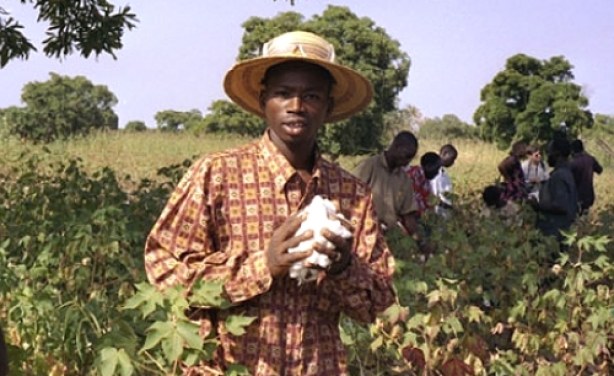
Cotton is a major source of livelihood for approximately two million people, including farmers (approximately 400 000), farm workers, their families, and industrial workers.
The crop contributes immensely to income and employment creation while contributing to foreign currency earnings.
Cotton provides raw material for oil expressing, knitting, spinning, weaving and stockfeed industries.-herald